Quick Answer: Engine decarbonisation in Bangalore costs ₹1,800–₹2,500 for hatchbacks, ₹2,500–₹4,500 for SUVs and turbo-petrol engines, and ₹4,000–₹10,000+ for diesel SUVs and luxury vehicles, depending on engine size and the method used. The most common modern technique — HHO hydrogen carbon cleaning — takes 45–60 minutes with no engine disassembly. If your car is sluggish, drinking more fuel than usual, or idling rough after 40,000+ km of Bangalore city driving, this guide tells you exactly what’s happening, what to check before you pay for anything, and what a fair price actually looks like near you.
If you searched “decarbonization near me,” “engine decarbonization near me,” or you’re comparing quotes across a few Bangalore workshops — this page gives you the straight numbers so you can walk into any shop, including ours, and know exactly what you should be paying.
What Is Engine Decarbonisation, in Plain Terms
Every petrol or diesel engine burns fuel to make power — and that burn is never 100% clean. A small amount of unburned fuel and oil vapour leaves behind carbon residue that settles on the parts that matter most: intake valves, piston crowns, the inside of the combustion chamber, fuel injector tips, and the EGR valve.
Over tens of thousands of kilometres, this buildup does three things to your engine:
- Restricts airflow into the cylinder, so the engine breathes less efficiently
- Disrupts the fuel spray pattern from the injectors, leading to incomplete combustion
- Reduces the effective volume of the combustion chamber, which throws off the engine’s tuning
The result you actually feel: less power, worse mileage, rougher idling, and — in advanced cases — misfires and a Check Engine light.
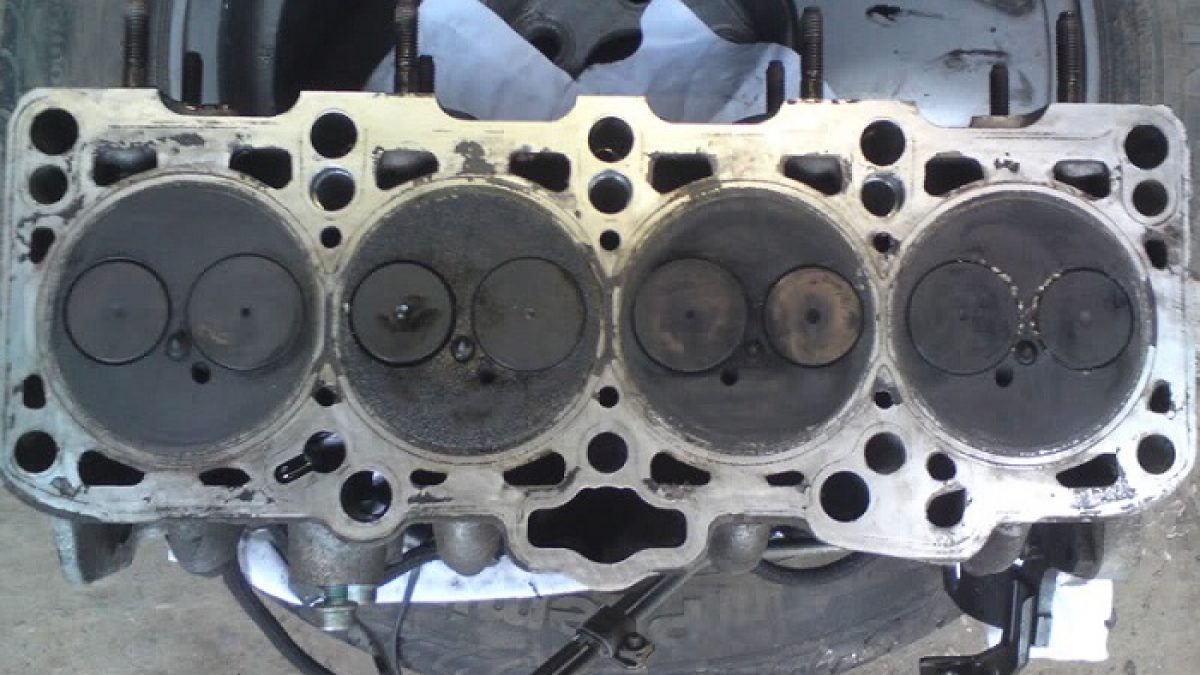
Engine decarbonisation is simply the process of removing that carbon. In Bangalore, this is almost always done with HHO (hydrogen) cleaning — a machine splits water into hydrogen and oxygen gas, feeds it into the engine’s air intake while the engine idles, and the resulting high-temperature burn oxidises the carbon off the valves and chamber walls. No tools touch the engine. No parts come off. The carbon exits through the exhaust as CO₂ and water vapour.
Curious whether it’s actually worth doing for your specific engine and mileage — not just what it costs? Our companion guide, Engine Decarbonisation: Is It Worth It?, goes deeper into which engines benefit most and which don’t need it at all. This page focuses on cost and the signs to watch for; that one focuses on the honest yes/no decision.
Why Bangalore Cars Build Up Carbon Faster Than Most Cities
This isn’t a generic problem — Bangalore’s specific driving conditions make it worse than almost anywhere else in India.
Stop-and-go traffic is the main culprit. Silk Board junction, the ORR between 8–10 AM, Marathahalli Bridge — anywhere your engine idles or crawls for extended stretches, combustion temperatures drop below what’s needed for a clean, complete burn. The fuel doesn’t fully combust, and carbon accumulates faster than it would on an open highway.
Short trips make it worse. If you live 4–8 km from work or the nearest mall — common across Bangalore — your engine rarely reaches full operating temperature on any single trip. That’s “cold start” mode for most of the car’s life, which is the single worst condition for carbon buildup.
Modern turbo-petrol engines are especially vulnerable. Direct-injection engines — the kind in the Hyundai Creta 1.0T, Kia Seltos, Tata Nexon Turbo, and VW/Skoda TSI range — spray fuel straight into the combustion chamber, bypassing the intake valve entirely. That valve never gets “washed” by fuel the way older engines’ valves did, so oil-mist carbon bakes onto it steadily, with nothing to clean it off naturally. If you drive a Creta specifically, our Hyundai Creta tyre and maintenance guide covers the other Bangalore-specific wear patterns worth watching on this engine.
6 Signs Your Car Needs Engine Decarbonisation Now
Don’t book this on a service advisor’s say-so — book it when your car is actually telling you something.
- Mileage has noticeably dropped. Your Creta used to give 13 kmpl in city traffic; now it’s giving 10–11 with no change in how you drive. Carbon on the injectors or intake valves is a plausible cause.
- Rough idle at traffic lights. A faint shudder or vibration through the steering wheel or seat while stopped on Hosur Road or at a signal.
- Sluggish throttle response. The car hesitates before picking up speed — a “lag” that’s more pronounced than when the car was new, even on a clear stretch.
- Visible smoke from the exhaust. Especially at startup or under hard acceleration — a sign of unburned carbon being expelled.
- Hard cold starts. The engine cranks longer than it used to before firing, particularly on cooler Bangalore mornings between October and February.
- High mileage with zero prior cleaning. Past 50,000 km, almost entirely city-driven, never decarbonised — worth at least an inspection.
One honest caveat: these same symptoms can come from a dirty air filter, worn spark plugs, a failing oxygen sensor, or even underinflated tyres. Get a proper diagnostic before paying for decarbonisation — a good shop checks first and tells you if something else is actually the problem.
Engine Decarbonisation Cost in Bangalore — 2026 Price Guide
Prices vary by engine size, method, and where you go. Here’s a realistic breakdown:
| Vehicle Type | Cost Range |
|---|---|
| Small hatchback (Alto, WagonR, Punch petrol) | ₹1,800 – ₹2,500 |
| Mid-size sedan/hatchback (Swift, Dzire, Baleno) | ₹2,000 – ₹3,000 |
| Compact SUV petrol (Nexon, Venue, Brezza) | ₹2,500 – ₹3,500 |
| Compact SUV turbo petrol (Creta 1.0T, Seltos) | ₹3,000 – ₹4,500 |
| Full-size SUV diesel (XUV700, Creta diesel, Hector) | ₹4,000 – ₹6,000 |
| Luxury / imported vehicles | ₹6,000 – ₹10,000+ |
A word of caution: be wary of anything advertised under ₹1,000. At that price, the machine almost always has insufficient HHO output to touch deep deposits — you’ll pay for a service that does little beyond clearing light surface carbon, if that.
What’s typically included in a fair-priced service:
- Pre-service diagnostic (idle quality, throttle response, visual exhaust check)
- HHO hydrogen carbon cleaning through the air intake, 45–60 minutes
- No engine disassembly, no downtime beyond the service itself
- A post-service check confirming idle and throttle improvement
If you’re also weighing whether to get this done at your car’s dealer service centre instead of a local specialist, our dealer vs local shop cost comparison breaks down where dealers typically overcharge and where they’re actually worth it.
What to Expect — and What Not To
You’ll likely notice:
- A smoother idle within the first 10–15 km of driving
- Slightly better throttle response
- A modest mileage gain — typically 1–2 kmpl in city driving, more in some cases, depending on how much carbon had built up
- Less visible exhaust smoke
You won’t get:
- A dramatic power jump, as if a new engine was fitted
- Mileage back to brand-new, showroom-day numbers if other things (worn spark plugs, a dirty air filter, tyre wear) are also dragging it down
- A permanent fix — carbon starts rebuilding the moment you drive off, especially in city traffic
Think of it like a dental cleaning: it removes what’s accumulated and buys you real, measurable time — but it isn’t a one-time cure.
How Often Should You Get This Done in Bangalore?
| Engine Type | First Service | Repeat Interval |
|---|---|---|
| Turbo petrol GDI (Creta 1.0T, Nexon Turbo, TSI) | 40,000–50,000 km | Every 30,000–40,000 km |
| Diesel (city-driven) | 30,000–40,000 km | Every 30,000 km |
| Older MPFI petrol | 60,000–80,000 km | Only if symptomatic |
| Mostly highway-driven cars | 60,000 km | Every 50,000 km |
Don’t over-do it. Decarbonisation done more often than every 20,000–25,000 km is wasted money — and on older engines, it can disturb a thin carbon layer that’s quietly helping maintain compression seal.
Decarbonisation Near You in Bangalore — What to Check Before You Book
Before paying anything, at any workshop, ask these three questions:
- “What equipment do you use, and can I see the HHO output rating?” Low-end machines under-deliver. A shop that can’t answer specifically is using basic equipment.
- “Will you diagnose first, or just clean?” A shop that skips straight to billing without checking idle quality, throttle response, or exhaust behaviour first is selling a service, not solving a problem.
- “Is this a flat price or does it change by engine size?” Genuine HHO decarbonisation costs scale with engine size and condition — a single flat price for every car is a red flag for a rushed or generic process.
One more thing worth knowing: decarbonisation and wheel alignment often get bundled together at Bangalore workshops, and for good reason — both are things that quietly degrade from the same stop-start city driving that’s hard on your engine. If your steering has been pulling or your tyres are wearing unevenly alongside the symptoms above, it’s worth getting both checked in the same visit. See our wheel alignment near me guide for what a proper 4-wheel alignment should actually involve and cost.
Book Engine Decarbonisation at Tyre Torque — Two Bangalore Locations
At Tyre Torque, we check your car’s actual condition before recommending decarbonisation — not the other way around. If your symptoms point to something else (a worn spark plug, a vacuum leak, a dirty air filter), we’ll tell you that instead of selling you a service you don’t need.
✅ Free pre-service diagnostic — idle, throttle response, exhaust check ✅ Professional-grade HHO decarbonisation, 45–60 minutes ✅ Covers petrol and diesel, all brands ✅ Transparent pricing by vehicle type, posted before work begins
📍 Kasturi Nagar (North-East Bangalore)
Tyre Torque – NV Tyre Centre Kasturi Nagar Main Road, Near CMR College, Next to Nayara Petrol Station, Chikka Banaswadi, Bangalore – 560043 📞 +91-72041-01993 🕘 Open 7 days | 8:00 AM – 8:00 PM
📍 Kudlu (South-East Bangalore)
Tyre Torque – NV Tyre Centre (Kudlu Branch) No. 3, Sy.No.148/3, Silver County Road Circle, Near TCIS School, Choodasandra, Kudlu, Bengaluru – 560102 📞 +91-76187-91796 🕘 Open 7 days | 9:00 AM – 9:00 PM
Want the deeper dive on when decarbonisation genuinely is and isn’t worth it, broken down by engine type and mileage? Read our full Engine Decarbonisation: Is It Worth It? guide.