
You’re sitting at a red light on Outer Ring Road, engine idling. The car next to you — a Maruti Swift that looks well-loved — is throwing faint wisps of smoke from the exhaust. The driver revs it a little to clear the idle stumble. Meanwhile, your own car has been feeling sluggish lately. The pickup isn’t what it used to be. Mileage has dropped from 15 kmpl to maybe 12. The engine sounds a little rough at idle.
You take it to your service centre. The advisor nods knowingly and says, “Sir, you need engine decarbonisation. ₹2,500. Very important.”
But is it? Or is it one of those add-on services pushed at every service centre that does little beyond lightening your wallet?
The honest answer — which we’ll give you in full in this guide — is: sometimes yes, sometimes no. And the difference matters a great deal.
At Tyre Torque on Kasturi Nagar Main Road, we offer engine decarbonisation as one of our specialist services. But we also believe in giving Bangalore car owners the straight truth so you can make an informed decision — not just a sale. So here’s everything you need to know, without the upsell.
What Is Engine Decarbonisation?
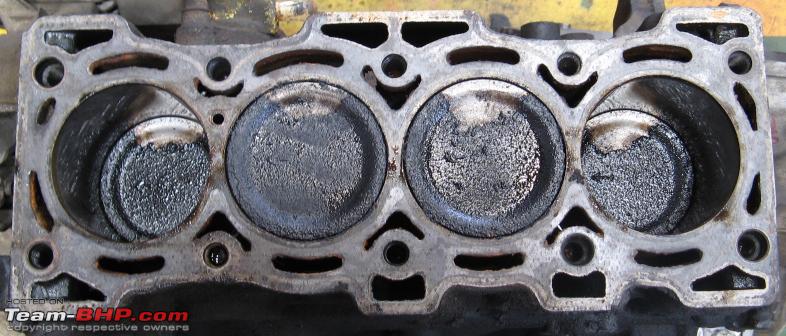
Every internal combustion engine — petrol or diesel — burns fuel to generate power. That combustion process is never perfectly clean. A small amount of unburned fuel and oil vapour leaves behind carbon residue that gradually accumulates on engine components: intake valves, piston crowns, combustion chamber walls, fuel injectors, and the EGR (Exhaust Gas Recirculation) valve.
Over thousands of kilometres, this carbon buildup can start to restrict airflow, disrupt the fuel spray pattern from injectors, reduce the compression chamber’s effective volume, and generally make the engine work harder to do the same job. The result is a gradual loss of power, reduced fuel efficiency, rougher idling, and in more severe cases, misfires and increased emissions.
Engine decarbonisation is the process of removing these carbon deposits — either through chemical means, hydrogen-based cleaning, or (in older or more severe cases) mechanical disassembly.
Why Carbon Builds Up Faster in Bangalore Than Most Cities
Before we get into whether decarbonisation is worth it, it’s important to understand why Bangalore cars are actually more prone to carbon buildup than cars in many other Indian cities — and the answer has everything to do with how we drive.
Chronic stop-and-go traffic is the primary villain. When an engine is idling or moving at low speed for extended periods — as happens on Silk Board junction, Marathahalli Bridge, or any stretch of the ORR between 8 and 10 am — combustion temperatures drop below the threshold needed for a complete, clean burn. Fuel doesn’t combust fully. Carbon residue accumulates faster.
Short trips compound this. Many Bangalore residents live 4–8 km from their office or the nearest mall. A car that never fully warms up to operating temperature on any given trip is running in “cold start” mode for most of its life — which is the worst possible condition for carbon accumulation.
Fuel quality inconsistency at local petrol pumps can vary more than most people realise. Fuel with lower detergent additives or slight adulteration leaves more residue behind in the combustion chamber.
Diesel cars and direct-injection petrol cars (turbocharged engines like those in the Hyundai Creta, Kia Seltos, Tata Nexon turbo, and Volkswagen Polo TSI) are especially vulnerable. More on this below.
The Two Types of Engine Decarbonisation
Not all decarbonisation is the same. There are two fundamentally different approaches, and knowing the difference matters when you’re deciding whether to get it done.
Type 1: HHO Hydrogen Carbon Cleaning (Most Common Today)
This is the modern, non-invasive approach — and the one we use at Tyre Torque.
A machine electrolyses water to produce HHO gas (a mixture of hydrogen and oxygen). This gas is introduced into the engine’s air intake while the engine runs at idle. The HHO mixes with the fuel-air mixture inside the combustion chamber, and when ignited, it burns at a higher temperature than petrol or diesel alone. This elevated burn temperature softens and oxidises carbon deposits on the piston crowns, intake valves, combustion chamber walls, and injector tips. The dissolved carbon exits through the exhaust as CO₂ and water vapour.
The entire process takes 30–60 minutes. No engine disassembly required. No harsh chemicals. No downtime.
Best for: Cars with moderate carbon buildup from urban stop-and-go driving. Petrol and diesel engines between 30,000–80,000 km. Pre-emptive maintenance before the vehicle starts showing symptoms.
Type 2: Mechanical Decarbonisation (Manual / Physical Cleaning)
In this older, more involved approach, a mechanic physically removes the cylinder head and scrapes off carbon deposits by hand. It’s more thorough for severe cases but involves significant labour, longer downtime, and higher cost. It carries a small but real risk of disturbing the engine’s seals and gaskets if not done by an experienced mechanic.
Best for: Older high-mileage engines (typically diesel, 1,50,000+ km) with severe, hardened carbon deposits that chemical or HHO methods can’t adequately address.
What About Chemical Fuel Additives?
There are also liquid decarbonising additives you pour into the fuel tank or air intake. These work to some extent for mild, early-stage buildup — particularly for injector cleaning. However, they’re far less effective than HHO cleaning for intake valve deposits, especially in direct-injection engines where fuel doesn’t even touch the intake valves during normal operation. We’ll explain why in the next section.
The Dirty Secret About Modern Direct-Injection Engines
Here’s something most service advisors won’t explain to you — and it’s critically important for owners of modern turbo-petrol or diesel cars.
In older port fuel injection (MPFI) engines — like those in the classic Maruti 800, old Santro, or early Swift petrol — fuel was injected into the intake port, upstream of the intake valve. As fuel flowed past the valve on its way into the combustion chamber, it naturally washed away any carbon deposits forming on the valve’s back face. The valve essentially cleaned itself on every injection cycle.
Modern direct injection (GDI/DI) engines — which include virtually every turbocharged petrol car sold in India today, from the Hyundai Creta 1.0T to the Tata Nexon Turbo to the Volkswagen and Skoda TSI range — inject fuel directly into the combustion chamber, completely bypassing the intake valve. The intake valve now only sees air — and the oil mist from the PCV (positive crankcase ventilation) system.
That oil mist bakes onto the back of the intake valve over thousands of kilometres, creating hard, layered carbon deposits that restrict airflow into the cylinder. Since no fuel ever touches the valve, there’s no self-cleaning effect. The deposits accumulate steadily, and no fuel additive can reach them — because fuel never goes near the intake valve.
This is why owners of modern turbo-petrol cars in Bangalore (where constant city driving makes it worse) often notice a gradual but real decline in throttle response, idle quality, and fuel efficiency after 40,000–60,000 km — and why a properly performed HHO decarbonisation can make a genuine, noticeable difference for these engines.
For older MPFI petrol engines (most Maruti, pre-2018 Hyundai, etc.), the buildup is less severe and the self-cleaning effect more active, meaning decarbonisation is less critical — and some experts argue it’s unnecessary for these engines if regular oil changes are maintained.
7 Signs Your Car in Bangalore May Actually Need Decarbonisation
Don’t book a decarbonisation based on a service advisor’s calendar. Book it when your car shows you these signs:
1. Noticeably reduced fuel efficiency — If your Creta used to give 13 kmpl in city traffic and is now consistently giving 10–11 kmpl with no change in driving pattern, carbon buildup on injectors or intake valves is a plausible cause (though not the only one — a wheel alignment issue or under-inflated tyres can also rob fuel efficiency).
2. Rough idle or engine shudder — The engine feels unstable at low RPM — at traffic lights or in slow-moving traffic on Hosur Road. You may feel a slight vibration through the steering wheel or seat.
3. Sluggish throttle response — The car hesitates before picking up speed. The “lag” feels more pronounced than when the car was new, even on a clear stretch of road.
4. Black or excessive smoke from the exhaust — Particularly at startup, or under hard acceleration. This is unburned carbon being expelled, indicating combustion is not complete.
5. Hard cold starts — The engine cranks longer than it used to before firing in the morning, especially on cooler Bangalore nights (October–February).
6. Check engine light — Carbon buildup on injectors can trigger misfires (OBD codes P0300–P0304), which will illuminate the CEL. This is more common in high-mileage DI turbo engines.
7. High mileage with no prior cleaning — If your car has crossed 50,000 km and has spent most of its life in Bangalore city traffic with no decarbonisation, it’s a reasonable candidate for an inspection.
Important caveat: These symptoms can also be caused by other issues — a dirty air filter, a failing oxygen sensor, spark plug wear, poor-quality fuel, or tyre-related rolling resistance. Before booking a decarbonisation, have a proper diagnostic done. At Tyre Torque, we check your car’s condition before recommending any service — we won’t advise decarbonisation if something else is causing the problem.
Is Engine Decarbonisation Really Worth It? The Honest Answer
Let’s cut through the marketing claims and give you a straight assessment.
When it IS worth it:
Turbocharged direct-injection petrol engines (GDI/TGDI) between 40,000–80,000 km with symptoms of rough idle, sluggish throttle, or reduced mileage. These engines genuinely accumulate intake valve carbon that HHO cleaning can address effectively. Owners of the Hyundai Creta 1.0T, Kia Seltos 1.0T, Tata Nexon Turbo, Volkswagen Polo/Vento 1.0 TSI, Skoda Kushaq, and similar cars in this category.
Diesel engines in cars used primarily for city driving in Bangalore — including the Maruti Vitara Brezza diesel (discontinued but still widely in use), Hyundai Creta diesel, Mahindra XUV300 diesel, and similar. Diesel engines accumulate carbon faster, particularly around the EGR valve, DPF (in BS6 vehicles), and injector tips. Properly done HHO cleaning can restore throttle response and reduce emissions measurably.
High-mileage cars (80,000+ km) that have been doing predominantly city driving with no prior decarbonisation and are showing clear symptoms.
Cars with elevated emission test readings — If your car is failing or barely passing Pollution Under Control (PUC) tests, a decarbonisation can bring emissions back within norms.
When it is NOT worth it:
Brand new or low-mileage cars (under 20,000 km). Carbon deposits simply haven’t accumulated enough to make any meaningful difference. Anyone selling you decarbonisation at the 5,000 km or 10,000 km service is selling you something you don’t need.
Older MPFI petrol engines in good mechanical health with regular oil changes. The self-cleaning nature of port injection means carbon buildup is far less severe in these engines.
Cars with active mechanical problems — a misfiring engine may need new spark plugs, not decarbonisation. A rough idle could be a faulty MAF sensor or a vacuum leak. Carbon cleaning on a mechanically sick car treats the symptom, not the disease. Always diagnose first.
Very high mileage engines (1,50,000+ km) with no prior decarbonisation — on these engines, there’s a real risk that removing substantial carbon deposits that have built up over the years could reveal underlying compression issues or seal wear that the carbon was inadvertently masking. HHO cleaning at this stage needs to be carefully evaluated, case by case.
What Results Can You Realistically Expect?
Let’s be honest here — and manage expectations properly.
You will likely notice:
- Smoother idle — within the first 10–15 km after the service
- Better throttle response — the car feels more “eager” on acceleration
- Modest mileage improvement — typically 1–2 kmpl in city driving conditions for affected engines; some owners report up to 15% improvement, but this depends heavily on the severity of prior buildup
- Reduced exhaust smoke — measurable drop in emissions
- Quieter engine note — less combustion knock or rough running
You will not notice:
- A dramatic power surge as if a new engine was installed
- Mileage jumping back to showroom-day figures if other factors (worn spark plugs, dirty air filter, tyre wear) are also contributing
- Permanent results — carbon will begin accumulating again, especially in city-driven cars
Think of engine decarbonisation like a dental cleaning. It removes what has built up, restores proper function, and buys you time — but you’ll need it again, and daily habits (oil change intervals, fuel quality, driving style) determine how fast the deposits come back.
How Often Should You Get It Done in Bangalore?
Given Bangalore’s driving conditions — chronic city traffic, frequent cold starts from multiple short trips, variable fuel quality — our recommendation at Tyre Torque is:
| Engine Type | First Decarbonisation | Repeat Interval |
|---|---|---|
| Turbo petrol GDI (Creta 1.0T, Nexon Turbo, TSI etc.) | At 40,000–50,000 km | Every 30,000–40,000 km thereafter |
| Diesel engines (city driven) | At 30,000–40,000 km | Every 30,000 km thereafter |
| Older MPFI petrol | At 60,000–80,000 km | Only if symptomatic |
| Highway-driven cars | At 60,000 km | Every 50,000 km |
These are guidelines, not rigid rules. Let symptoms and a proper diagnostic guide the timing.
One important rule: Never get decarbonisation done more frequently than every 20,000–25,000 km minimum. Over-frequent cleaning is not only a waste of money — it can disturb the thin layer of deposits that actually help maintain compression seal in older engines.
How Much Does Engine Decarbonisation Cost in Bangalore? (2026)
Costs vary by service provider and engine size. Here’s a realistic range for Bangalore:
| Vehicle Type | Typical Cost at Tyre Torque |
|---|---|
| Small hatchback (Alto, WagonR, Punch petrol) | ₹1,800 – ₹2,500 |
| Mid-size sedan/hatchback (Swift, Dzire, Baleno) | ₹2,000 – ₹3,000 |
| Compact SUV petrol (Nexon, Venue, Brezza) | ₹2,500 – ₹3,500 |
| Compact SUV turbo petrol (Creta 1.0T, Seltos) | ₹3,000 – ₹4,500 |
| Full-size SUV diesel (XUV700, Creta diesel, Hector) | ₹4,000 – ₹6,000 |
| Luxury or imported vehicles | ₹6,000 – ₹10,000+ |
Call +91-72041-01993 for an exact quote for your specific vehicle.
Be cautious of extremely cheap services (under ₹1,000) — these typically use low-grade equipment with insufficient HHO output that barely touches deep deposits. The equipment and process quality matters significantly for results.
How to Prevent Carbon Buildup — The Smarter Long-Term Approach
Decarbonisation is maintenance, not a cure. Here’s how to slow carbon accumulation between services:
1. Don’t skip or delay oil changes. Engine oil breaks down over time and loses its detergent capacity. Old, degraded oil produces more blow-by vapour that contributes directly to intake valve carbon buildup in direct-injection engines. In Bangalore city driving, change every 5,000 km — not 10,000.
2. Use quality synthetic engine oil. Synthetic oils with lower NOACK volatility (a measure of oil evaporation) produce less oil vapour in the PCV system, which directly reduces the carbon that settles on intake valves.
3. Fuel up at reputable, high-volume petrol pumps. Premium-grade fuel from reputed pumps contains higher detergent additives that slow injector deposits. For diesel cars, this matters even more.
4. Take your car on the highway occasionally. The “Italian tune-up” — a sustained run at higher engine speeds on Bangalore-Mysore Expressway or NH44 — raises combustion temperatures and burns off light carbon deposits more effectively than any city driving cycle can.
5. Don’t idle unnecessarily. If you’re waiting more than 2 minutes — at a train crossing, in a parking lot — turn off the engine. Idling is the worst operating condition for carbon accumulation.
6. Replace spark plugs on schedule. Worn spark plugs produce weaker ignition, leading to more incomplete combustion and faster carbon buildup.
The Tyre Torque Approach to Engine Decarbonisation
At our Kasturi Nagar Main Road shop, we take a diagnostic-first approach to every decarbonisation inquiry. Before we recommend the service, our team:
- Reviews your vehicle’s current mileage and service history
- Checks your car’s idle quality and throttle response
- Visually inspects exhaust smoke and emissions behaviour
- Assesses whether other issues (spark plugs, air filter, fuel injectors) might better explain your symptoms
Only after this assessment do we recommend whether decarbonisation is the right service for your car — and at what priority level. If your car doesn’t need it, we’ll tell you so.
Our HHO decarbonisation service uses professional-grade equipment calibrated for the engine sizes common in Indian vehicles, covers petrol and diesel engines across all brands, and is completed within 45–60 minutes.
5 Myths About Engine Decarbonisation — Cleared Up
Myth 1: “Every car needs decarbonisation at 20,000 km.”
False. Most modern cars — especially BS6-compliant engines designed for more complete combustion — can go significantly longer before decarbonisation becomes necessary, if at all. It should be driven by symptoms and engine type, not an arbitrary mileage number.
Myth 2: “Decarbonisation will dramatically boost my mileage.”
Possibly, but modestly. If carbon buildup was genuinely causing incomplete combustion, you might recover 1–2 kmpl. Don’t expect your 10-year-old car to suddenly return to showroom mileage — there are too many other variables.
Myth 3: “Frequent decarbonisation keeps your engine healthier.”
Over-cleaning is counterproductive and potentially harmful on high-mileage engines. Do it when needed, not as a ritual.
Myth 4: “Fuel additives from a petrol pump are the same as decarbonisation.”
Not even close. Fuel additives help clean injectors and combustion chamber deposits, but they cannot reach intake valve carbon in direct-injection engines — which is often the most problematic buildup. Professional HHO cleaning works through the air intake, where additives never reach.
Myth 5: “Brand new BS6 cars don’t get carbon deposits.”
BS6 engines are cleaner than older BS4 engines, but they’re not immune to carbon buildup. Turbocharged direct-injection BS6 engines are actually more prone to intake valve carbon than older MPFI engines, precisely because of their injection system design.
Should You Get Engine Decarbonisation at Tyre Torque?
Use this quick decision guide:
✅ Yes — book it now if your car has a turbo-petrol or diesel engine, is between 40,000–80,000 km, has been predominantly driven in Bangalore city traffic, and is showing any of the 7 symptoms listed above (rough idle, reduced mileage, sluggish pickup, excess smoke).
⏳ Worth a diagnostic first if you’re seeing one or two mild symptoms but aren’t sure of the cause. Let us check it before you commit.
❌ Not needed right now if your car has under 25,000 km, is an older MPFI petrol in good health, or was recently serviced with fresh spark plugs, air filter, and oil and is running normally.
Book Your Engine Decarbonisation in Bangalore
If your car is telling you something is off — trust it. A properly performed decarbonisation on the right car at the right mileage is one of the better value-for-money maintenance services available, particularly for Bangalore’s stop-and-go driven petrol and diesel cars.
Come in to Tyre Torque, Kasturi Nagar Main Road, Near CMR College, Next to Nayara Petrol Station, Bangalore – 560043 for a free pre-service assessment. No obligation to proceed — we’ll tell you honestly whether your car needs it.
📞 Call us: +91-72041-01993
🌐 Book online: www.tyretorque.in
⏰ Service time: 45–60 minutes
We also offer wheel alignment, tyre fitment, wheel balancing, nitrogen refilling, suspension checks, and anti-rust coating — so you can get multiple services done in one visit.
Questions about your specific car? Drop them in the comments or WhatsApp us directly. We’ll give you an honest answer.

One Response