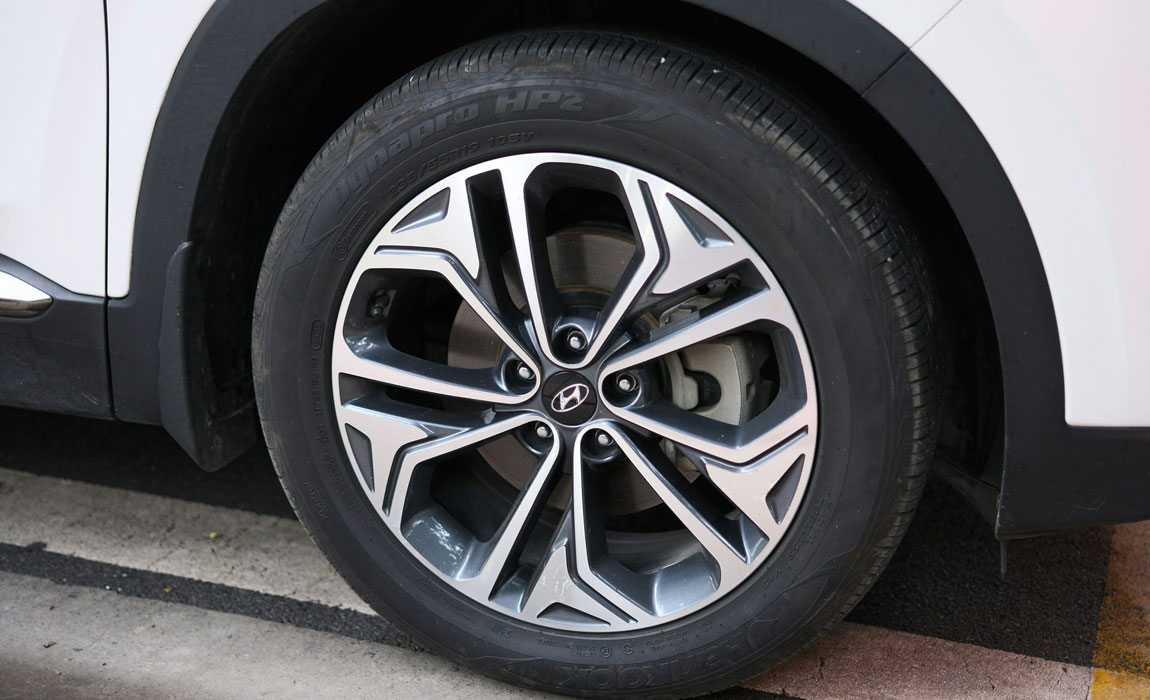
Quick Answer: Shock absorber replacement in Bangalore costs ₹3,500–₹11,000 for hatchbacks, ₹6,000–₹20,000 for compact SUVs, ₹8,000–₹30,000 for mid-to-full-size SUVs, and ₹20,000–₹60,000+ for luxury cars with adaptive or air suspension — for a full set of four, including labour. If your car bounces more than once after a speed breaker, feels vaguely “floaty” on the highway, or your tyres are wearing in scalloped patches despite a recent alignment, this guide tells you what’s actually wrong, what a fair price looks like, and what to check before you pay for anything.
What Your Suspension Actually Does (And Why It Fails Faster in Bangalore)
Your car’s suspension has one job that sounds simple and isn’t: keep all four tyres in constant, controlled contact with the road while absorbing every bump, pothole, and speed breaker along the way.
The shock absorber (or strut, in many modern cars — more on that distinction below) is the component that does the actual absorbing. Without it, the spring under your car would keep bouncing indefinitely every time it compresses — the shock absorber’s job is to dampen that bounce, converting the spring’s kinetic energy into heat through hydraulic fluid being forced through small internal valves.
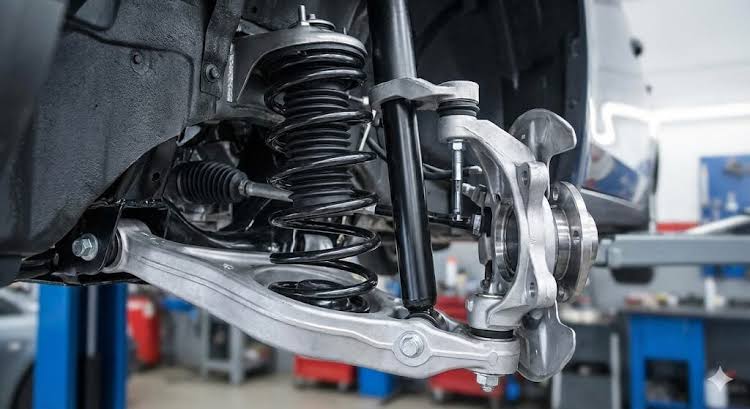
When a shock absorber wears out, it doesn’t fail all at once. It degrades gradually — the hydraulic seals wear, fluid leaks internally, and the damping force weakens. The spring keeps doing its job. The shock absorber slowly stops doing its job. You feel the difference as extra bounce, before you ever see a warning light, because there isn’t one.
Why Bangalore Destroys Suspension Faster Than Most Cities
Pothole density is the primary driver. Every hard pothole impact — the kind that makes a loud thud on ORR near Marathahalli, or catches you off guard on the service road along Sarjapur Road — sends a shock load through the strut mount, the shock absorber piston, and the bushings simultaneously. A car doing normal Bangalore city driving absorbs dramatically more of these hard impacts per kilometre than the same car would on a well-maintained highway city.
Speed breakers, everywhere, often unmarked. Bangalore’s residential roads are dense with speed breakers of wildly inconsistent height, frequently unpainted and unlit at night. Each one is a smaller version of a pothole impact — individually minor, but multiplied by dozens per day, every day, for years.
Standing water hides the damage trigger. During monsoon months, waterlogged stretches near Hebbal, KR Puram, and low-lying underpasses hide potholes until the wheel is already in them — removing the driver’s ability to slow down or steer around the impact, which means the suspension takes the hit at full speed instead of a reduced one.
Stop-and-go traffic adds heat cycling. Shock absorbers work hydraulically, and hydraulic fluid performance is heat-sensitive. Bangalore’s traffic means constant micro-movements of the suspension at low speed, followed by sudden loading during braking — a cycle that accelerates seal wear over time, distinct from the pure impact damage above.
Shock Absorbers vs Struts — Which Does Your Car Have?
This matters because it changes both diagnosis and cost.
Shock absorbers are a standalone damping component, separate from the spring. Common on the rear axle of many hatchbacks and sedans, and on some SUVs’ rear suspension.
Struts (MacPherson struts) combine the shock absorber and a structural mounting point into one integrated unit that the spring sits around. Struts are also part of the steering geometry on the front axle of nearly every modern car — which is why a worn front strut often affects alignment and handling more noticeably than a worn rear shock absorber.
Most Bangalore-driven hatchbacks, sedans, and compact SUVs (Swift, Baleno, Nexon, Creta, Seltos) use struts at the front and either struts or simple shock absorbers at the rear, depending on the model. If you’re not sure which your car has, mention the model to us when you call — it changes the price, not just the terminology.
7 Signs Your Suspension or Shock Absorbers Need Attention
Don’t wait for a mechanic to point it out on an unrelated visit — these are the signs to actually watch for.
1. Excessive bouncing after a bump. Hit a pothole or speed breaker and your car bounces more than once or twice before settling — that’s the clearest sign of worn damping. A healthy shock absorber controls the bounce within one or two cycles.
2. Nose-dives under braking, or the rear squats under acceleration. If braking hard makes the front of the car dip noticeably more than it used to, or accelerating from a signal makes the rear visibly sink, the shocks or struts have lost their ability to control weight transfer.
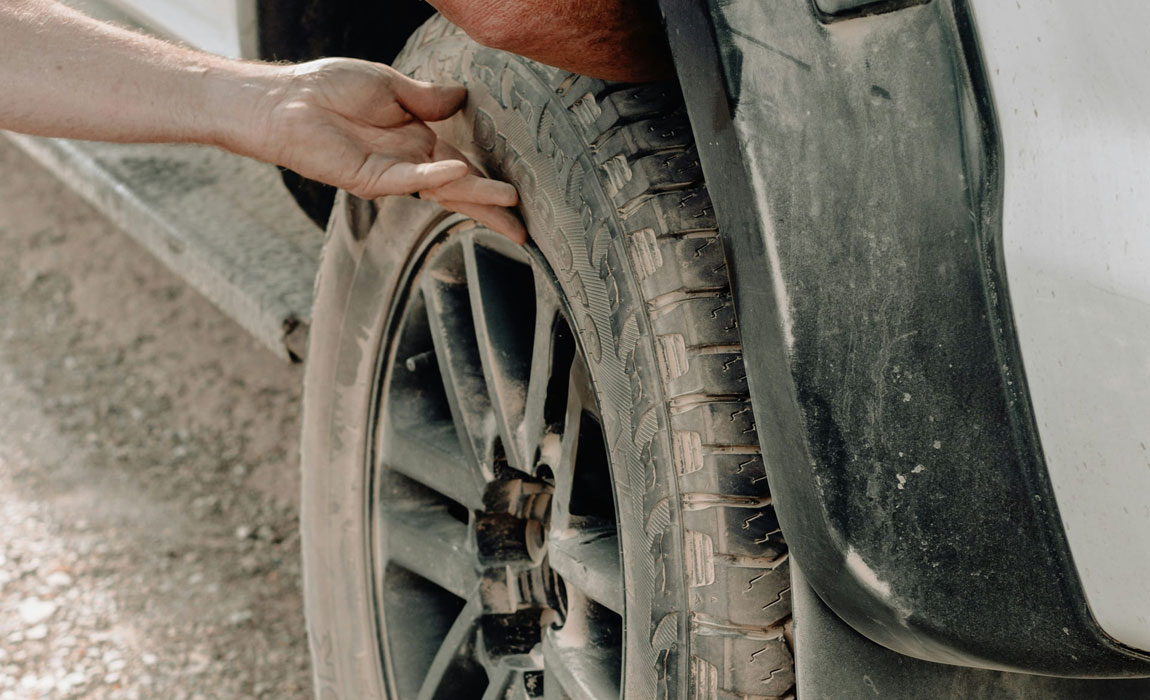
3. Cupped or scalloped tyre wear. This is one of the most reliable diagnostic signs, and it’s one we’ve covered in detail in our guide on when to replace your tyres in Bangalore — a patchy, wave-like wear pattern across the tread, rather than smooth even wear, points directly at worn shock absorbers letting the tyre bounce and skip against the road instead of rolling smoothly. New tyres fitted on worn shocks will develop the same pattern within 10,000–15,000 km, so fixing the suspension before replacing tyres matters.
4. Vibration or a “floaty,” disconnected feeling at highway speed. If your car feels vague or wallowy on the NICE Road or the Bangalore–Mysore stretch — not the sharp, specific vibration of an unbalanced wheel, but a general looseness in how the car settles — worn dampers are a common cause. If you’re troubleshooting a specific vibration, our guides on car vibration at 60–80 km/h and vibration at high speed walk through how to tell suspension issues apart from balancing or alignment problems.
5. Clunking or knocking noises over bumps. A distinct clunk — not a rattle — when going over a pothole or speed breaker usually points to worn bushings, a failing strut mount, or a loose link rather than the shock absorber fluid itself. Still a suspension issue, still needs inspection.
6. Uneven tyre wear that returns after a fresh alignment. If you’ve had a proper 4-wheel alignment done and the same wear pattern starts reappearing within a few thousand kilometres, the alignment isn’t the root cause — the suspension geometry is shifting under load because a component is worn. Our wheel alignment near me guide covers how to tell a genuine alignment job from a rushed one, but if the symptoms keep returning, suspension is the next place to look.
7. Visible fluid leakage or physical damage on the shock body. Park on flat ground and look at each strut/shock — a wet, oily film running down the outside of the shock body means the internal seal has failed and it’s actively leaking hydraulic fluid. This one doesn’t need a test drive to diagnose; if you see it, the part needs replacement.
Shock Absorber & Suspension Repair Cost in Bangalore — 2026 Price Guide
Pricing depends on vehicle type, whether you’re replacing shocks or full strut assemblies, and whether you go OEM or a quality aftermarket brand.
| Vehicle Type | Cost (Pair — Front or Rear) | Cost (All Four, Full Set) |
|---|---|---|
| Small hatchback (Alto, WagonR, Celerio) | ₹3,500 – ₹6,000 | ₹7,000 – ₹11,000 |
| Mid-size hatchback/sedan (Swift, Dzire, Baleno, Honda City) | ₹4,500 – ₹8,000 | ₹9,000 – ₹15,000 |
| Compact SUV (Nexon, Venue, Brezza, Punch) | ₹6,000 – ₹10,000 | ₹12,000 – ₹20,000 |
| Mid-to-full SUV (Creta, Seltos, XUV700, Scorpio, Harrier) | ₹8,000 – ₹15,000 | ₹16,000 – ₹30,000 |
| Luxury cars — standard suspension (3 Series, C-Class) | ₹15,000 – ₹30,000 | ₹30,000 – ₹55,000 |
| Luxury cars — adaptive/air suspension | ₹25,000 – ₹60,000+ | ₹50,000 – ₹1,20,000+ |
What drives the cost within each range:
- Struts cost more than plain shock absorbers because they’re a structural, multi-part assembly, not just a damper.
- Front struts typically cost more than rear shocks — tighter engineering, and often bundled with the coil spring and mounting bearing as a single “quick strut” assembly.
- OEM parts run 20–40% higher than quality aftermarket brands like Gabriel, Monroe, or KYB — for most Bangalore daily-driver use, quality aftermarket is a reasonable choice; OEM matters more for cars still under warranty or with adaptive suspension electronics.
- Labour typically adds ₹800–₹2,000 per axle on top of parts cost, depending on how straightforward the mounting is on your specific model.
A word of caution: if a quote for a hatchback comes in dramatically under ₹3,000 for a pair, ask what brand of part is being used — some workshops fit unbranded or reconditioned shocks without disclosing it, and these typically fail again within 15,000–20,000 km.
Do You Need to Replace All Four, or Just the Worn Ones?
Replace in pairs, always — both front or both rear together, never just one side. Mismatched damping side-to-side creates uneven handling, particularly noticeable during hard braking or emergency lane changes, which matters more on Bangalore’s unpredictable roads than on a smooth highway.
Replacing all four at once isn’t always necessary, but it’s worth doing if:
- All four are past 80,000–100,000 km (typical lifespan for Bangalore driving conditions)
- You’re already paying for labour on one axle and the other axle is close behind
- You’ve noticed symptoms affecting both the front and rear of the car
Just the front or just the rear is fine if the other axle is measurably newer, hasn’t shown any of the 7 signs above, and you’re not planning to keep the car more than another year or two.
What to Expect From a Proper Suspension Inspection
A real diagnostic isn’t just “does it bounce” — it should include:
- Visual inspection of each shock/strut for fluid leakage, physical damage, or corrosion
- Bounce test at each corner — press down firmly and release; a healthy suspension settles within one bounce, a worn one keeps bobbing
- Bushing and mount check — worn rubber bushings cause clunking even when the shock itself is fine, and replacing shocks without addressing worn bushings means the noise persists
- Tyre wear pattern review — cross-checked against your alignment history to separate suspension-caused wear from alignment-caused wear
- Test drive over a mix of smooth road and at least one deliberate bump, to feel for bottoming-out, excessive body roll, or delayed rebound
If a shop skips straight to “you need new shocks” without doing at least the bounce test and a visual check, get a second opinion before paying.
Suspension Work and Wheel Alignment — Always Get Both Checked Together
Any suspension component work — struts, shocks, control arms, bushings, ball joints — changes the geometry your wheels sit at. Skipping alignment after suspension repair is one of the most common ways Bangalore drivers end up back at a workshop within weeks, wondering why the new parts didn’t fix the pulling or the uneven wear.
The rule: get a 4-wheel alignment done immediately after any suspension repair, not “whenever it’s convenient.” Our wheel alignment charges guide has current Bangalore pricing if you’re budgeting for both together — and doing them in the same visit typically saves on combined labour versus two separate trips.
It’s also worth a broader maintenance check while you’re in — carbon buildup from Bangalore’s stop-start traffic affects your engine the same way potholes affect your suspension, just less visibly. If your car is also feeling sluggish or drinking more fuel than it used to, our engine decarbonisation guide covers the signs and cost for that separately.
How Long Should Suspension Components Last in Bangalore?
| Component | Typical Highway-City Lifespan | Typical Bangalore Lifespan |
|---|---|---|
| Shock absorbers / struts | 80,000–100,000 km | 60,000–80,000 km |
| Suspension bushings | 60,000–80,000 km | 40,000–60,000 km |
| Strut mounts | 80,000–100,000 km | 60,000–80,000 km |
The gap exists entirely because of pothole density and speed breaker frequency — the same driving pattern that accelerates tyre wear and knocks alignment out of spec repeatedly also fatigues suspension components faster. If your car is a daily Bangalore city commuter rather than mostly highway-driven, budget toward the lower end of these ranges.
Questions to Ask Before You Book Suspension Work
- “Are you replacing shocks only, or the full strut assembly?” — a workshop should be specific, not vague, about what’s actually being fitted.
- “What brand is the replacement part?” — get a real brand name, not “quality part” or “good company.”
- “Will you check the bushings and mounts while it’s apart?” — labour is already committed once the strut is off; catching a worn bushing now saves a second labour charge later.
- “Is wheel alignment included, or is that separate?” — it should always be done after, but confirm whether it’s bundled into the quote or billed separately.
- “What’s the warranty on parts and labour?” — a fair suspension job should carry at minimum a 6–12 month or distance-based warranty on the parts themselves.
Book a Suspension Inspection at Tyre Torque — Two Bangalore Locations
At Tyre Torque, suspension work always starts with an honest inspection — bounce test, visual check, bushing assessment, and a look at your tyre wear pattern — before we recommend anything. If it’s a worn bushing rather than a full shock replacement, we’ll tell you that; it’s a fraction of the cost.
✅ Free suspension inspection with every visit ✅ Quality aftermarket and OEM options, your choice ✅ Wheel alignment done immediately after any suspension work, as standard ✅ Transparent pricing by vehicle type, confirmed before work begins
📍 Kasturi Nagar (North-East Bangalore)
Tyre Torque – NV Tyre Centre Kasturi Nagar Main Road, Near CMR College, Next to Nayara Petrol Station, Chikka Banaswadi, Bangalore – 560043 📞 +91-72041-01993 🕘 Open 7 days | 8:00 AM – 8:00 PM
📍 Kudlu (South-East Bangalore)
Tyre Torque – NV Tyre Centre (Kudlu Branch) No. 3, Sy.No.148/3, Silver County Road Circle, Near TCIS School, Choodasandra, Kudlu, Bengaluru – 560102 📞 +91-76187-91796 🕘 Open 7 days | 9:00 AM – 9:00 PM
Frequently Asked Questions
How do I know if it’s my shocks or my tyres causing the bumpy ride? Check tyre pressure first — under-inflation feels similar to worn shocks. If pressure is correct and the ride is still harsh or bouncy, and you notice cupped/scalloped wear on the tyres themselves, it’s very likely the suspension rather than the tyres. See our tyre replacement warning signs guide for how to tell the wear patterns apart.
Can I drive on worn shock absorbers, or is it urgent? Worn shocks aren’t usually an immediate breakdown risk the way a bald tyre or bad brakes are, but they measurably increase braking distance and reduce control during emergency manoeuvres — both of which matter more on Bangalore’s unpredictable roads. Don’t panic, but don’t put it off indefinitely either.
Does suspension work affect my car’s warranty? If your car is still under manufacturer warranty, using non-OEM parts can affect warranty claims specifically related to the suspension system — check your warranty terms, or come in and we’ll advise based on your car’s age and remaining warranty.
Will new shocks fix my alignment problem? Not on their own — they’re related but separate systems. New shocks restore proper damping; alignment corrects the angles your wheels sit at. If both are off, both need fixing, and alignment should always be checked after suspension work regardless of whether it was off before.
How much does just a bushing replacement cost, versus full shocks? Bushings alone typically run ₹500–₹2,000 per bushing including labour, far less than a full shock or strut replacement — which is exactly why a proper inspection matters before you agree to replace anything.