Last Updated: February 2026 | Reading Time: 11 minutes | Critical Decision Guide
You Just Saw a Nail in Your Tyre—Now What?
It’s 8:30 AM. You’re in the parking lot at Manyata Tech Park. About to drive to an important meeting in Whitefield (12km away). You notice a nail lodged in your front-right tyre tread.
Your mind races with questions:
- Can I drive to the meeting? (30 minutes)
- Should I call for help now? (miss the meeting)
- Will the tyre go flat immediately?
- Can I drive to nearest tyre shop? (3km away)
- What if it bursts on ORR at 100 kmph?
The pressure to decide is immense. Make the wrong choice and you could:
- Destroy a ₹12,000 tyre (repairable puncture becomes irreparable)
- Damage your rim (₹15,000 replacement)
- Cause an accident (putting yourself and others at risk)
- Get stranded in heavy traffic (Silk Board at 9 AM)
But here’s the truth: Whether you can safely drive with a nail in your tyre depends on SEVEN specific factors—not guesswork, not hope, not “I’ll risk it.”
This complete guide gives you the exact decision framework to assess YOUR situation, safe driving distances for different scenarios, and emergency protocols if things go wrong.
The Critical First Assessment (Before You Move the Car)
Step 1: Where is the Nail? (Location = Everything)
SAFE Locations (Can Drive Short Distance with Caution):
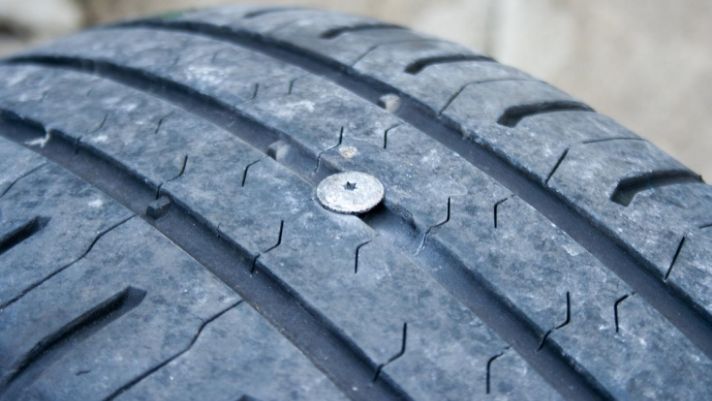
✅ Center tread area (middle 75% of tread width)
- Between the two main grooves
- Not near shoulder/edge
- Not in sidewall
✅ Perpendicular to tread (nail straight in, not angled)
- Indicates recent puncture
- Less likely to have caused extensive damage
UNSAFE Locations (DO NOT DRIVE):
❌ Sidewall (anywhere on the side of the tyre)
- Structural damage guaranteed
- High blowout risk
- Not repairable under any circumstances
- Call for towing/help immediately
❌ Shoulder area (outer 25% of tread, near sidewall)
- Flexes constantly during driving
- Repairs often fail
- High-stress zone
- Avoid driving if possible
❌ Multiple punctures (2+ nails/objects)
- Structural integrity compromised
- Too much damage to risk
- Definitely do not drive
How to Check:
- Walk around and visually inspect all sides of tyre
- Get down low to see sidewall clearly
- Take a photo with flash (helps see better)
Step 2: Is the Tyre Losing Air? (The 5-Minute Test)
Immediate Check:
- Look at tyre visually – does it appear low/flat?
- Press the sidewall with thumb – does it feel soft?
- Compared to other tyres – noticeably different?
Accurate Test:
- Note exact time (e.g., 8:32 AM)
- Check pressure with gauge if available (note exact PSI)
- Wait 5 minutes without moving car
- Check again at 8:37 AM
Results Guide:
No Pressure Loss (Holding Stable):
- Nail might be sealing the hole (temporarily)
- Safe to drive SHORT distance (<5km) to tyre shop
- Must drive IMMEDIATELY (don’t wait)
- Risk increases every minute
Slow Loss (1-2 PSI in 5 minutes):
- Moderate leak
- Can drive 2-3km MAXIMUM to nearest shop
- Must avoid high speeds (stay under 40 kmph)
- Risk of sudden deflation
Fast Loss (3+ PSI in 5 minutes or visibly deflating):
- Severe leak
- DO NOT DRIVE
- Change to spare or call for help
- Driving will destroy tyre + rim
Already Flat:
- NEVER drive on completely flat tyre
- Not even 100 meters
- Will destroy rim instantly
- Cost: ₹15,000+ rim replacement
Step 3: What Type of Nail? (Size Matters)
Small Nail (2-4mm diameter):
- Common roofing nail, small screw
- Often seals partially (nail fills hole)
- Can usually drive 5km carefully if stable
- Repairable with a mushroom plug
Medium Nail/Screw (5-8mm diameter):
- Standard construction nail, wood screw
- Moderate hole size
- Drive only if pressure stable
- Maximum 3km to shop
- Still repairable if you don’t drive far
Large Object (10mm+ diameter):
- Bolt, large nail, metal rod
- Significant damage
- High risk of sudden deflation
- Do not drive if possible
- May not be repairable
Sharp vs Blunt:
- Sharp object (clean hole): Better prognosis
- Blunt/rusty (torn rubber): Worse prognosis
Can I Drive? Distance-Specific Safety Guide
Scenario A: Tyre Shop Within 1-2km
Conditions:
- Nail in center tread (not sidewall/shoulder)
- Tyre holding pressure (no visible loss in 5 min)
- Low-traffic route available
- Tyre shop verified open
SAFE TO DRIVE: YES
Instructions:
- Drive IMMEDIATELY (don’t delay)
- Maximum speed: 40 kmph
- Avoid sudden braking/acceleration
- Turn on hazard lights
- Take most direct route
- Call shop ahead to confirm they can help immediately
Risk Level: LOW (5% chance of issue)
If Pressure Drops En Route:
- Pull over immediately
- Do not continue
- Call for help
Scenario B: Tyre Shop 3-5km Away
Conditions:
- Nail in the center tread
- Tyre holding pressure (verified stable)
- Must cross some busy roads
- No closer alternatives
SAFE TO DRIVE: YES, with Extra Caution
Instructions:
- Re-check pressure before starting
- Maximum speed: 30 kmph
- Avoid ORR/highways (stick to side roads)
- Stop every 1-2km to verify pressure holding
- Plan pull-over spots in advance (safe parking)
- Keep emergency number ready: +91-72041-01993 (TyreTorque)
Risk Level: MODERATE (15% chance of issue)
Warning Signs to Stop:
- Tyre feels “spongy” or different
- Steering pulls to one side
- A thumping sound develops
- Visible deflation
Scenario C: Need to Drive 10-15km (Whitefield to Kasturi Nagar)
Conditions:
- Nail in the center tread
- Tyre MUST be holding pressure perfectly (zero loss)
- The route involves some high-speed roads
- Important reason (emergency, critical meeting)
SAFE TO DRIVE: RISKY
Only Proceed If ALL True: ✓ Verified zero pressure loss over 10 minutes ✓ Small nail (2-4mm, not large object) ✓ Nail appears recent (tread not damaged around it) ✓ You have spare tyre ready ✓ You know how to change tyre if needed ✓ Route has multiple safe pull-over points
Instructions:
- Inflate to 2-3 PSI ABOVE normal (e.g., 35 PSI instead of 32)
- Compensates for expected slow leak
- Don’t over-inflate (check max PSI on sidewall)
- Maximum speed: 50 kmph (even on ORR)
- Stay in left lane
- Stop every 5km to check pressure
- Turn on hazard lights
- Have phone ready with emergency numbers
- Alert someone of route/situation
Risk Level: HIGH (30-40% chance of problem)
Abort If:
- Any pressure loss detected
- Any unusual sounds/vibrations
- The weather turns (rain makes it more dangerous)
- Heavy traffic (increases stop-and-go stress)
Scenario D: Long Distance 20km+ (Bangalore-Whitefield, Kasturi Nagar to Electronic City)
SAFE TO DRIVE: NO
Why Not:
- 20km at Bangalore traffic pace = 45-60 minutes
- Even slow leaks will deflate the tyre in this time
- Crossing ORR/highways significantly increases risk
- Rim damage is almost guaranteed if tyre deflates
- Blowout risk at highway speeds
Correct Action:
- Change to spare tyre (if you have one and know how)
- Call mobile tyre repair service (come to you)
- Call towing (₹1,500-2,500 but saves ₹15,000 rim)
- Uber/Auto to destination (deal with car later)
Exception (Last Resort Only): If it’s a genuine emergency (medical, etc.) AND:
- Tyre absolutely stable (verified 15 min test)
- Have someone to help if problem occurs
- Drive at 3 AM with zero traffic
- Even then: EXTREME RISK
Bangalore-Specific Danger Zones
DO NOT Drive Through These Areas with Nail:
1. Silk Board Junction
- Stop-and-go traffic generates heat
- Pressure builds up
- Higher deflation risk
- Alternative: Outer Ring Road service road
2. ORR High-Speed Sections
- Speed above 60 kmph stresses tyre
- Blowout is extremely dangerous at 100 kmph
- Alternative: Old Madras Road, service roads
3. Marathahalli-Whitefield Peak Hours
- 1-hour journey becomes 2 hours
- Prolonged stress on damaged tyre
- Alternative: Early morning/late evening
4. Elevated Flyovers
- Hebbal, Silk Board flyovers
- No emergency pull-over
- Difficult to get help
- Alternative: Ground-level roads
5. Flooded Roads (Monsoon)
- KR Puram underpass when flooded
- Water hides potholes
- Impact + damaged tyre = disaster
- Alternative: Wait for the water to recede
What Happens If You Drive Too Far
Kilometer-by-Kilometer Damage Progression
0-2km (If Leaking):
- Tyre pressure drops 5-10 PSI
- Sidewalls start flexing more
- Heat builds up
- Still repairable with a mushroom plug (₹350)
3-5km:
- Pressure down 15-20 PSI (dangerously low)
- Sidewalls flexing excessively
- Inner liner starting to separate
- May still be repairable (₹350-500)
6-10km:
- Tyre nearly flat (pressure <10 PSI)
- Sidewalls collapsed
- Riding on rim partially
- Tyre likely destroyed (₹8,000-12,000 replacement)
- Rim might be damaged (₹15,000+ replacement)
10km+:
- Tyre completely flat
- Driving entirely on rim
- Rim 100% damaged
- Possible suspension damage
- Total cost: ₹20,000-30,000
Emergency Driving Protocol (If You Must Drive)
Before You Start:
□ Inflate tyre slightly above normal (2-3 PSI extra) □ Clear route in GPS (note safe pull-over spots) □ Hazard lights ON □ Phone charged and accessible □ Emergency numbers saved:
- TyreTorque: +91-72041-01993
- Towing: Have the number ready □ Tell someone your route (for safety)
While Driving:
Speed Limits:
- City roads: 30-40 kmph maximum
- No ORR or highways (if avoidable)
- Slower = safer
Driving Technique:
- Gentle acceleration (no sudden throttle)
- Gradual braking (plan stops early)
- Smooth steering (avoid jerks)
- Stay in left lane
- Avoid potholes completely (even small ones)
Monitoring:
- Listen for changes in sound
- Feel for vibration changes
- Check handling (pulling to one side?)
- Watch the dashboard for warning lights
If Tyre Deflates While Driving:
Immediate Actions (First 5 Seconds):
- Don’t panic brake (causes loss of control)
- Grip the steering firmly (the car will pull toward the flat)
- Ease off the accelerator
- Turn on hazards
Next 30 Seconds: 5. Gradual deceleration (engine braking) 6. Move toward left (safest shoulder) 7. Avoid sudden steering 8. Look for safe pull-over spot
After Stopping: 9. Turn off engine 10. Exit from left side (away from traffic) 11. Move behind barrier (if available) 12. Call for help 13. DO NOT attempt to drive further
The Math: Is Driving Worth the Risk?
Cost-Benefit Analysis
If You Drive 5km Safely:
- Repair cost: ₹350 (mushroom puncture)
- Time saved: 30-60 minutes
- Risk: 5-10%
If Tyre Deflates Completely:
- Tyre replacement: ₹8,000-12,000
- Possible rim damage: ₹15,000
- Towing anyway: ₹1,500
- Total: ₹24,500
- Risk: Increases with distance
Towing from Start:
- Towing cost: ₹1,500-2,500
- Repair cost: ₹350
- Total: ₹1,850-2,850
- Risk: 0%
The Question: Is saving ₹2,000 and 1 hour worth risking ₹24,500 and a potential accident?
When to Absolutely NOT Drive
DO NOT DRIVE If Any of These:
❌ Nail in sidewall (anywhere, any size) ❌ Tyre already significantly low (below 20 PSI) ❌ Visible bulge near puncture (internal damage) ❌ Multiple punctures (2+ nails/objects) ❌ Tyre age 6+ years (rubber brittle, will fail) ❌ Rainy weather (reduced grip + damaged tyre = dangerous) ❌ Heavy traffic (ORR rush hour, Silk Board) ❌ Long distance (20km+) ❌ High-speed necessary (ORR, highway) ❌ Tyre already had previous repair (weakened structure)
In These Cases:
- Change to spare tyre yourself (if you can)
- Call mobile puncture repair (₹500-800, they come to you)
- Call towing service (₹1,500-2,500)
- Uber/auto to destination, deal with car later
Mobile Puncture Repair vs Driving to the Shop
Mobile Service (They Come to You)
Pros: ✅ Zero driving risk ✅ Done at your location (parking lot, home) ✅ Usually same-day service ✅ Can watch the repair ✅ Often do mushroom repair on-site
Cons: ❌ Costs ₹500-800 (vs ₹350 at shop) ❌ Limited equipment (can’t handle all issues) ❌ Wait time: 30-60 minutes ❌ Not available everywhere
When to Choose Mobile:
- Office/home parking (safe location)
- Nail in awkward location
- Busy schedule (can’t visit shop)
- Don’t want to risk driving
TyreTorque Mobile Service:
- Coverage: 2km radius from Kasturi Nagar shop
- FREE for existing customers
- Call: +91-72041-01993
- Response time: 15-30 minutes
Driving to the Shop
Pros: ✅ Cheaper (₹350 mushroom repair) ✅ Better equipment (3D alignment check, etc.) ✅ Can inspect other tyres ✅ Get professional advice
Cons: ❌ Risk of damage during drive ❌ Risk of deflation en route ❌ Stress of driving carefully ❌ Must find closest shop
When to Choose This:
- Nail in center tread (safe location)
- Tyre holding pressure perfectly
- Shop very close (<3km)
- Low-traffic route available
After Repair: What to Check
Immediate Post-Repair (Before Leaving Shop):
□ Pressure correct (check with your own gauge) □ No visible leak (soapy water test) □ Wheel balanced (if weights were removed) □ Test drive (short drive to verify) □ Get warranty details (mushroom repair should have 6-12 month warranty)
24-Hour Follow-Up:
□ Check pressure next morning (when cold) □ Look for slow leaks (compare to other tyres) □ Listen for hissing (air escaping) □ Feel for vibration (balance issue?)
If Pressure Dropped:
- Return to the shop immediately
- The repair might have failed
- Free re-repair within the warranty period
Long-Term Monitoring:
□ Check this tyre more frequently (weekly vs monthly) □ Note in calendar (when repair was done) □ Watch for bulges (near repair site) □ Consider replacement if:
- Repair fails twice
- Tyre age 5+ years
- Tread depth low (<3mm)
TyreTorque Emergency Puncture Services
Walk-In Immediate Service
Location: Kasturi Nagar Main Road (next to Nayara Petrol Station)
Service: Mushroom Puncture Repair
- Time: 45 minutes
- Cost: ₹350
- Includes: Inner liner inspection, proper mushroom plug, nitrogen fill
- Warranty: 6 months
No Appointment Needed:
- Just drive in (if safe to drive)
- Average wait: 15-20 minutes
- Operating hours: 8 AM – 8 PM daily
Mobile Puncture Service (We Come to You)
Coverage Area: 2km radius from shop
- Kasturi Nagar, Banaswadi, Ramamurthy Nagar coverage
Service:
- On-site mushroom repair (if feasible)
- OR: Safe transport to shop if needed
- Cost: FREE for existing customers, ₹500-800 for others
- Response time: 15-30 minutes
When to Call Mobile:
- Unsafe to drive (sidewall damage, rapid deflation)
- Office/home parking location
- Want a professional assessment before deciding
Emergency Consultation (Free)
Call +91-72041-01993 for:
- Immediate advice on whether to drive
- Assessment based on your description
- Nearest safe pull-over points
- Alternative options (mobile repair, towing)
What to Tell Us:
- Exact location of nail (tread center, sidewall, shoulder?)
- Is tyre losing air? (stable, slow leak, fast leak?)
- Your current location
- Where you need to go
- How far to nearest shop
We’ll Guide You:
- Safe to drive or not
- Maximum safe distance
- Speed limits to follow
- Alternative solutions
Decision Flowchart (Quick Reference)
NAIL IN TYRE
    ↓
Is it in SIDEWALL?
    ↓
YES → DO NOT DRIVE → Call for help
    ↓
NO → Continue
    ↓
Is tyre LOSING AIR rapidly?
    ↓
YES → DO NOT DRIVE → Change spare/call help
    ↓
NO → Continue
    ↓
How far to tyre shop?
    ↓
<2km → Safe to drive (40 kmph max)
3-5km → Risky but possible (30 kmph, stop every 2km)
10km+ → DO NOT DRIVE → Too risky
    ↓
Before driving:
✓ Inflate 2-3 PSI extra
✓ Hazard lights ON
✓ Plan route with pull-over spots
✓ Drive IMMEDIATELY (don't delay)
✓ Call shop ahead
    ↓
Monitor while driving:
- Any pressure loss → STOP
- Any unusual sounds → STOP
- Steering pull → STOP
    ↓
Get to shop safely → Mushroom repair ₹350
The Bottom Line: 3 Simple Rules
Rule #1: Location Determines Everything
- Sidewall nail = Never drive
- Center tread nail = Maybe, if conditions perfect
Rule #2: Distance is Risk
- <2km = Low risk
- 3-5km = Moderate risk
- 10km+ = High risk, usually not worth it
Rule #3: When in Doubt, Don’t
- If you’re questioning whether it’s safe, it probably isn’t
- ₹2,000 towing cost < ₹24,500 rim+tyre replacement
- Your safety > any meeting or errand
Make the Right Decision
You’ve found a nail in your tyre. You now have the information to make a smart decision.
Ask yourself:
- Is the nail in the tread center? (Not sidewall/shoulder)
- Is the tyre holding pressure? (Stable for 5+ minutes)
- Is the tyre shop very close? (<3km)
- Is the route safe? (Low traffic, no ORR)
- Am I willing to accept the risk? (₹24,500 worst case)
If all 5 are YES: Drive carefully to shop If any are NO: Call for help instead
Get Expert Help Now
📍 TyreTorque – Kasturi Nagar: Kasturi Nagar Main Road, Near CMR College
Next to Nayara Petrol Station
Bangalore – 560043
📞 Emergency Consultation (FREE): +91-72041-01993
Services:
- Mushroom puncture repair: ₹350
- Mobile service (2km radius): FREE for customers
- Emergency advice: FREE
- Same-day service: Walk-ins welcome
Don’t risk a ₹24,500 mistake.
Call now. Get expert advice. Drive safe.