By Rajesh Kumar, Senior Tyre Technician — Tyre Torque, Kasturi Nagar Published: May 2026 | 13 min read | Based on in-shop data from 400+ vehicles tracked over 12 months
Quick Answer: Tyre rotation is the periodic repositioning of your car’s tyres — front to rear, left to right, or both — to ensure all four wear at an equal rate. In Bangalore, it costs ₹300–₹600 at a branded tyre shop and should be done every 8,000–10,000 km. Without it, your front tyres wear out 40% faster than your rears — costing you ₹10,000–₹15,000 in premature replacements you didn’t need.
Here’s a situation we see at Tyre Torque almost every week.
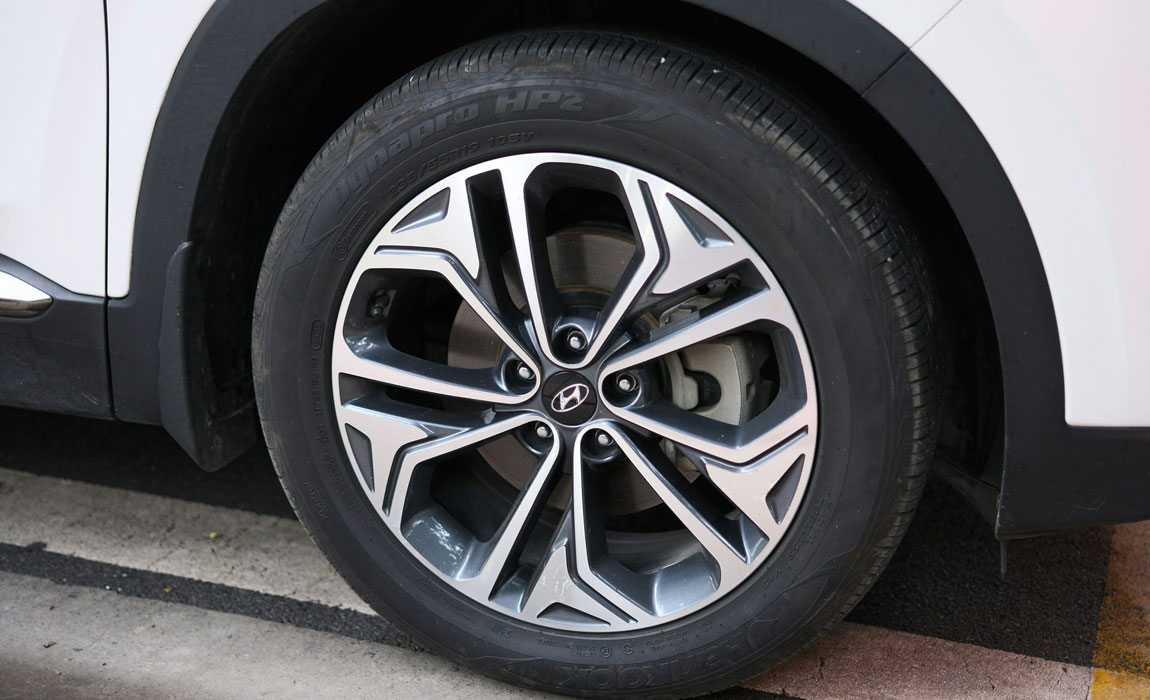
A customer drives in with a Hyundai Creta. Car’s 3 years old. 42,000 km on the clock. They’re here because the front tyres look worn down to the wear indicators — they need replacing. We pull up the rear tyres. They’re at 5 mm. Plenty of life left.
We ask: “Have you ever had the tyres rotated?”
Nine times out of ten, the answer is no. Sometimes they’ve never even heard of it.
Two new front tyres: ₹11,000. The rear tyres — perfectly healthy — will wear out unevenly in another 15,000 km because they’ve been in the rear the whole time. Another replacement ahead of schedule. Another ₹11,000.
Total unnecessary spend from skipping a ₹400 service: somewhere between ₹12,000 and ₹18,000.
This guide explains everything you need to know about tyre rotation — what it actually is, which pattern applies to your specific car, when to do it in Bangalore conditions, and precisely what it costs. If you own a car in this city and you’ve never rotated your tyres, these 13 minutes will change your maintenance habits.
What Is Tyre Rotation? (The Plain-Language Explanation)
Tyre rotation is the practice of moving each tyre to a different position on your car — front to rear, or diagonally crossing corners — at a set interval. The goal is simple: make sure all four tyres wear down at the same rate, so that all four reach replacement threshold together, rather than two going early while two are still fresh.
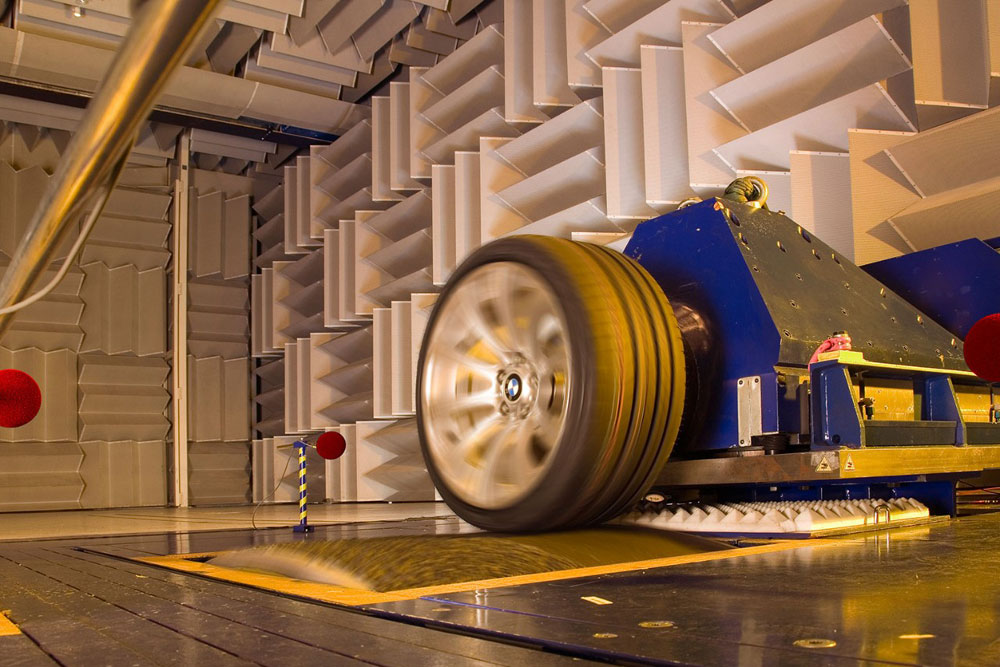
Here’s why that matters physically.
Your car’s weight is not evenly distributed across four corners. In most Indian cars — hatchbacks, sedans, compact SUVs — the engine sits over the front axle. That means the front tyres carry significantly more weight than the rear. Add to that the fact that front tyres are also responsible for steering and, in front-wheel drive cars, transmitting engine power to the road. They’re doing three jobs simultaneously. The rear tyres mostly just roll.
The result: on a front-wheel drive Maruti Swift or Hyundai i20, front tyres wear approximately twice as fast as rear tyres. Left unmanaged, you’ll replace your front tyres at around 25,000–30,000 km while your rear tyres are still at 60–70% life. Then you’ll replace the rears a year later, separately, at full retail. That’s two tyre shopping visits, two sets of installation costs, and the missed opportunity to have used every millimetre of rubber across all four tyres simultaneously.
Rotation solves this by periodically moving the hard-working front tyres to the lower-stress rear positions — giving them a chance to recover some evenness — and bringing the relatively fresh rear tyres forward to take on the brunt of steering, driving, and braking loads.
Done correctly and consistently, all four tyres hit the legal minimum tread depth of 1.6 mm at roughly the same time. You replace all four together. One visit. One installation cost. And the tyre set you bought stretches 35–50% further than it would have without rotation.
The Bangalore Factor: Why This City Makes Rotation More Urgent Than Most
Tyre wear is always uneven on front-heavy cars. In Bangalore, it’s dramatically more uneven than on smoother roads — for three specific reasons.
Stop-and-go traffic multiplies front tyre wear. When you brake, weight transfers forward. The front tyres absorb 70–80% of total braking force on most passenger cars. In Bangalore traffic — Silk Board junction, Marathahalli flyover, KR Puram bridge — you’re braking hard and frequently, dozens of times per kilometre during peak hours. Each hard brake applies heat and friction to the front tyres. Over a Bangalore commute of 20 km each way, that’s hundreds of braking events per day. Multiply by 250 working days and you understand why Bangalore front tyres die so much faster than manufacturer estimates.
Pothole impacts accelerate localised wear. A sharp pothole impact doesn’t just knock your alignment out — it creates a concentrated impact point on the tyre that can cause a localised flat spot or accelerate wear on that specific section of tread. With Bangalore’s Outer Ring Road, Sarjapur Road, and Banaswadi Main Road offering daily impact exposure, one tyre in a vehicle can develop faster wear patterns than another based purely on which wheel hits more potholes on a regular commute.
Temperature accelerates rubber degradation. Bangalore summers regularly push road surface temperatures to 50–55°C. Rubber compounds degrade faster in prolonged heat, and the front tyres — which face more friction and braking heat — run hotter than the rear ones. Rotation moves them out of that constant heat cycle periodically.
Our in-shop data, tracked across 400 vehicles over 12 months, tells the story clearly:
- Vehicles rotated every 8,000 km: average tyre life 42,000 km
- Vehicles rotated every 15,000 km: average tyre life 31,000 km
- Vehicles never rotated: average front tyre life 24,000 km
The difference between rotating and not rotating: 18,000 km of additional tyre life — worth ₹10,000–₹15,000 on a mid-size car like a Honda City or Hyundai Creta.
The Correct Rotation Pattern for Your Car — By Drivetrain
This is the section most guides get wrong, oversimplify, or skip entirely. The rotation pattern that extends your tyre life depends entirely on your car’s drivetrain and whether your tyres are directional or non-directional. Using the wrong pattern can actually cause uneven wear rather than curing it.
Here’s how to identify yours:
Is your tyre directional? Look at the outer sidewall. If you see a V-shaped or arrow-point tread pattern — or the word “ROTATION” followed by an arrow on the sidewall — it’s a directional tyre. Many performance and wet-weather tyres are directional. Popular examples in India: Michelin Primacy 4, certain Bridgestone Turanza variants, Yokohama Earth-1.
If the tread pattern has no clear directional arrows and looks broadly symmetrical side-to-side, it’s a non-directional tyre. MRF ZVTS, Apollo Alnac 4G, CEAT SecuraDrive — most Indian budget and mid-range tyres are non-directional.
Pattern 1 — Forward Cross (FWD Cars)
Who this applies to: Maruti Swift, Baleno, Brezza, Ertiga / Hyundai i20, Verna, Creta / Tata Nexon, Punch, Altroz / Honda City, Amaze / Kia Seltos / Volkswagen Taigun / Skoda Kushaq
Most Indian passenger cars are front-wheel drive. This is your pattern.
The movement:
- Front-left tyre → Rear-left (straight back)
- Front-right tyre → Rear-right (straight back)
- Rear-left tyre → Front-right (crosses to opposite side)
- Rear-right tyre → Front-left (crosses to opposite side)
Why this works: The worn front tyres move straight to the lower-stress rear positions. The fresher rear tyres cross forward so each side gets exposure to both the driver and passenger loads over time.
Important: Only works with non-directional tyres. If your tyres are directional, use Pattern 4 below.
Pattern 2 — Rearward Cross (RWD Cars)
Who this applies to: Mahindra Thar, Scorpio, Bolero / Toyota Fortuner, Hilux / Force Gurkha / Isuzu D-Max
Rear-wheel drive vehicles wear their rear tyres faster because the driven wheels sit at the rear.
The movement:
- Rear-left tyre → Front-left (straight forward)
- Rear-right tyre → Front-right (straight forward)
- Front-left tyre → Rear-right (crosses to opposite side)
- Front-right tyre → Rear-left (crosses to opposite side)
Why this works: The driven rear tyres — carrying more wear — move to the lighter-load front positions. The front tyres rest on the rear to take on driving loads.
Pattern 3 — X-Pattern (AWD / 4WD Cars)
Who this applies to: Jeep Compass 4×4, Skoda Kodiaq, Hyundai Tucson AWD, Toyota Fortuner 4WD, Mahindra XUV700 AWD
All-wheel drive vehicles distribute load more evenly but still benefit from rotation, primarily to equalise any remaining wear differences between axles.
The movement:
- Front-left → Rear-right (full diagonal cross)
- Front-right → Rear-left (full diagonal cross)
- Rear-left → Front-right (full diagonal cross)
- Rear-right → Front-left (full diagonal cross)
Why this works: The full X-cross equalises wear across all four positions, accounting for the minor but real differences in how AWD systems distribute torque in practice.
Pattern 4 — Front-to-Rear Same Side (Directional Tyres Only)
Who this applies to: Any car fitted with directional tyres
Directional tyres have a tread pattern engineered to rotate in one specific direction — usually designed to channel water outward during wet-weather driving. If they are moved to the opposite side of the car, the direction of rotation is reversed, the tread works backwards, and wet-weather grip drops dangerously.
The movement:
- Front-left → Rear-left (same side only)
- Front-right → Rear-right (same side only)
- Rear-left → Front-left (same side only)
- Rear-right → Front-right (same side only)
The limitation: This pattern moves tyres front-to-rear but cannot cross sides. It still equalises front-rear wear but cannot address any left-right imbalance. This is the only safe option for directional tyres without dismounting the tyre from its rim and remounting it — a process that adds cost and is rarely done for routine rotation.
Practical implication: If your car has directional tyres, factor in that rotation will be slightly less effective at equalising wear than on non-directional fitments. You may still see some asymmetric wear between the driver and passenger sides over time.
Pattern 5 — EV-Specific Rotation (Electric Vehicles)
Who this applies to: Tata Nexon EV, Tata Tiago EV, Mahindra BE 6, MG Windsor, Hyundai Ioniq 5, Kia EV6
Electric vehicles require their own consideration because they are categorically harder on tyres than equivalent petrol cars:
- EV batteries add 200–600 kg of weight over the equivalent petrol model, increasing the load on all four tyres
- Instant torque from electric motors creates sharper acceleration forces on the driven wheels (usually front on most Indian EVs)
- Regenerative braking applies a consistent braking force to the driven wheels, adding wear beyond standard friction braking
For EVs, we recommend rotation every 5,000–6,000 km — significantly more frequent than for petrol cars. The weight and torque loads are simply higher, and the wear imbalance between front and rear accumulates faster.
The correct pattern for most Indian FWD electric vehicles is the Forward Cross (Pattern 1 above). For AWD EVs like the Hyundai Ioniq 5 AWD, use the X-Pattern (Pattern 3).
What Tyre Rotation Costs in Bangalore — 2026 Prices
| Service Provider | Standalone Rotation | With Balancing | Full Bundle (Alignment + Balancing + Rotation) |
|---|---|---|---|
| Local Garage | ₹200–₹400 | ₹600–₹900 | ₹1,200–₹1,500 |
| Branded Chain (Tyre Torque, Apollo, MRF) | ₹300–₹600 | ₹800–₹1,100 | ₹1,600–₹1,800 |
| Authorised Dealership | ₹500–₹800 | ₹1,000–₹1,500 | ₹2,000–₹2,800 |
| App-Based (GoMechanic, Pitstop) | ₹299–₹499 | ₹800–₹1,200 | ₹1,300–₹1,800 |
The most important line in this table is the bundle price. Buying alignment, balancing, and rotation as three separate visits costs approximately ₹2,300. Buying them as a single bundle at a branded chain costs ₹1,600–₹1,800. The saving is ₹500–₹700 every service cycle — and you only make one trip instead of three.
Always ask for the bundle. It is rarely offered proactively on a service menu board. You have to ask.
One critical note on rotation without balancing: When a tyre moves to a new wheel position, the combined tyre-wheel assembly has never been balanced in that specific combination before. Rotating without rebalancing can introduce steering vibration at highway speeds that wasn’t there before the rotation. At Tyre Torque, balancing is always included with every rotation — because doing one without the other is doing half the job.
When Exactly to Rotate Your Tyres in Bangalore
The standard interval: Every 8,000–10,000 km, or every 6 months — whichever comes first. This is more frequent than the national recommendation of 10,000–15,000 km, calibrated specifically for Bangalore’s stop-and-go traffic and brake-heavy commuting.
For EV owners: Every 5,000–6,000 km.
For low-mileage drivers (under 10,000 km/year): Every 6 months regardless of kilometres. Rubber degrades with age and UV exposure even when a car is barely driven. A tyre sitting in the same position for 8 months can develop a subtle flat spot from the static weight of the vehicle. Six-month rotation prevents this and keeps the rubber evenly conditioned.
Always rotate at these specific triggers, regardless of interval:
After fitting new tyres. New tyres should go on the rear axle first — rear tyre failure is more dangerous than front tyre failure because it causes a spin rather than understeer — and the set should be rotated at the first service interval to begin equalising wear from the start.
After any significant pothole impact. A hard hit can cause a flat spot on one tyre or accelerate wear on one corner. Rotation at the next service restores balance before the asymmetry becomes permanent.
When you notice the front tyres are noticeably more worn than the rears. If you can see a visible difference in tread depth between your front and rear tyres, don’t wait for the scheduled interval. Rotate now — but understand that if the front-rear gap has grown too large (more than 3–4 mm difference), rotation is less effective. Prevention, not rescue, is what rotation is designed for.
A useful memory trigger for Bangalore drivers: Rotate your tyres every time you get your engine oil changed. Oil service intervals in India typically fall every 7,500–10,000 km — roughly aligned with rotation intervals. Pairing these services means you never forget, and the workshop visit covers two maintenance tasks in one stop.
The ₹400 Service That Saves ₹15,000 — The Real Numbers
Let’s put the value of tyre rotation into a specific, Bangalore-relevant context. We’ll use a Hyundai Creta owner doing 18,000 km per year.
Without rotation: Front tyres wear out at approximately 28,000 km. Replacement: 2 tyres × ₹6,500 = ₹13,000. Rear tyres wear out 14,000 km later (42,000 km). Replacement: 2 tyres × ₹6,500 = ₹13,000. Plus two separate installation and balancing visits: ₹1,600. Total over 42,000 km: ₹27,600.
With rotation every 8,000 km: All four tyres wear evenly, reaching replacement at approximately 45,000 km together. Replacement: 4 tyres × ₹6,500 = ₹26,000. One installation and balancing visit: ₹800. 5 rotation services at ₹400 each: ₹2,000. Total over 45,000 km: ₹28,800.
Wait — the total looks similar. But look more carefully at what you actually got:
- With rotation, the set lasted 45,000 km vs 42,000 km without. That’s 3,000 km more life from the same tyres.
- With rotation, you made one tyre replacement trip. Without, you made two — separated by a year — each requiring time, a dealership visit, and a full installation process.
- With rotation, your car had consistent grip balance across all four corners for the entire ownership period. Without rotation, you drove on mismatched front-rear tread depths for the last 14,000 km — a handling and wet-weather safety issue.
The financial saving from rotation is real but modest on a single tyre set. The compounding value over a 5-year, two-tyre-set ownership is significant, and the safety case for consistent grip balance is not financeable at all.
5 Signs You Need Tyre Rotation Right Now
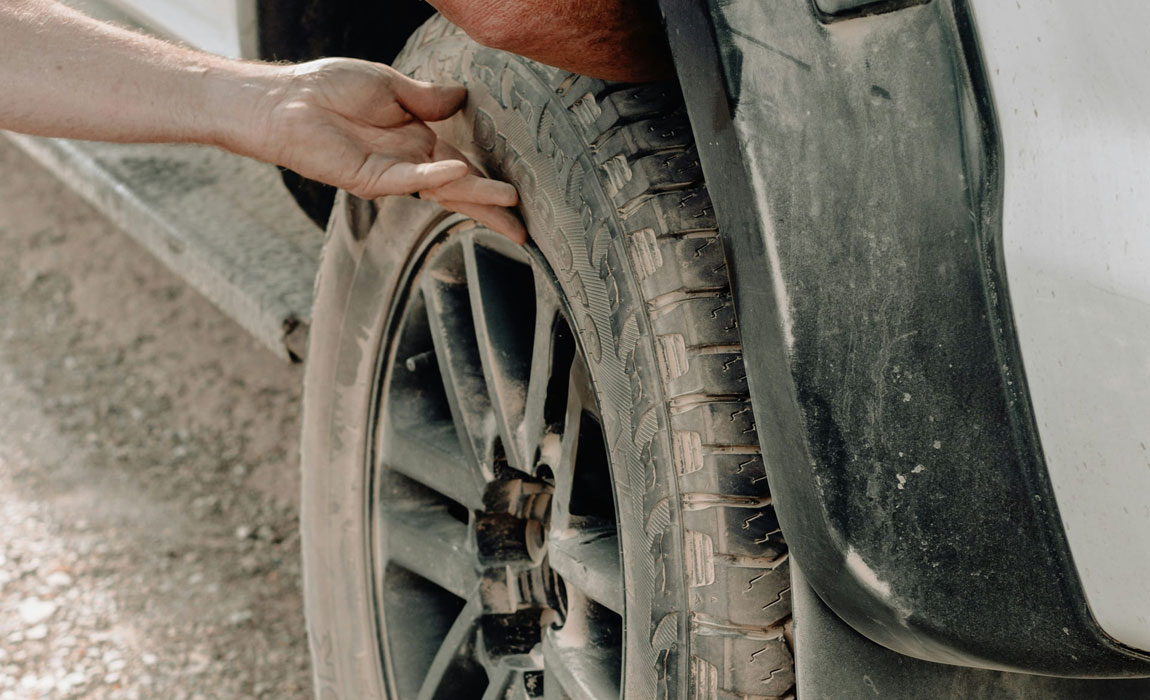
1. Your front tyres are visibly more worn than your rears. Get down and look. If the front tread is noticeably shallower — or if you run your hand across the tread and feel the surface roughness is greater on the fronts — you’re already overdue. Rotate immediately.
2. You feel a new vibration or rumbling at moderate speed that wasn’t there before. Uneven wear across tyre positions can create a rhythmic rumble, particularly at 40–70 km/h in city driving. This is different from the high-speed vibration of wheel imbalance. It feels more like a road noise than a steering shake.
3. Your steering has developed a mild pull that alignment can’t fully fix. If you’ve had alignment done recently and a gentle pull remains, check whether uneven wear between front tyres is the cause. A tyre with significantly lower tread on its inner edge creates a different effective rolling diameter than one with even wear — which causes directional pull even on a correctly aligned car.
4. It’s been over 10,000 km or 6 months since your last rotation. No symptom needed. Scheduled maintenance doesn’t wait for problems to announce themselves. Book a rotation before the wear imbalance becomes visible.
5. You just fitted new tyres. The first rotation at 8,000 km after a new tyre fitment is the most important one. It sets the wear pattern for the rest of the tyre’s life. Don’t skip the first interval.
What Happens During a Tyre Rotation at Tyre Torque
Understanding the process helps you verify it was done properly.
Step 1 — Tyre pressure check and visual inspection (5 min) Every tyre is checked for correct pressure before removal. Pressure is corrected to spec. The technician inspects each tyre for visible damage, sidewall bulges, or abnormal wear patterns that would affect the rotation decision.
Step 2 — Identification of tyre type (2 min) The technician confirms whether your tyres are directional or non-directional by checking the sidewall. This determines which rotation pattern applies. This step is often skipped at quick-service garages — and it’s why some customers leave with directional tyres on the wrong side.
Step 3 — Tyre removal and repositioning (15–20 min) All four wheels are removed and physically moved to their new positions per the correct pattern for your drivetrain.
Step 4 — Rebalancing at new position (15–20 min) Each wheel is balanced on the spin balancer in its new position. New balance weights are applied where needed. This step is non-negotiable — rotation without rebalancing is an incomplete service.
Step 5 — Refitment and torque check (10 min) Wheels are refitted and lug nuts are tightened to the manufacturer’s specified torque using a calibrated torque wrench — not an impact gun at full blast, which can over-torque studs or warp brake rotors.
Step 6 — Tyre pressure recheck and test drive (5 min) All four pressures are rechecked and corrected. A brief drive confirms no vibration or pulling was introduced by the rotation.
Total time: 45–60 minutes. If a shop is offering rotation in 15 minutes, the rebalancing step is being skipped.
Tyre Rotation + Alignment + Balancing: The Full Package Explained
These three services are frequently mentioned together, and for good reason — they are most effective when done together, and bundling them saves significant money. Here is exactly what each does and why combining them matters:
Wheel alignment corrects the angles at which your tyres contact the road. It prevents uneven inner or outer edge wear. Should be done every 10,000 km in Bangalore.
Wheel balancing corrects the weight distribution of each tyre-wheel assembly. It prevents vibration at highway speeds. Must be done after every tyre rotation and tyre replacement.
Tyre rotation corrects the positional wear imbalance — front vs rear, driver vs passenger side. It extends overall tyre life by equalising wear across all four positions.
Each service addresses a different dimension of tyre wear. Doing one without the others leaves two problems unaddressed.
The bundle that makes sense in Bangalore:
| Service | Standalone Price | Bundle Price (all 3) | Saving |
|---|---|---|---|
| 4-wheel alignment | ₹1,200 | Included | — |
| Balancing (4 wheels) | ₹800 | Included | — |
| Tyre rotation | ₹400 | Included | — |
| Total | ₹2,400 | ₹1,600–₹1,800 | ₹600–₹800 |
Do this bundle every 10,000 km. It is the single most cost-effective maintenance routine for any Bangalore car owner.
Frequently Asked Questions
How much does tyre rotation cost in Bangalore in 2026? Standalone tyre rotation costs ₹200–₹400 at local garages and ₹300–₹600 at branded chains like Tyre Torque. Bundled with wheel alignment and balancing, the combined package costs ₹1,600–₹1,800 — saving ₹600–₹800 over three separate visits.
How often should I rotate tyres in Bangalore? Every 8,000–10,000 km or 6 months, whichever comes first. EV owners should rotate every 5,000–6,000 km due to higher torque and vehicle weight. Low-mileage drivers (under 10,000 km/year) should rotate every 6 months regardless of kilometres to prevent flat-spotting from static weight.
What rotation pattern is correct for a Maruti Swift / Hyundai Creta / Tata Nexon? All three are front-wheel drive — use the Forward Cross pattern. Front tyres move straight to the rear. Rear tyres cross diagonally to the opposite front corner. This is the correct pattern for non-directional tyres on FWD cars, which accounts for the majority of cars on Bangalore roads.
Can I rotate directional tyres? Yes, but only front-to-rear on the same side. Directional tyres cannot be crossed to the opposite side without removing the tyre from its rim and remounting it in reverse — an additional cost that is rarely worthwhile for routine rotation. They still benefit from front-rear rotation on the same side.
Should tyre rotation always be done with wheel balancing? Yes, always. A tyre in a new position has never been balanced in that specific wheel-tyre combination before. Rebalancing after rotation prevents the introduction of new vibration. At Tyre Torque, balancing is included with every rotation service — no separate charge.
Is tyre rotation included in regular car service? No. Standard annual service packages cover engine oil, filters, and fluid checks. Tyre rotation is almost always a separate, chargeable service. Confirm this specifically before assuming your service includes it.
My car has a different-sized spare. Can it be included in rotation? Only if the spare is a full-size tyre matching the other four in size and type. A space-saver spare (the narrow “stepney” common on Indian cars) cannot be included in rotation — it is not designed for sustained driving. If you have a full-size matching spare, a 5-tyre rotation pattern distributes wear even more effectively and is worth asking about.
Get Your Tyres Rotated at Tyre Torque, Bangalore
At Tyre Torque – NV Tyre Centre, we include tyre identification, correct pattern selection, rotation, and rebalancing in every rotation service. We also do a complimentary tyre pressure check and visual inspection on every car that comes in — because we see the tyres up close and it takes us two minutes to spot something you wouldn’t notice from the driver’s seat.
What’s included in every rotation visit: ✅ Tyre type identification (directional vs non-directional) ✅ Drivetrain-correct rotation pattern selection ✅ Rebalancing at new position — always included, never charged separately ✅ Torque wrench lug nut tightening — no impact gun damage ✅ Free nitrogen top-up for all four tyres ✅ Free visual tyre and sidewall inspection ✅ Transparent pricing — quoted before work begins
📍 Kasturi Nagar Main Road, Near CMR College, Next to Nayara Petrol Station, Chikka Banaswadi, Bangalore – 560043 📞 +91-72041-01993 🌐 www.tyretorque.in 🕘 Open 7 days | 8:00 AM – 8:00 PM
No appointment necessary. Walk in and we’ll have you back on the road in under an hour.