
Most Bangalore drivers do three things religiously: oil change, AC service, and washing the car before a road trip.
Tyre rotation? Never heard of it. Or heard of it but always postponed it.
Here’s what that costs you: ₹15,000–₹25,000 in premature tyre replacement — every single set. Because front tyres on a typical Bangalore hatchback wear 40% faster than rear tyres. Without rotation, you’re replacing front tyres at 30,000 km when they could have lasted 50,000 km with a simple ₹500 service done every 8,000 km.
This guide covers everything — what tyre rotation actually is, why Bangalore’s roads make it more critical than anywhere else in India, exactly how it’s done, what it costs, and when you should book yours.
Quick Answer: Tyre rotation in Bangalore should be done every 8,000 km (not the standard 10,000–12,000 km recommended for smoother roads). It costs ₹400–₹600 for most cars and takes 30–45 minutes. It extends tyre life by 20–30% — saving ₹8,000–₹15,000 per set over the tyre’s lifetime.
What Is Tyre Rotation? (Simple Explanation)
Tyre rotation means moving each tyre from its current position to a different position on the car — following a specific pattern.
That’s it. No complex machinery. No special equipment beyond a jack and torque wrench. But the impact on tyre life and car safety is significant.
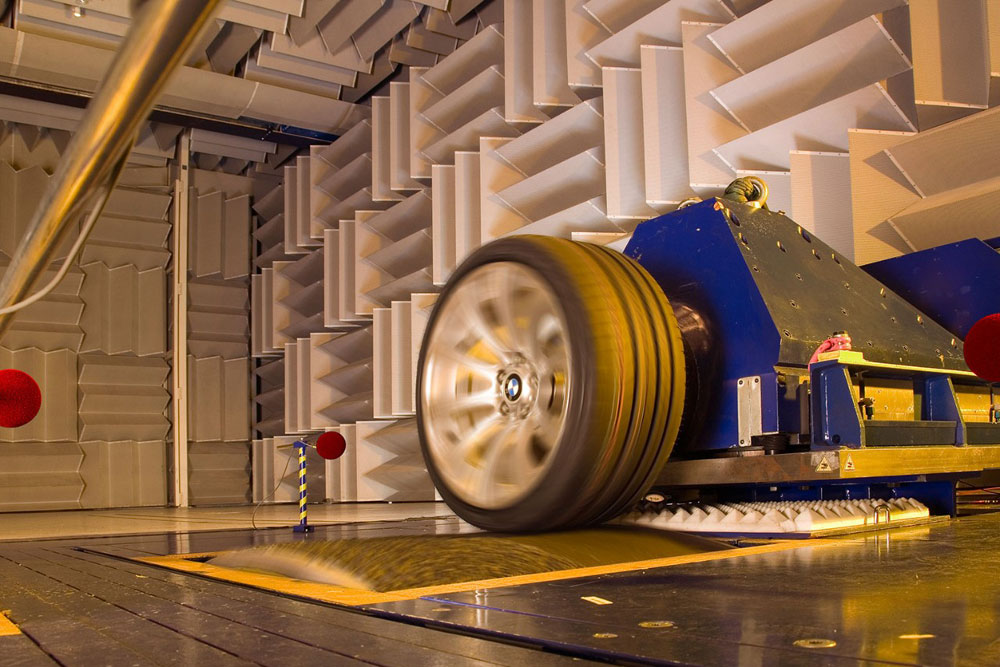
Why does position matter?
Every position on your car creates different wear on the tyre:
Front tyres do the hard work:
- Steering forces (turning left and right)
- Most braking load (60–70% of braking force goes to front)
- Engine weight (on front-wheel drive cars)
Rear tyres have a comparatively easy life:
- Follow where front tyres steer
- Carry less braking load
- No steering stress
The result: Front tyres wear 40–50% faster than rear tyres on most Indian cars.
Without rotation, you end up replacing front tyres at 30,000 km while rears still have 60% life left. By rotating, you equalise this wear — all four tyres wear at a similar rate and last to 45,000–55,000 km together.
Why Every 8,000 km in Bangalore — Not 12,000 km
Standard global recommendation: Rotate every 10,000–12,000 km.
Bangalore recommendation: Every 8,000 km. Here’s why:
Reason 1: Pothole Impacts Create Uneven Wear Spikes
Every pothole impact — Hennur Road, Outer Ring Road near Marathahalli, Silk Board junction — creates a sudden, uneven stress on the tyre at the point of contact. Over hundreds of these impacts, localised wear patches develop.
Rotating more frequently catches these patches before they become permanent flat spots.
Reason 2: Stop-and-Go Traffic Accelerates Front Wear
Average Bangalore commuter stops 35–50 times per 10 km stretch during peak hours. Every stop applies disproportionate braking force to the front tyres.
More stops = faster front tyre wear = more frequent rotation needed.
Reason 3: Monsoon Roads Create Lateral Wear
During monsoon, drivers naturally avoid flooded sections and drive on the edge of usable road — often the same edge, consistently. This creates lateral wear bias that rotation corrects.
Reason 4: Mixed Surface Quality
Flyovers to potholes to speed breakers to smooth stretches — Bangalore’s road quality changes every few hundred meters. This variation creates inconsistent wear patterns that equalise faster with more frequent rotation.
Comparison:
| City | Road Quality | Recommended Rotation |
|---|---|---|
| Bangalore | Poor–Mixed | Every 8,000 km |
| Pune/Hyderabad | Average | Every 10,000 km |
| Delhi (highways) | Good | Every 12,000 km |
| European roads | Excellent | Every 12,000–15,000 km |
The 4 Rotation Patterns: Which One Is Right for Your Car?
Not all cars rotate the same way. The correct pattern depends on your car’s drivetrain and tyre type.
Pattern 1: Forward Cross (Most Common — FWD Cars)
Used for: Front-wheel drive cars (Swift, i20, Baleno, City, Verna, Nexon, most hatchbacks and sedans in India)
BEFORE:              AFTER:

FL    FR            RL    RR
                →
RL    RR            FL    FR

Front Left  → Rear Left  (straight back)
Front Right → Rear Right (straight back)
Rear Left   → Front Right (cross)
Rear Right  → Front Left  (cross)
Logic: Front tyres (which wear fastest) go straight to the rear. Rear tyres cross to front — this cross movement compensates for the steering angle wear they’ll now experience.
Pattern 2: Rearward Cross (RWD and AWD Cars)
Used for: Rear-wheel drive (Fortuner, older Innova, trucks) and AWD vehicles
BEFORE:              AFTER:

FL    FR            RL    RR
                →
RL    RR            FR    FL

Rear Left   → Front Left  (straight forward)
Rear Right  → Front Right (straight forward)
Front Left  → Rear Right  (cross)
Front Right → Rear Left   (cross)
Logic: Rear tyres go straight forward. Front tyres cross to rear. This is because rear tyres wear faster in RWD cars.
Pattern 3: X-Pattern (All Four Cross)
Used for: When all four tyres show uniform wear, or on AWD cars where manufacturer specifies
BEFORE:              AFTER:

FL    FR            RR    RL
                →
RL    RR            FR    FL

Every tyre crosses diagonally to the opposite corner
Used when: Wear is already quite uniform and you want maximum equalisation.
Pattern 4: Front-to-Back Only (Directional Tyres)
Used for: Directional tyres (those with a V-shaped or arrow tread pattern — check for an arrow on the sidewall)
BEFORE:              AFTER:

FL    FR            RL    RR
                →
RL    RR            FL    FR

Front Left  → Rear Left   (same side only)
Front Right → Rear Right  (same side only)
Why only front-to-back: Directional tyres have a tread pattern designed to rotate in one specific direction. Moving them to the other side of the car would reverse their rotation — reducing water evacuation and grip.
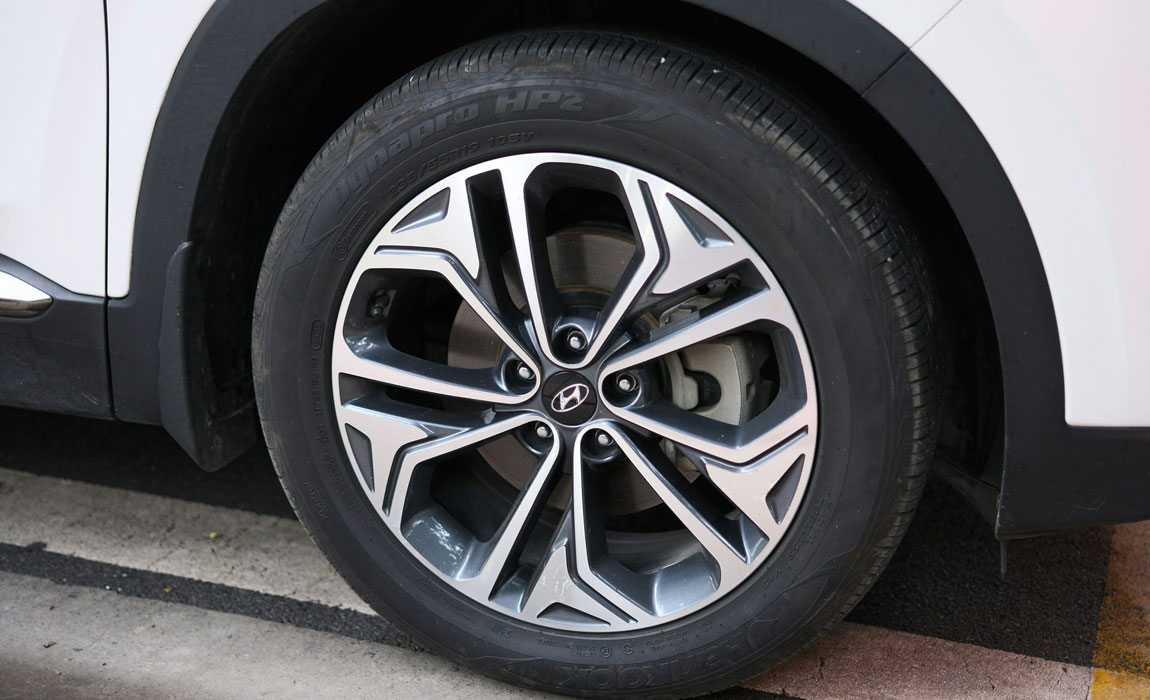
Important: Most budget Indian tyres (CEAT, Apollo Apterra range) are non-directional. Premium tyres (Michelin Primacy, Bridgestone Dueler, Continental CrossContact) may be directional. Check your sidewall for an arrow marking.
What About the Spare Tyre?
Full-size spare (same as other four): Can be included in a 5-tyre rotation — extends each tyre’s life further.
Compact spare (the small emergency tyre): Never include in rotation — wrong size, wrong load rating.
Most modern Bangalore cars (Creta, Seltos, City, i20) come with compact spares. Don’t rotate it.
Tyre Rotation Cost in Bangalore: What’s Fair?
This is what you should actually pay — broken down by shop type.
Standard Pricing (2026)
| Car Type | Budget Shop | Mid-Range (TyreTorque) | Authorized Dealer |
|---|---|---|---|
| Hatchback (Swift, i20, Baleno) | ₹200–300 | ₹400–500 | ₹600–900 |
| Sedan (City, Verna, Ciaz) | ₹250–350 | ₹450–550 | ₹700–1,000 |
| SUV (Creta, Seltos, XUV) | ₹300–400 | ₹500–600 | ₹800–1,200 |
| MUV/Large (Innova, Scorpio) | ₹400–500 | ₹600–700 | ₹900–1,400 |
TyreTorque pricing: ₹400–600 depending on car type. Includes torque wrench re-tightening to manufacturer spec and free tyre pressure adjustment after rotation.
What Should Be Included in Rotation Charge?
✅ Jack up car safely (hydraulic lift or floor jack at correct jack points) ✅ Remove all four wheels ✅ Move to correct position per rotation pattern ✅ Remount and tighten to correct torque (critical — under-tightening causes wheels to wobble) ✅ Tyre pressure check and adjustment on all four ✅ Visual inspection of each tyre while off the car
❌ NOT separately charged: Basic pressure adjustment, visual inspection
When Rotation Is Free
At TyreTorque, rotation is free for the lifetime of the tyres if you purchased your tyres from us. No conditions, no expiry.
This alone saves ₹400–600 every 8,000 km — ₹2,000–3,000 over a set’s lifetime.
The Rotation + Alignment + Balancing Question
Customers often ask: “Do I need alignment and balancing every time I rotate?”
Short answer: Not every time — but together when due.
The Smart Schedule for Bangalore:
| Service | Frequency | Cost |
|---|---|---|
| Tyre Rotation | Every 8,000 km | ₹400–600 |
| Wheel Balancing | Every 16,000 km (or if vibration starts) | ₹400 |
| Wheel Alignment | Every 16,000 km (or after pothole impact) | ₹700 |
Why not alignment every rotation?
Alignment is needed when angles shift — which happens from pothole impacts, not from normal driving. Every 16,000 km is sufficient unless you’ve had a significant impact.
The efficient bundle: Every second rotation, do all three together. At TyreTorque:
- Rotation + Balancing + Alignment (hatchback): ₹1,500
- Rotation alone: ₹400–500
Doing all three every 16,000 km costs ₹1,500. Skipping rotation for 50,000 km and buying two sets of tyres instead of one costs ₹11,200–₹16,800 extra.
The maths is straightforward.
What Happens During Tyre Rotation at TyreTorque
When you bring your car to us for rotation, here’s exactly what happens — no surprises.
Step 1: Pre-Rotation Inspection (10 minutes)
Before moving any tyre, our technician checks:
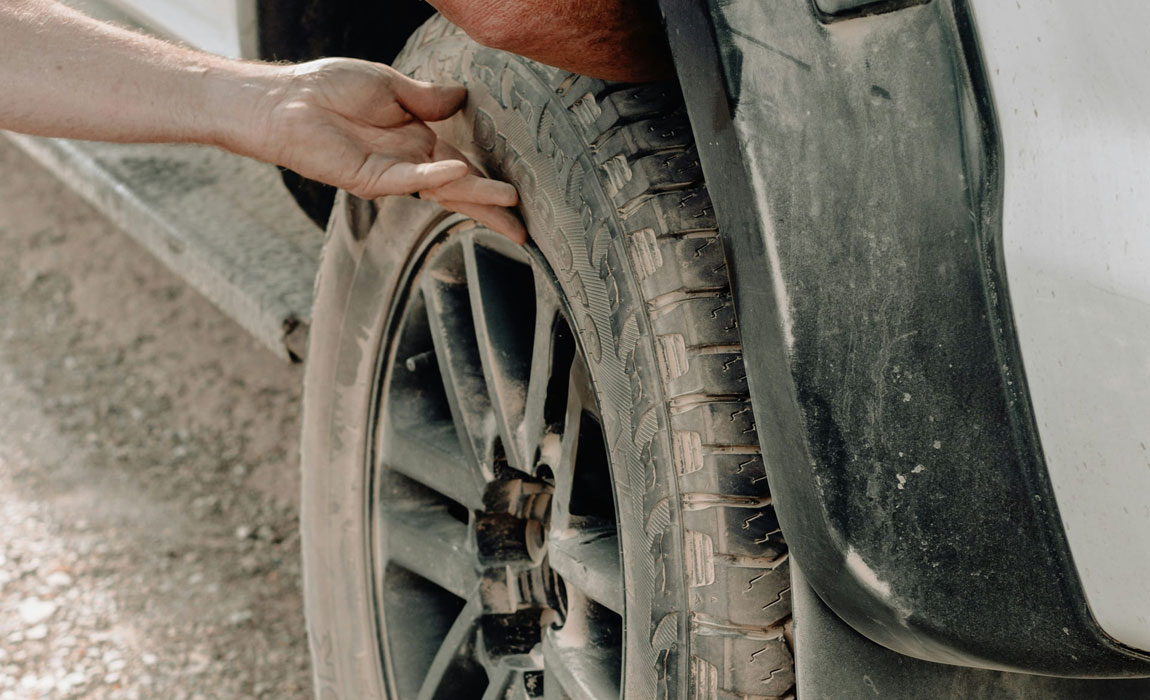
Tread depth on all four tyres Using a tread depth gauge. Minimum legal limit: 1.6mm. We recommend replacement at 3mm for safety. If any tyre is below 2mm, we’ll advise replacement before rotation — there’s no point rotating a tyre that needs replacing.
Tyre pressure on all four Incorrect pressure before rotation gives us a false picture of wear patterns. We normalise pressure first.
Visual inspection of sidewalls Looking for bulges, cuts, or cracks that may have developed since last inspection. A sidewall bulge found during rotation could save you from a highway blowout.
Wear pattern analysis
- Centre wear → overinflation
- Edge wear → underinflation
- One-side wear → alignment issue
- Patchy/cupping wear → balancing issue
If we find an underlying issue causing abnormal wear, we’ll tell you before rotating — because rotating won’t fix the root problem.
Step 2: Determine Correct Pattern (2 minutes)
We check your car’s drivetrain (FWD/RWD/AWD) and tyre type (directional or non-directional) and select the correct rotation pattern.
If you’re unsure — we check it. No extra charge.
Step 3: Rotation (15–20 minutes)
Car lifted on hydraulic ramp — not a roadside jack. Proper lift points used.
All four wheels removed — this is important. Some budget shops “rotate” by just swapping diagonals with the car still on the ground using a second jack. This is both dangerous and doesn’t allow proper inspection.
Wheels moved to correct positions per the pattern and mounted.
Torque tightening using calibrated torque wrench. Every car has a specific wheel nut torque specification (typically 85–110 Nm for most Indian cars). Under-tightening causes wheel wobble or worse — wheel falling off at speed. Over-tightening damages threads.
This step is why you shouldn’t let a roadside mechanic do rotation with a manual wrench and feel.
Step 4: Post-Rotation Pressure Adjustment (5 minutes)
After rotation, pressures are rechecked and adjusted. Why?
Because front and rear tyre pressure recommendations sometimes differ. For example:
- Maruti Swift: Front 30 PSI, Rear 30 PSI (same)
- Toyota Innova: Front 35 PSI, Rear 41 PSI (fully loaded)
- Hyundai Creta: Front 33 PSI, Rear 33 PSI
After rotation, what was your rear is now your front. Pressure must be adjusted to the specification for the new position, not the old one.
Step 5: Test Drive (5 minutes)
We drive the car 100 meters out of the workshop and back. This confirms:
- No wheel wobble
- No unusual sounds
- Correct fitment
If anything feels off, the car goes back on the ramp before being returned to you.
What Tyre Rotation Actually Saves You: Real Numbers
Let’s calculate the real financial value of tyre rotation.
Scenario 1: Without Rotation (Most Bangalore Drivers)
Car: Maruti Swift, daily 35 km Bangalore commute Tyres: Apollo Alnac 4G, ₹2,800/tyre
What happens:
- Front tyres wear out at 30,000 km
- Rear tyres still at 60% life
- Replace front two: ₹5,600 + ₹1,200 installation = ₹6,800
- Rear tyres wear out at 48,000 km
- Replace rear two: ₹5,600 + ₹1,200 = ₹6,800
- Total spend over 48,000 km: ₹13,600
Scenario 2: With Rotation Every 8,000 km (Smart Driver)
Same car, same tyres
What happens:
- Rotation every 8,000 km: 6 rotations over 48,000 km
- Cost: 6 × ₹500 = ₹3,000
- All four tyres wear evenly, lasting 48,000 km together
- Replace all four at 48,000 km: ₹11,200 + ₹2,400 installation = ₹13,600
- Total spend over 48,000 km: ₹3,000 + ₹13,600 = ₹16,600
Wait — that’s MORE? Let’s look further.
Scenario 3: Long-Term With Rotation (Full Picture)
With rotation, tyres last 55,000 km instead of 48,000 km (equalised wear extends total life)
Over 110,000 km (2 full sets):
Without rotation:
- Set 1 front pair at 30,000 km: ₹6,800
- Set 1 rear pair at 48,000 km: ₹6,800
- Set 2 front pair at 78,000 km: ₹6,800
- Set 2 rear pair at 96,000 km: ₹6,800
- Total: ₹27,200
With rotation:
- Set 1 all four at 55,000 km: ₹16,000
- Rotation costs (13 rotations): ₹6,500
- Set 2 started at 55,000 km: ongoing
- Total for 110,000 km: ₹22,500
Net saving with rotation: ₹4,700 over 110,000 km
Plus: Rotation catches problems early (sidewall bulges, abnormal wear) that can prevent ₹3,000–₹5,000 emergency replacements and accident risk.
7 Signs Your Tyres Need Rotation Right Now
Don’t wait for the km counter. These signs mean rotation is overdue:
1. Visible wear difference between front and rear Look at your front tyre tread versus rear. If front looks significantly more worn — rotate immediately.
2. Car pulls slightly to one side Can be alignment — but also uneven tyre wear from skipped rotation. Rotation may partially resolve this.
3. Vibration at 60–80 km/h Patchy tyre wear (from skipped rotation) causes the same vibration as wheel imbalance. Often misdiagnosed and only balancing is done — when the root cause is uneven wear from no rotation.
4. Steering wheel slight shudder at low speed Flat spots from consistent front braking without rotation creates this symptom in stop-and-go Bangalore traffic.
5. Increased road noise from front Front tyres wearing unevenly develop a pattern that generates more noise. If your car is suddenly louder, check front tyre wear.
6. More than 8,000 km since last rotation Simple calendar check. If you can’t remember when you last rotated — it’s overdue.
7. After any puncture repair The spare tyre that temporarily replaced a flat changes the wear equation. Once the repaired tyre is back, rotate to re-equalise.
Tyre Rotation for Different Car Types in Bangalore
Hatchbacks (Swift, i20, Baleno, Tata Punch)
Rotation pattern: Forward Cross Frequency: Every 8,000 km Why critical: FWD + light weight = maximum front wear differential Cost at TyreTorque: ₹400
Bangalore-specific: These cars typically carry 2–4 passengers daily in peak traffic. The repeated braking accelerates front wear more than any other car type.
Sedans (Honda City, Hyundai Verna, Maruti Ciaz, Dzire)
Rotation pattern: Forward Cross Frequency: Every 8,000 km Why critical: Similar to hatchbacks but heavier — more braking force per stop Cost at TyreTorque: ₹450
Bangalore-specific: Sedan drivers tend to drive more highway (Electronics City, Whitefield corridors) — this mixed use creates uneven wear between city and highway sections of tread.
Compact SUVs (Creta, Seltos, XUV300, Nexon, Brezza)
Rotation pattern: Forward Cross (FWD) or Rearward Cross (AWD variants) Frequency: Every 8,000 km — strictly Why critical: Heavier vehicles amplify pothole impact wear Cost at TyreTorque: ₹500–550
Bangalore-specific: SUVs tend to take more aggressive pothole hits because of higher ground clearance and driver confidence. Rotation catches the resulting uneven wear before it damages tyre structure.
AWD Note: Creta AWD, Seltos AWD, XUV700 AWD — rotation is even more critical. Unequal tyre circumference from uneven wear puts stress on the AWD system. Some manufacturers void drivetrain warranty if tyre diameter difference exceeds 2mm — which happens faster than you’d think without rotation.
MUVs (Innova Crysta, Innova HyCross, Marazzo)
Rotation pattern: Rearward Cross Frequency: Every 8,000 km Why critical: Higher load carrying = accelerated rear wear on loaded trips Cost at TyreTorque: ₹600–700
Bangalore-specific: Innova Crysta is frequently used for family travel (Bangalore to Coorg, Ooty, Mysore). Loading the car for these trips dramatically accelerates rear tyre wear. Weekend warriors need rotation even more than daily commuters.
Premium and Luxury Cars (BMW, Mercedes, Audi, Volvo)
Rotation pattern: Check owner’s manual — many premium cars have staggered sizing (wider rear tyres) Staggered fitment: Cannot rotate front-to-rear — different sizes Same size fitment: Rotate normally, but always with computerised balancing after
Important: Luxury cars with run-flat tyres have specific rotation requirements. Don’t assume standard patterns apply.
Cost at TyreTorque: ₹700–900 (includes precision torque tightening)
Common Questions Answered
Q1: Tyre rotation after how many kilometers for Bangalore?
Every 8,000 km for most Bangalore drivers. The standard 10,000–12,000 km recommendation is for better road conditions. Bangalore’s pothole density, stop-and-go traffic, and road surface variation accelerate uneven wear enough to justify a shorter interval. If you drive mostly highway (Mysore/Pune expressway), you can stretch to 10,000 km.
Q2: What is tyre rotation and is it really necessary?
Tyre rotation moves tyres between positions on your car to equalise wear. It’s necessary because front and rear tyres wear at different rates — front tyres wear 40–50% faster on FWD cars. Without rotation, you replace front tyres while rears are still usable — wasting ₹5,600–₹14,400 depending on brand. Rotation costs ₹400–600 and extends tyre life by 20–30%.
Q3: What does tyre rotation cost in Bangalore?
Fair market rate: ₹400–600 for most hatchbacks and sedans. ₹500–700 for SUVs. Authorised dealers charge ₹700–1,200 for identical work. Budget roadside shops offer ₹200–300 but may not use proper torque wrenches or do a full safety inspection. At TyreTorque, rotation is free for lifetime if you bought tyres from us.
Q4: Can I skip rotation if my car feels fine?
Yes — but you’re paying for it silently in tyre wear. Uneven wear doesn’t create symptoms until it’s advanced. By the time you feel vibration or see obvious wear difference, you’ve already lost 15,000–20,000 km of tyre life. Rotation works by preventing the problem, not fixing it after it starts.
Q5: What is the difference between tyre rotation and wheel alignment?
Rotation moves tyres between positions to equalise wear. Alignment adjusts the angles of your wheels relative to the road to fix pulling, uneven wear from incorrect angles, and steering issues. They do different things. Both are needed — on different schedules. Rotation: every 8,000 km. Alignment: every 16,000 km or after pothole impact.
Q6: Should I rotate tyres before or after wheel alignment?
Rotate first, then align. Alignment is specific to each wheel’s position — if you align and then move the tyres, the alignment settings move with the tyres but the car’s geometry doesn’t. Do rotation first so alignment is set for the final position of each tyre.
Q7: Mere spare tyre ko rotate karna chahiye?
Full-size spare (same size as other four): Haan, can be included in a 5-tyre rotation cycle — extends each tyre’s life further. Compact emergency spare (woh chhota tyre jo boot mein hota hai): Kabhi nahi — wrong size, wrong load rating, not designed for rotation cycles.
Q8: Can tyre rotation fix vibration?
Sometimes — if the vibration is caused by uneven wear (flat spots from skipped rotation). But if vibration is from wheel imbalance, rotation won’t fix it — balancing will. Often both are needed together. Our pre-rotation inspection identifies the root cause before we start.
Q9: Directional tyres ko kaise rotate karte hain?
Directional tyres (with an arrow on sidewall) can only be rotated front-to-rear on the same side — never crossed. If you want to cross them, the tyre must be demounted from the rim and remounted in the opposite direction — this costs extra (₹150–200 per tyre) but gives full rotation benefit.
Q10: After rotation, tyre pressure check zaroori hai?
Haan — always. If your car has different front and rear pressure specifications, these must be adjusted after rotation. Even if specifications are the same, pressure equalisation after rotation ensures even wear going forward. At TyreTorque this is included in the rotation service — no extra charge.
Your Rotation Schedule: A Practical Bangalore Guide
Set these reminders on your phone today:
If you drive 35 km/day (typical Bangalore commute):
- 8,000 km = every 7.5 months
- First rotation reminder: 7 months after getting new tyres
If you drive 50 km/day:
- 8,000 km = every 5.3 months
- First rotation reminder: 5 months
If you drive 20 km/day:
- 8,000 km = every 13 months
- First rotation reminder: 12 months
Easiest method: Note your odometer reading when you get new tyres. Add 8,000. Write that number on a piece of paper in your glove box. When your odometer hits that number — it’s time.
Or: WhatsApp us your current odometer reading. We’ll remind you at 8,000 km.
TyreTorque Tyre Rotation Service
Location: TyreTorque — NV Tyre Centre Kasturi Nagar Main Road Next to Nayara Petrol Bunk Bangalore — 560043
📞 Call / WhatsApp: +91-72041-01993 ⏰ Hours: Monday–Sunday, 9 AM – 8 PM
What’s included in every rotation: ✓ Pre-rotation tread depth check (all 4 tyres) ✓ Wear pattern analysis ✓ Correct pattern selection for your car type ✓ Hydraulic lift — no floor jacks on uneven ground ✓ Torque wrench tightening to manufacturer spec ✓ Post-rotation pressure adjustment ✓ Visual sidewall and tread inspection ✓ Test drive before handover ✓ Next rotation reminder (WhatsApp)
Rotation pricing:
- Hatchback/Sedan: ₹400–500
- SUV/Compact SUV: ₹500–600
- MUV/Large SUV: ₹600–700
- Free for life if tyres purchased from TyreTorque
Walk-ins welcome. Most rotations completed in 30–45 minutes.
The Bottom Line
Tyre rotation is the most underutilised car maintenance service in Bangalore. It costs ₹400–600. It takes 30–45 minutes. Done every 8,000 km, it extends tyre life by 20–30% and saves ₹4,000–₹8,000 per set.
The drivers who skip it aren’t saving money — they’re advancing their next tyre purchase by 15,000–20,000 km and paying for the privilege.
Your action today: Check your odometer. Note when you last rotated (or when you got your current tyres). If it’s been more than 8,000 km — call TyreTorque and book a rotation this week.
Thirty minutes now, ₹8,000 saved later.

6 Responses
Свадьба становится ключевым событием в жизни человека.
Такой праздник символизирует начало совместной семьи.
Он соединяет этих близких людей перед близкими и свидетелями.
http://numi.ru/artikles/otkuda-poyavilas-tradiciya-prazdnovat-i-darit-podarki-na-den-rozhdeniya.php
Церемония позволяет молодым публично признаться в любви и обменяться клятвами.
Торжество становится памятью навсегда, поддерживая любовь двух людей.
На представленном ресурсе вы сможете отыскать огромное количество полезных ресурсов.
https://fitlife.womaninstyle.ru/G8XvLT1IKerk/
Тут ресурсе можно получить интересную информацию.
https://online-festival.ru/detail/3252-benzinovyy-defitsit-v-rossii-vremennye-trudnosti-i-regionalnye-resheniya.html
Здесь веб-сайте есть шанс почерпнуть ценную информацию.
https://relax-spb.ru/read-info/3365-kak-podobrat-krossovki-pod-vash-stil-zhizni-sport-povsednevnaya-odezhda-i-ulichnaya-moda.html
На данном ресурсе легко получить много нужных данных.
https://nashipesni.ru/pub/2026-07-17-eko-moda-trend-ustoychivoy-odezhdy-i-eyo-vliyanie-na-rynok/
На этом же ресурсе вы сможете отыскать много ценных сведений.
https://1-mk.ru/detail/487-kuban-investiruet-156-mln-v-sozdanie-dostupnoy-sredy-dlya-lyudey-s-ogranichennymi-vozmozhnostyami/