Quick Answer: A Bangalore cab driver covers 100–150 km a day — 6-8x what a private car owner drives. That means tyres wearing out in 4-6 months instead of 2-3 years, and every rupee saved or wasted on tyres shows up directly in your daily earnings. This guide covers the real numbers: how often fleet tyres actually need replacing, which tyres give the best cost-per-km (not just the lowest upfront price), and a maintenance routine built for drivers who can’t afford downtime.
Why Cab and Fleet Tyres Are a Completely Different Problem
If you’re running a Dzire, Etios, WagonR, or Amaze for Ola, Uber, Rapido, or a private fleet, your tyre math is nothing like a private car owner’s. A typical private car in Bangalore does 800–1,200 km a month. A full-time cab does 3,000–4,500 km a month — sometimes more during peak season. That difference changes everything:
- Tyre life is measured in months, not years. A tyre rated for 50,000 km lasts a private owner 3-4 years. On a full-time cab doing 4,000 km/month, the same tyre is gone in 12-13 months — and Bangalore’s stop-start traffic, heat, and road quality typically cut that further.
- Downtime costs more than the tyre. For a private owner, a flat tyre is an inconvenience. For a driver earning per trip, every hour off the road is direct lost income — which changes the entire calculation around prevention versus reactive repair.
- The cheapest tyre is rarely the cheapest option. A ₹500 saving on a budget tyre that lasts 8 months less isn’t a saving — it’s a loss once you account for the extra tyre purchase and the fitting time you lose. Cost-per-kilometre, not cost-per-tyre, is the number that actually matters here.
How Long Do Fleet Tyres Actually Last in Bangalore?
Based on typical driving patterns for Ola/Uber/Rapido drivers running sedans and hatchbacks in Bangalore traffic:
| Monthly Distance | Typical Tyre Life (Budget Tyre) | Typical Tyre Life (Mid-Range Tyre) |
|---|---|---|
| 2,000–3,000 km (part-time) | 12–16 months | 16–22 months |
| 3,000–4,000 km (full-time) | 8–11 months | 11–15 months |
| 4,000–5,000+ km (peak fleet use) | 6–8 months | 8–12 months |
Front tyres on a front-wheel-drive cab (which is most of the fleet on Bangalore roads) wear noticeably faster than the rears — expect to rotate or replace fronts before rears in most cases. This is the single most commonly skipped maintenance step among fleet drivers, and it’s the cheapest one to actually do.
Real Cost-Per-KM Math: Budget vs Mid-Range Tyres
Here’s the comparison that actually matters for a working driver, using a typical Dzire/Etios-class tyre (175/65R14 or 185/65R15) as the example:
| Tyre Tier | Price (Set of 4, Fitted) | Typical Life at 4,000 km/month | Cost per KM |
|---|---|---|---|
| Budget/local brand | ₹9,000 – ₹13,000 | 8–10 months (~35,000 km) | ₹0.29 – ₹0.37 |
| Mid-range (CEAT, Apollo, MRF) | ₹13,000 – ₹18,000 | 11–14 months (~48,000 km) | ₹0.29 – ₹0.33 |
| Premium (Michelin, Bridgestone) | ₹18,000 – ₹24,000 | 14–18 months (~62,000 km) | ₹0.31 – ₹0.35 |
The numbers land closer together than most drivers expect — a mid-range tyre often works out cheapest per kilometre once you factor in the extra downtime and fitting labour that comes with replacing budget tyres more often. Premium tyres aren’t automatically the best value either; the mileage gain doesn’t always outpace the upfront cost for a driver replacing on a tight budget cycle. The honest takeaway: mid-range tyres from established brands (CEAT SecuraDrive, Apollo Amazer, MRF ZVTV) usually give fleet drivers the best real-world balance, not the cheapest or the most expensive option.
The Fleet Maintenance Routine That Actually Saves Money
This is the routine we’d recommend to any driver putting 3,000+ km a month on a car:
- Check tyre pressure every 3-4 days, not weekly. At fleet mileage, underinflation shows up as visible wear within a week, and it directly hurts your fuel/electricity cost per trip. Keep a pressure gauge in the car — don’t rely on the fuel-station attendant’s guess.
- Rotate tyres every 8,000–10,000 km. At 4,000 km/month, that’s roughly every 2-2.5 months. This is the highest-leverage habit on this list — it can add 15-20% to total tyre life by evening out front/rear wear. See our full tyre rotation guide for the process and cost.
- Get wheel alignment checked every 15,000-20,000 km, or immediately after any hard pothole hit — cab drivers hit far more potholes over a month than a private owner does simply from time on the road. Misalignment on a high-mileage tyre burns through tread noticeably faster than on a low-mileage one. See our wheel alignment cost guide.
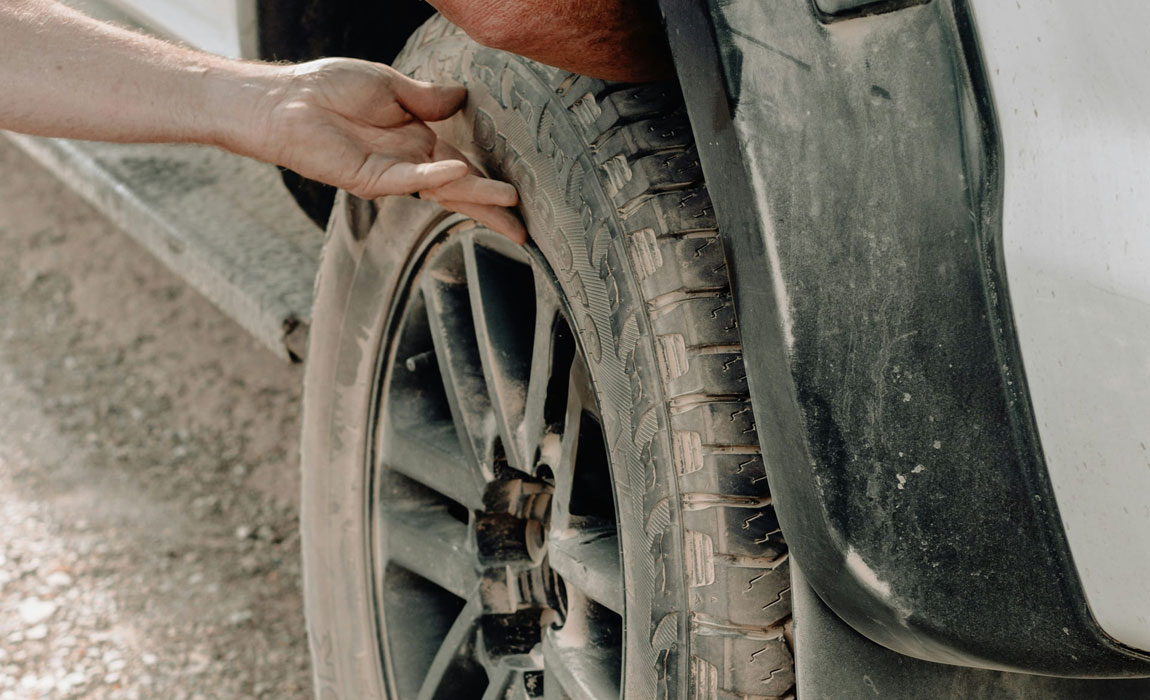
- Inspect tread depth visually every week. Use the ₹1 coin test (insert edge into the tread groove — if you can see the full rim edge, it’s time to plan a replacement) rather than waiting for a puncture to force the issue.
- Keep a spare tyre in genuinely usable condition. A flat spare doesn’t save you anything — check its pressure monthly, same as the road tyres.
- Don’t ignore slow leaks. A slow puncture that a private owner might top up and forget about for weeks can lose significant air over just 2-3 days of fleet driving, quietly increasing wear and fuel cost. Get it patched properly the same day.
Timing Replacements Around Your Schedule, Not Around a Breakdown
The biggest cost fleet drivers face isn’t the tyre itself — it’s an unplanned breakdown mid-shift. A tyre that fails on the road costs you the fare you were on, the time lost getting to a shop, and often a same-day emergency-priced replacement instead of a planned one.
The fix is simple: track your odometer against the mileage table above and plan replacement 1,000-1,500 km ahead of when you expect to need it — ideally scheduled during your own off-peak hours (early morning or a lower-demand slot) rather than waiting for a warning sign mid-trip.
What to Ask a Tyre Shop Before You Commit as a Fleet Driver
- “Do you have same-day fitting without an appointment?” — fleet drivers can’t always plan a visit days ahead; a shop that can turn around a tyre change same-day matters more here than for a private owner.
- “What’s your price for a full set versus one at a time?” — some shops offer better per-tyre pricing on a set of 4, worth asking directly rather than assuming.
- “Can I get a running tally of my tyre spend?” — useful for drivers tracking cost-per-km themselves, and a shop willing to keep basic records for you is one worth sticking with.
- “Do you stock the size for my car, or do I need to wait?” — Dzire, Etios, and WagonR sizes are common stock; confirm before you’re stuck waiting mid-shift.
Fleet & Cab Driver Service at Tyre Torque, Bangalore
We understand that for a working driver, time off the road is money lost — our fleet service is built around getting you back out fast, without cutting corners on the check that actually protects your tyre spend long-term.
✅ Same-day fitting, most sizes in stock for Dzire, Etios, WagonR, Amaze, and other common fleet models ✅ Free pressure check every visit — no appointment needed ✅ Rotation and alignment scheduled around your driving pattern, not a generic calendar ✅ Honest cost-per-km guidance — we’ll tell you if a cheaper tyre will actually cost you more over its life ✅ Fast puncture repair, prioritised for working drivers
📍 Kasturi Nagar: Main Road, Near CMR College, Next to Nayara Petrol Station, Chikka Banaswadi, Bangalore – 560043 📍 Kudlu: Kudlu Gate, Bangalore — call to confirm exact address 📞 +91-72041-01993 🌐 www.tyretorque.in 🕘 Open 7 days | 8:00 AM – 8:00 PM
Running a fleet of more than one vehicle? Call us directly to discuss volume pricing and a maintenance schedule across your full fleet.
Related reading: Tyre Rotation in Bangalore: Cost, Process & When to Do It | Wheel Alignment Charges in Bangalore | Car Tyre Replacement Cost Bangalore 2026 | Budget Tyres vs Premium Tyres in India | Tyre Fitting Charges in Bangalore