Here is the question we get asked at least three times a week at our Kasturi Nagar workshop: “My Creta needs new tyres. Should I go with MRF or spend extra on Michelin?”
It is a genuinely good question — and the honest answer is not what most tyre shops will tell you. At Tyre Torque, we fit hundreds of SUV tyres every month across every brand from JK Tyre to Michelin Primacy. We see which ones come back quickly and which ones keep going. We see what happens to a Fortuner’s MRF tyres after 28,000 km of airport runs and what Michelin tyres look like on the same car after the same distance.
This guide gives you the real numbers. Not brand advertising. Not manufacturer claims. What we actually see.
The Short Answer First
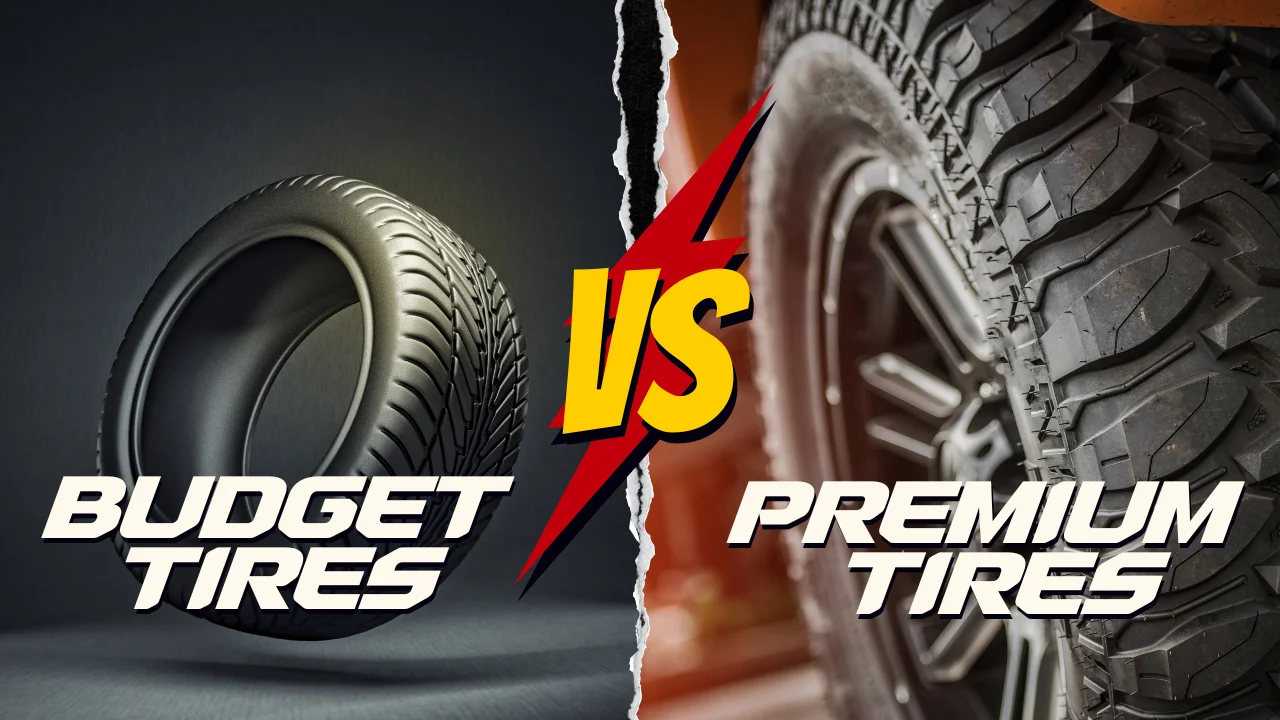
For most Bangalore SUV owners doing 15,000–25,000 km per year in mixed city and highway use — the premium tyre is cheaper over three years. Not cheaper upfront. Cheaper in total when you account for how long it lasts, how much fuel it saves, and how often you need to replace it.
For low-mileage SUV owners doing under 10,000 km per year — budget brands make more sense. You will replace on age (5 years) before you reach the tread limit on either brand.
Everything between those two extremes depends on your specific numbers. We will do the maths below.
Why SUVs Are Different — The Weight and Load Problem
Before comparing brands, understand why this decision is harder for SUV owners than hatchback owners.
A Hyundai Creta weighs approximately 1,335–1,450 kg unladen. A Kia Seltos is 1,380–1,490 kg. A Toyota Fortuner is 2,235–2,260 kg. A Toyota Innova Crysta fully loaded with seven passengers and luggage can put over 3,000 kg of total load on four tyres simultaneously.
Weight matters for tyres in two critical ways. First, heavier vehicles generate more heat in the tyre compound during driving — heat is the primary accelerator of tyre wear. Second, heavier vehicles need higher load-index tyres that can structurally sustain the weight without sidewall deformation.
For daily commuting at moderate speeds, budget tyres suffice. For highway cruising, spirited driving, or heavy vehicles, premium tyres provide noticeable safety margins. The SUV is specifically the vehicle category where premium compounds earn their price premium most clearly — because the vehicle’s weight stress on the tyre is so much higher than a hatchback.
The Per-Kilometre Cost — Real Numbers for Bangalore SUV Owners
This is the calculation most car owners never do — and it changes the decision every time.
Hyundai Creta (205/65 R16) — Cost over 40,000 km
| Budget (MRF/CEAT/Apollo) | Premium (Michelin/Bridgestone) | |
|---|---|---|
| Price per tyre (Bangalore 2026) | ₹6,000 – ₹7,500 | ₹11,000 – ₹14,000 |
| Full set of 4 tyres | ₹24,000 – ₹30,000 | ₹44,000 – ₹56,000 |
| Expected life in Bangalore | 25,000 – 35,000 km | 42,000 – 55,000 km |
| Sets needed over 100,000 km | 3–4 sets | 2 sets |
| Total tyre spend over 100,000 km | ₹72,000 – ₹1,20,000 | ₹88,000 – ₹1,12,000 |
| Fuel saving (2–4% lower rolling resistance) | Nil | ₹8,000 – ₹16,000 over 100,000 km |
| Effective total cost over 100,000 km | ₹72,000 – ₹1,20,000 | ₹72,000 – ₹96,000 |
The numbers converge. Premium tyres deliver approximately 18% lower cost-per-kilometre while providing superior performance and safety. Over the full life of a car, Creta owners on Michelin or Bridgestone spend roughly the same or less than owners on MRF — while driving on significantly better rubber the whole time.
Toyota Fortuner (265/60 R18) — Cost over 40,000 km
The Fortuner calculation is starker because the tyres are larger and more expensive across all brands.
| Budget (MRF/Apollo) | Premium (Bridgestone Alenza/Michelin Primacy SUV+) | |
|---|---|---|
| Price per tyre | ₹9,000 – ₹12,000 | ₹18,000 – ₹25,000 |
| Full set of 4 | ₹36,000 – ₹48,000 | ₹72,000 – ₹1,00,000 |
| Expected life Bangalore | 20,000 – 28,000 km | 35,000 – 48,000 km |
| Sets over 100,000 km | 4–5 sets | 2–3 sets |
| Total spend over 100,000 km | ₹1,44,000 – ₹2,40,000 | ₹1,44,000 – ₹3,00,000 |
The Fortuner is the one case where premium does not always win on pure economics — the upfront cost is so high that even with better longevity, the numbers are closer. For Fortuner owners, our honest recommendation is Bridgestone Dueler or Goodyear Wrangler — strong premium performers at a lower price than Michelin at this large size.
Wet Braking — The Number That Changes Everything
This is where the comparison stops being about money and becomes about safety.
Independent tests show premium tyres can reduce wet braking distances by 15–30% compared to budget alternatives — potentially several car lengths at highway speeds.
What does that mean for a Bangalore SUV owner specifically?
Picture a typical Monday morning in July. The Hebbal underpass is flooded but passable. You are doing 60 km/h on the approach when a two-wheeler cuts across your path. You brake hard.
On a Creta at 1,400 kg with 5mm of budget tyre tread, your braking distance on wet tarmac is approximately 32–36 metres. On a Creta at the same speed and weight on Michelin Primacy 4 with 5mm of tread — approximately 26–29 metres. That 6–7 metre difference is the length of a Mahindra Thar. On a Fortuner at 2,250 kg, those margins stretch further.
Michelin Primacy 3ST offers superior wet-weather grip and water displacement, making it ideal for heavy rainfall regions. Bangalore receives concentrated heavy rainfall — the city averages 970mm annually, with most of it falling in June through September. Any SUV owner who uses Outer Ring Road, the Mysore Expressway, or the Whitefield corridor during monsoon season is driving in conditions where wet braking distance is a real, daily risk variable. Blog
We are not saying budget tyres will get you killed. We are saying that on a heavy SUV in a Bangalore monsoon, the braking margin difference between budget and premium is genuinely meaningful — and unlike fuel savings or tyre life, you cannot calculate the value of the stopping distance you did not need.
Highway Noise — The Mysore Expressway Test
This is the clearest qualitative difference between budget and premium SUV tyres, and the one Fortuner and Innova owners feel most immediately.
At 100 km/h on NH-275 (Bengaluru–Mysore Expressway), the cabin noise difference between MRF Wanderer Sport and Michelin Primacy SUV+ on a large SUV is audible without testing equipment. Premium tyre compounds use silica-rich formulations that reduce the noise frequency generated where the tread blocks contact the road. The result: 3–5 decibels quieter at highway cruise speeds — the difference between needing to raise your voice in the cabin and a relaxed conversation.
For Innova Crysta owners doing airport runs or intercity family trips, this is a real comfort improvement. For a daily Creta commuter doing mostly Bangalore city driving below 60 km/h — the difference is far less noticeable and less worth the price premium.
Load Rating — The Spec Most SUV Buyers Miss
Load index is printed on your tyre sidewall as part of the size marking — for example, 205/65 R16 95H. That 95 means each tyre is rated to carry 690 kg. At maximum vehicle weight plus passengers and luggage, a Creta’s total load approaches the limit of a load index 95 tyre.
Budget tyres meeting minimum safety standards show measurably longer braking distances and reduced wet grip. But there is a less-discussed issue: some budget brands in the SUV segment are available only in load index 95, while premium brands offer load index 97 (730 kg per tyre) and 100 (800 kg per tyre) in the same size.
For Innova Crysta and Fortuner owners who regularly carry full passenger loads — this matters. The extra load capacity reduces heat buildup in the sidewall under sustained heavy loads. It is the technical reason why premium tyres last longer on fleet SUVs than budget tyres, even when the budget tyre’s tread life specification suggests it should last as long.
The Bangalore Road Specific Issue — Pothole Impact Resistance
One factor that general tyre comparisons miss entirely: Bangalore’s roads are uniquely punishing on SUV tyres in a way that shifts the calculus compared to smoother cities.
Deep potholes on ORR, the broken surface near Marathahalli Bridge, and the unmaintained road shoulders on Sarjapur Road deliver hard impacts to SUV tyres regularly. These impacts stress the sidewall in ways that accumulate over time — causing internal cord damage that is not visible from the outside but progressively weakens the structural integrity.
Bridgestone tyres are known for their durable tread compounds and monsoon performance, which is critical in India. In our workshop observation, the premium brands — particularly Bridgestone Alenza, Michelin Primacy SUV, and Continental UC6 SUV — show meaningfully better resistance to pothole-impact sidewall stress than budget alternatives on the same car doing the same routes. Budget tyres on Bangalore’s ORR tend to show sidewall micro-cracking earlier than their expected age replacement date.
The Honest Workshop Verdict — By SUV Type and Owner Profile
Daily commuter SUV (Creta / Seltos / Nexon), 12,000–18,000 km/year, mostly city:
Apollo Apterra HT2 or Goodyear Assurance TripleMax 2. You will not notice the premium compound difference in stop-start city traffic, and the per-km economics of budget brands make more sense at this mileage. Spend the ₹10,000–₹15,000 savings on alignment every 10,000 km and nitrogen — you will get more tyre life from maintenance than from upgrading to premium.
Mixed city-highway SUV owner (Creta / Seltos), 18,000–25,000 km/year:
This is the profile where Michelin Primacy 4 ST or Bridgestone Turanza T001 makes clear financial sense. The per-km economics work out roughly equal, and you drive on a significantly better tyre for the same lifetime cost. The wet braking improvement on monsoon highways is the tie-breaker.
Long-distance family SUV (Fortuner / Innova Crysta / Scorpio-N), full loads, highway trips:
Bridgestone Alenza or Michelin Primacy SUV+. No hesitation. The load rating advantage, the sidewall durability on long highway runs, and the cabin noise improvement on 6–8 hour trips to Coorg or Goa are all meaningful at this weight class. Michelin Primacy SUV+, Bridgestone Alenza, Continental UC6 SUV, and Goodyear Wrangler are excellent choices for modern SUVs.
Fleet / cab Innova (60,000+ km/year):
Apollo Apterra HT2 or CEAT SecuraDrive. Pure economics: the replacement frequency at this mileage makes premium brands difficult to justify. Focus on monthly rotation, alignment every 10,000 km, and nitrogen — these maintenance habits will extend budget tyre life by 20–30% and deliver better per-km economics than spending on premium compounds that wear out just as fast under fleet mileage.
What to Do Right Now
Before you buy anything, do this:
Calculate your annual mileage and multiply by three (your three-year tyre cycle). Divide your total tyre cost by that number to get cost per kilometre. Do it for both budget and premium options. The number that surprises most Bangalore SUV owners: the premium tyre almost always costs less than you think when you run the numbers over the full ownership period.
Then come in for a free tyre consultation. We will look at your current tyres — wear pattern, tread depth, age, sidewall condition — and give you an honest recommendation for your specific car, mileage, and budget. If budget tyres are the right answer for your situation, we will tell you that. If premium makes financial sense, we will show you the maths that prove it.
Tyre Torque — NV Tyre Centre
📍 Kasturi Nagar Main Road, Near CMR College, Next to Nayara Petrol Station, Chikka Banaswadi, Bangalore — 560043
📞 Call / WhatsApp: +91-72041-01993
⏰ Monday to Sunday, 9 AM – 8 PM | Walk-ins welcome
🌐 www.tyretorque.in
✅ Free tyre inspection on every visit | All major brands stocked
Frequently Asked Questions — Premium vs Budget SUV Tyres
Are premium SUV tyres really safer than budget tyres in Bangalore?
Yes — measurably so, particularly in wet conditions. Independent tests show premium tyres can reduce wet braking distances by 15–30% compared to budget alternatives. On a heavy SUV doing 60 km/h in Bangalore’s monsoon, that translates to 6–8 fewer metres before stopping — a genuinely significant safety margin. On Bangalore’s flooded underpasses and wet ORR stretches, this difference is real and repeated. Budget Indian brands like Apollo and MRF are well-engineered and safe under normal conditions — but the wet performance gap with Michelin and Bridgestone is measurable, not theoretical.