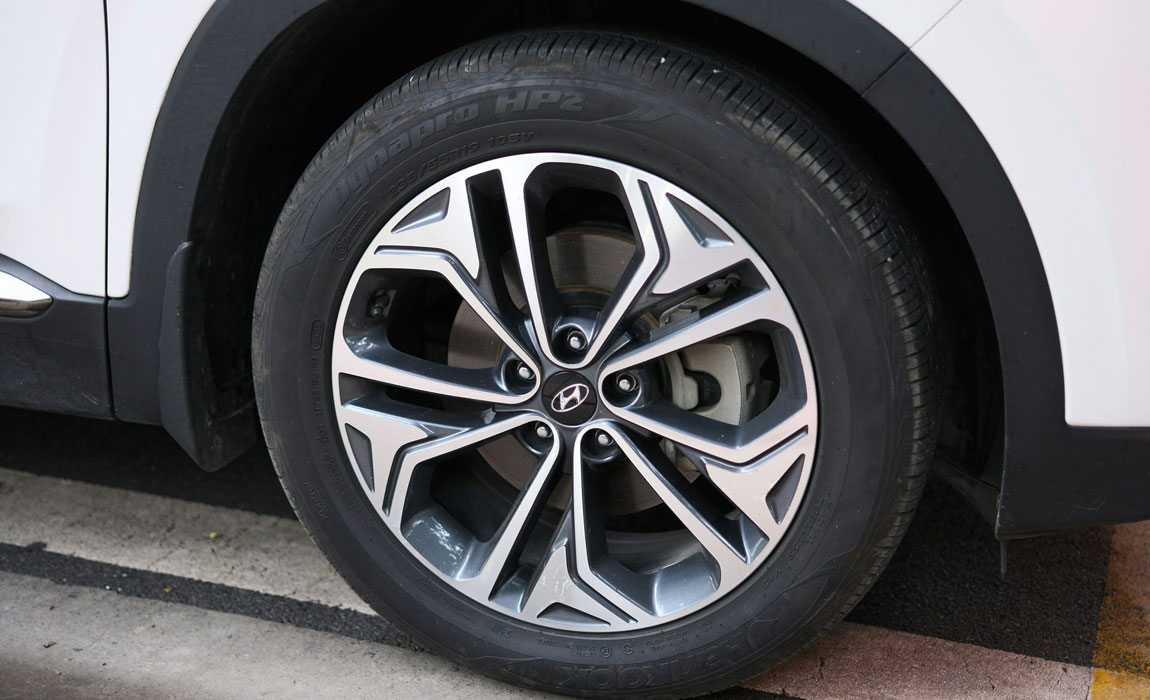
Here is the answer most people find after it is already too late: car tyres in Bangalore last 25% to 40% fewer kilometres than the same tyre on a car driven in most other Indian cities.
That is not a scare tactic. It is what we observe every day at our workshop on Kasturi Nagar Main Road, where we replace tyres on hundreds of cars every month. A Maruti Swift tyre that would comfortably last 42,000 km in Pune or Chennai might be finished at 30,000 km in Bangalore. The same MRF that runs 55,000 km on a Mumbai highway car might wear out at 38,000 km on a Bangalore cab running Outer Ring Road routes daily.
This guide gives you the real numbers — not the figures tyre brands print on their marketing materials, but what we actually see on the lift in our workshop. Tyre life by car model, by brand, by how you drive, and why Bangalore specifically shortens tyre life in ways most car owners do not account for.
Quick Reference: Tyre Life by Car Model in Bangalore 2026
Before going into detail, here is the table most Bangalore car owners need:
| Car Model | Tyre Size | Budget Brand (MRF/CEAT/JK) | Mid-Range (Apollo/Goodyear) | Premium (Michelin/Bridgestone) |
|---|---|---|---|---|
| Maruti Swift (2024+) | 165/80 R14 / 195/55 R16 | 28,000–38,000 km | 35,000–45,000 km | 45,000–60,000 km |
| Maruti Swift Dzire | 185/65 R15 | 30,000–40,000 km | 38,000–48,000 km | 48,000–62,000 km |
| Maruti Baleno | 185/65 R15 / 195/55 R16 | 30,000–40,000 km | 38,000–48,000 km | 48,000–62,000 km |
| Hyundai Creta | 205/65 R16 / 215/55 R17 | 25,000–35,000 km | 32,000–42,000 km | 42,000–55,000 km |
| Honda City | 185/55 R16 | 30,000–40,000 km | 38,000–48,000 km | 48,000–62,000 km |
| Toyota Innova Crysta | 205/65 R16 | 22,000–32,000 km | 28,000–38,000 km | 38,000–50,000 km |
| Kia Seltos | 215/60 R17 / 215/55 R17 | 25,000–35,000 km | 32,000–42,000 km | 42,000–55,000 km |
| Tata Nexon | 195/60 R16 | 25,000–35,000 km | 32,000–42,000 km | 42,000–55,000 km |
| Toyota Fortuner | 265/60 R18 | 20,000–28,000 km | 26,000–36,000 km | 35,000–48,000 km |
These are Bangalore-specific estimates from Tyre Torque workshop data. Actual life depends on driving pattern, alignment frequency, tyre pressure maintenance, and road type.
Why are SUV tyre lives significantly shorter? Weight. A Fortuner at 2,260 kg puts far more stress on each tyre with every rotation than a Swift at 880 kg. Heavier load means faster compound wear — regardless of brand.
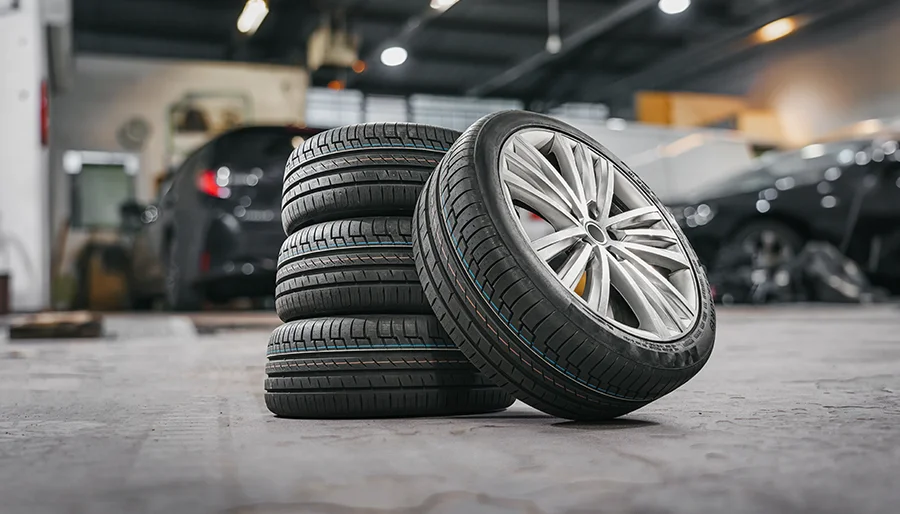
Why Bangalore Shortens Tyre Life More Than Any Other Metro
If you have owned the same car model in another city before moving to Bangalore, you have probably noticed your tyres wearing faster. There are six specific reasons for this:
Pothole impact stress. Every hard pothole hit — and Bangalore drivers average several per daily commute — delivers a sudden, violent impact load to the tyre. This stresses the sidewall, the bead, and the tread simultaneously. Repeated impact stress micro-fractures the rubber compound over time, accelerating wear even when there is no visible damage. The ORR near Silk Board, Marathahalli Bridge, and the Sarjapur Road stretch approaching Wipro are among the most tyre-hostile roads in India.
Stop-start heat cycling. Bangalore’s traffic — the Koramangala signal, the Hebbal flyover approach, the Electronic City toll queue — means your tyres heat up and cool down repeatedly across a single commute. Every heat cycle degrades rubber compound slightly. A Pune or Mysore driver doing the same mileage on open roads subjects their tyres to far fewer heat cycles.
Speed breaker abuse. Bangalore has more speed breakers per kilometre of road than almost any other Indian city. Poorly constructed speed breakers — either too steep, improperly profiled, or placed immediately after blind corners — cause violent tyre impacts at low speed. Low-speed impacts are actually worse for sidewall health than high-speed smooth road running.
Misalignment from poor roads. Bangalore’s roads knock wheel alignment out of specification faster than anywhere else in India. Misaligned wheels cause tyres to scrub sideways with every rotation instead of rolling cleanly forward. A misalignment of just half a degree on a car doing 1,500 km per month in Bangalore can reduce tyre life by 8,000–12,000 km. Most Bangalore car owners check alignment far less frequently than they should.
Heat and UV degradation. Bangalore sits at 920 metres above sea level with strong UV radiation, particularly from March through May. UV exposure degrades tyre rubber from the outside in — causing sidewall cracking even on tyres with good remaining tread depth. Cars parked outdoors in direct sun all day are especially vulnerable.
Under-inflation from pressure loss. Stop-start traffic generates heat, and heat causes tyre pressure to fluctuate. Many Bangalore drivers check tyre pressure infrequently. Running even 3–4 PSI below the recommended pressure accelerates inner edge tyre wear dramatically — exactly the kind of wear pattern we see most frequently on cars coming into our workshop.
Tyre Life by Driving Pattern — Which Type of Bangalore Driver Are You?
The biggest single variable in how long your tyres last is not the brand you buy — it is how and where you drive. Here is what each pattern delivers in Bangalore:
Pattern 1: Pure City Commuter (under 800 km/month)
Profile: You drive within a 15 km radius. Mostly residential areas, signal stops, slow-speed congestion. Examples: Indiranagar–MG Road daily, Koramangala–HSR Layout, Whitefield within the tech park zone.
Tyre life impact: Stop-start driving is actually gentler on tread depth than highway driving because your speeds are low. However, it maximises heat cycling and pothole impact exposure. Tyres on pure city commuters often wear out due to sidewall age degradation and alignment-induced edge wear rather than tread depth.
Expected tyre life in this pattern:
- Budget brands (MRF, CEAT): 30,000–40,000 km — or 5 years at 600 km/month
- Mid-range (Apollo, Goodyear): 35,000–48,000 km
- Premium (Michelin, Bridgestone): 45,000–62,000 km
What shortens it further: Infrequent alignment checks (most common issue), chronic under-inflation due to heat-cycle pressure loss, parking on degraded concrete that abrades the tyre sidewall.
Pattern 2: Mixed City and Highway (1,000–2,000 km/month)
Profile: You commute within Bangalore on weekdays and do weekend trips to Mysore, Coorg, Hassan, or Tumkur. You use the Bengaluru–Mysore Expressway (NH-275), NICE Road, or NH-75 regularly.
Tyre life impact: This is the most balanced pattern for tyre longevity. Highway running at steady speed generates less heat-cycle stress and allows the tread to wear evenly. However, the transition between Bangalore’s broken city roads and expressway speeds creates sudden load changes that stress tyres differently.
Expected tyre life in this pattern:
- Budget brands: 32,000–42,000 km
- Mid-range: 40,000–52,000 km
- Premium: 50,000–65,000 km
What shortens it further: Sudden speed changes on highways (braking from 100 km/h to 40 km/h for toll plazas causes significant tread scrub), overloading on family road trips.
Pattern 3: High-Mileage Commuter or Fleet/Cab (2,000+ km/month)
Profile: You drive for work — airport runs, intercity routes, office commute plus evening usage. Or you operate the car commercially (Ola, Uber, private cab). This is the Innova Crysta owner doing 90,000 km per year or the IT professional clocking 25,000 km annually between Whitefield and Electronic City.
Tyre life impact: High mileage accelerates tread wear in proportion to distance. But the type of roads matters critically. An airport-run Innova doing Kasturi Nagar to Kempegowda International Airport (35 km each way, mostly ORR and Bellary Road) will burn through tyres faster than the same car doing a Bengaluru–Mysore highway run despite similar distances.
Expected tyre life in this pattern:
- Budget brands: 20,000–30,000 km (replacement every 10–15 months)
- Mid-range: 25,000–38,000 km
- Premium: 35,000–48,000 km
Workshop observation: High-mileage cab operators who invest in Apollo Apterra HT2 or CEAT SecuraDrive at ₹6,500–₹7,500 per tyre consistently get better per-kilometre economics than those buying ₹4,500 budget tyres. The budget tyre replacement cycle at 22,000 km means 4–5 replacements per year on a high-mileage vehicle versus 3 replacements with mid-range tyres.
Tyre Life by Brand — What We Actually See in Bangalore
These ranges come from patterns we observe at Tyre Torque across the hundreds of cars we service monthly — not manufacturer claims.
Budget Tier — Indian brands
MRF (Revz FC2, ZVTS, ZLX): 28,000–45,000 km in Bangalore depending on vehicle and pattern. MRF averages 40,000–60,000 km nationally — but Bangalore’s roads consistently push our customers toward the lower half of that range. MRF’s strength is consistency and the widest service network in India. If you drive to smaller Karnataka towns regularly, MRF gives you the most repair options en route.
CEAT (Milaze X3, SecuraDrive): 26,000–42,000 km in Bangalore. CEAT has improved significantly in the past two years, particularly for wet-road grip during monsoon. The Milaze X3 on hatchbacks and the SecuraDrive on SUVs are notably better than JK Tyre in our workshop’s experience. Slightly shorter life than MRF but better wet performance.
Apollo (Alnac 4G, Apterra HT2): Apollo averages 45,000–65,000 km nationally, with a slight edge over MRF in tread life. In Bangalore, we see 30,000–48,000 km depending on the model. The Apterra HT2 on SUVs consistently outperforms both MRF and CEAT in our observations. Apollo’s silica compound technology gives meaningful wet-grip advantages during monsoon — important for Bangalore car owners navigating flooded Hebbal underpasses and waterlogged ORR stretches.
JK Tyre (Elanzo Touring): 22,000–35,000 km in Bangalore. Consistently the shortest life in our workshop experience. Good for low-mileage city-only driving, but not recommended for high-mileage commuters or regular highway use. The compound degrades faster under sustained load and heat.
Mid-Range Tier
Goodyear (Assurance TripleMax 2, Duraplus 2): 32,000–48,000 km. Goodyear’s wet-braking compound is genuinely excellent — one of the few budget-to-mid-range options that performs meaningfully better than MRF in monsoon conditions. Life is comparable to Apollo. Our recommendation for Bangalore drivers who prioritise monsoon safety over mileage.
Yokohama (Earth-1 E400): 35,000–50,000 km. Yokohama’s low-rolling-resistance compound extends both tyre life and fuel efficiency. Quieter than most alternatives in this price range. Performs well on Bangalore’s better-maintained roads (Mysore Road corridor, NICE Road) but shows slightly faster pothole-impact wear than Apollo on broken city roads.
Bridgestone (B290, B Series): Bridgestone tyres offer a tread life of 50,000–70,000 km nationally. In Bangalore, we see 38,000–55,000 km. Consistently outlasts MRF and Apollo in our workshop’s experience. Comfortable, quiet, long-lasting — the premium-feeling mid-range option.
Premium Tier
Michelin (Energy XM2+, Primacy 4): Premium brands like Michelin provide 50,000–70,000 km life. In Bangalore specifically, we see 45,000–65,000 km. Michelin’s compound retains wet-road grip even as tread wears down — a meaningful safety advantage in Bangalore’s monsoon season when most tyre brands lose grip progressively. The Michelin Energy XM2+ on a Swift or Baleno is the single longest-lasting tyre in that size we fit.
Continental (ContiMaxContact, PremiumContact): 44,000–62,000 km. German engineering with excellent lateral stability — noticeably better cornering feel than Indian brands. Consistent performer on both city and highway in Bangalore.
6 Warning Signs Your Tyre Is Done — Before You Hit the Km Limit
Reaching the expected km limit does not automatically mean the tyre needs replacing. And not reaching it does not mean the tyre is fine. Here are the six signals that override any kilometre target:
Tread depth below 3mm. The legal minimum in India is 1.6mm — but wet braking performance begins deteriorating measurably below 3mm. Check using the 2-rupee coin test: insert the coin into the tread groove. If you can see the entire number on the coin, the tread is below 2mm and the tyre needs immediate replacement. In Bangalore’s monsoon conditions, driving on 2mm tread is genuinely dangerous.
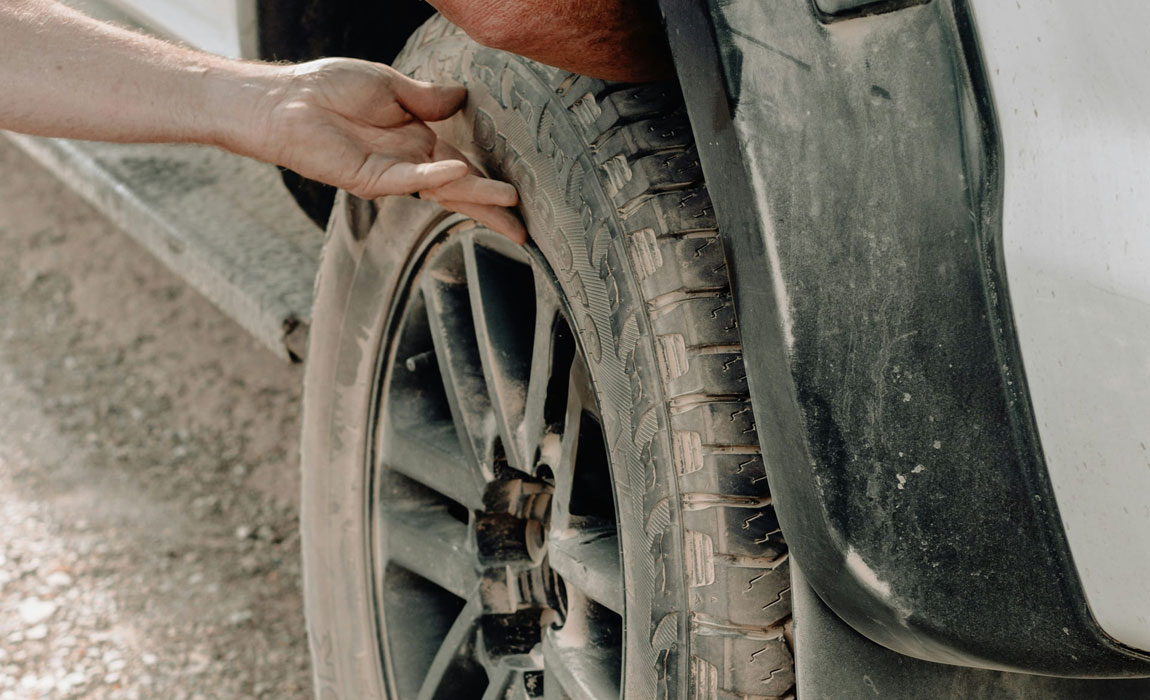
Sidewall cracking or crazing. Small surface cracks on the sidewall — even with good remaining tread — indicate compound degradation from UV exposure and heat cycling. Bangalore’s sun exposure accelerates this process. A 4-year-old tyre with excellent tread but networked sidewall cracks should be replaced.
Sidewall bulge or bubble. This indicates the internal structure of the tyre has been damaged — usually from a hard pothole impact. A bulge is a structural failure waiting to become a blowout. Replace immediately, regardless of tread depth or km covered.
Uneven wear across the tread face. If one edge of your tyre is significantly more worn than the other, or if wear is patchy across the tread, your wheels are misaligned or your tyre pressure has been chronically incorrect. The tyre may be finished long before its expected km life. More importantly: the alignment or pressure issue needs fixing before a new tyre is fitted, or the same pattern will repeat on the new rubber.
Age over 5 years. Regardless of tread depth or km covered, tyres degrade chemically with age. The rubber compound hardens, reducing grip and increasing cracking risk. We recommend replacement at 5 years for private passenger cars and 4 years for high-mileage commercial or fleet vehicles. Check the manufacturing date on your tyre sidewall — it is printed as a 4-digit code (week and year, e.g. “2423” means week 24 of 2023).
Persistent vibration after balancing. If your car vibrates at highway speed and the problem returns within a few thousand kilometres after balancing, the tyre has internal deformation — often from repeated pothole impacts. The tyre is no longer round, and no amount of balancing will permanently fix it. Replace it.
The Real Cost of Waiting Too Long — In Rupees
Most Bangalore car owners delay tyre replacement. The reasons are understandable — tyres are expensive, the old ones look okay, it can wait until next month. Here is what that delay actually costs:
Misaligned worn tyres destroy your new tyres. This is the most common and most expensive mistake we see. A customer fits a new set of tyres without checking alignment. The misalignment that wore through the old set starts working on the new set immediately. A new ₹7,000 tyre with 3mm of tread left might have 25,000 km of life on a properly aligned car — but only 15,000 km on a misaligned one. That is ₹2,800 of tyre life lost before you even leave the workshop.
Worn tyres in Bangalore’s monsoon is a safety issue, not a cost issue. On a flooded Sarjapur Road in July, the difference in wet braking distance between a 7mm tread tyre and a 2mm tread tyre can be 8–12 metres at 60 km/h. That is the distance between a near-miss and an accident.
Tyre failure on the Mysore Expressway or NICE Road costs more than replacement. A blowout at 100 km/h on a highway is not just dangerous — the resulting tyre loss typically also damages the alloy wheel, sometimes the suspension, and always the other tyre on the same axle (from the car swerving on the flat). A ₹6,000 delayed tyre replacement can become a ₹25,000–₹40,000 incident when you factor in alloy damage and emergency workshop costs.
How to Make Your Tyres Last Longer in Bangalore — 5 Practical Steps
Check pressure every two weeks, not monthly. Heat cycling in Bangalore’s stop-start traffic causes faster pressure loss than steady highway driving. The correct pressure — 29–33 PSI depending on your car — loses 1–2 PSI every few weeks in Bangalore conditions. Under-inflation by even 3 PSI accelerates inner edge wear significantly.
Align your wheels every 10,000 km in Bangalore. The standard recommendation of 15,000 km was not written for Bangalore’s roads. We see alignment knocked out of specification regularly by a single hard pothole hit on ORR. Check it every 10,000 km minimum, and immediately after any hard impact.
Rotate your tyres every 8,000–10,000 km. Front-wheel-drive cars (Swift, Baleno, Creta, City) put more load on front tyres for steering, braking, and power delivery. Regular rotation distributes wear evenly and extends overall set life by 20–30%.
Use nitrogen, not air. Nitrogen maintains tyre pressure more consistently across heat cycles than compressed air — which contains moisture that expands and contracts with temperature. At Tyre Torque, nitrogen fills are free for life. Consistent pressure directly extends tyre life.
Buy quality from the start. For a Bangalore driver with a mid-size car doing 15,000–25,000 km annually, the recommendation is this: don’t automatically go budget. The per-kilometre economics of premium tyres — when you account for their longer life, better fuel efficiency, and reduced alignment-induced wear — often make them the cheaper long-term choice.
Book a Free Tyre Inspection at Tyre Torque — Kasturi Nagar
Not sure whether your tyres need replacing? Come in for a free tyre inspection. We will check tread depth, sidewall condition, wear pattern, age, and tyre pressure across all four tyres — and give you an honest answer about what needs replacing now versus what can wait.
We stock the complete range of tyres for every car on this page — from MRF and Apollo to Michelin and Bridgestone — across all sizes. Every fitment includes 3D wheel balancing, nitrogen fill, new valve stems, and a wheel alignment check recommendation.
Tyre Torque — NV Tyre Centre
📍 Kasturi Nagar Main Road, Near CMR College, Next to Nayara Petrol Station, Chikka Banaswadi, Bangalore — 560043
📞 Call / WhatsApp: +91-72041-01993
⏰ Monday to Sunday, 9 AM – 8 PM | Walk-ins welcome
🌐 www.tyretorque.in
✅ Free tyre inspection on every visit | Free nitrogen top-up for life
Frequently Asked Questions — Car Tyre Life in Bangalore
How many km do car tyres last in Bangalore?
Car tyres in Bangalore last significantly less than national averages due to pothole impact, stop-start heat cycling, and frequent alignment disruption from poor roads. As a realistic Bangalore estimate: budget brands (MRF, CEAT, JK Tyre) last 25,000–40,000 km, mid-range brands (Apollo, Goodyear, Yokohama) last 32,000–50,000 km, and premium brands (Michelin, Bridgestone, Continental) last 42,000–65,000 km. The actual life depends heavily on your vehicle type, driving pattern, and how regularly you maintain alignment and tyre pressure.
How many km do Maruti Swift and Swift Dzire tyres last in Bangalore?
A Maruti Swift or Swift Dzire tyre in Bangalore typically lasts 28,000–40,000 km with budget brands like MRF or CEAT, 35,000–48,000 km with mid-range options like Apollo Alnac 4G, and 45,000–62,000 km with premium brands like Michelin Energy XM2+. City-only stop-start driving in Bangalore tends to degrade tyres faster than mixed city-highway use because of repeated heat cycling and more frequent pothole exposure per kilometre driven.
How long do Honda City tyres last in Bangalore?
Honda City tyres in Bangalore last approximately 30,000–40,000 km for budget brands, 38,000–50,000 km for mid-range brands, and 48,000–65,000 km for premium brands. The City’s 185/55 R16 size is a lower-profile tyre than the Baleno or Swift — the shorter sidewall provides less cushioning against Bangalore’s potholes and transfers more impact stress to the alloy wheel and suspension. This makes correct tyre pressure maintenance particularly important for Honda City owners in Bangalore.
Should I replace all four tyres at once or just the worn ones?
Replacing all four at once is the ideal approach because it maintains consistent grip, wear, and handling balance across the car. However, if budget is a constraint, replace tyres in axle pairs — both front or both rear together. Always fit the newer tyres on the rear axle for better wet-road stability during Bangalore’s monsoon. Never fit just one new tyre on an axle — the difference in grip between a new and a worn tyre on the same axle creates unpredictable handling, especially in emergency braking.
At what age should I replace tyres in Bangalore regardless of tread depth?
Replace tyres at 5 years of age for private cars and 4 years for fleet or commercial vehicles, regardless of how much tread remains. Bangalore’s heat, UV exposure, and humidity accelerate rubber degradation compared to cooler cities. Check the manufacturing date printed on your tyre sidewall — it is a 4-digit code where the first two digits are the week and the last two are the year. A tyre marked “1721” was manufactured in week 17 of 2021 and should be replaced by 2026 regardless of appearance.
The Bottom Line
In Bangalore, plan to replace your car tyres significantly sooner than the national averages suggest. Treat tyre replacement as a maintenance item with a predictable timeline — not as a reactive expense when something goes wrong.
For a Bangalore car owner doing 15,000 km per year in mixed city and highway use: budget on replacing tyres every 2–3 years if running MRF or CEAT, every 3–4 years with Apollo or Goodyear, and every 4–5 years with Michelin or Bridgestone. Keep your alignment checked every 10,000 km and your tyre pressure correct every two weeks, and you will consistently reach the upper end of those ranges.