
QUICK ANSWER: Alloy wheel repair in Bangalore costs ₹500–₹1,500 for kerb scratch repairs, ₹1,500–₹3,500 for bent rim straightening, ₹2,000–₹5,000 for crack welding and repair, and ₹3,000–₹7,000 for full wheel refurbishment. Diamond-cut alloy restoration costs ₹4,000–₹8,000 per wheel due to specialist CNC machining. Replacement alloy wheels cost ₹8,000–₹35,000+ depending on brand and size. In most cases, repair is the right call — but not always. This guide tells you exactly when to repair, when to replace, and what you’ll pay either way.
You’re parking on one of Indiranagar’s narrow by-lanes. You turn the wheel, hear that sickening scrape, and feel your stomach drop before you even look. The kerb has done what Bangalore kerbs do best — taken a chunk out of your alloy.
Or maybe you dropped into an unmarked pothole on Outer Ring Road at 50 km/h. A jolt, a bang, and now there’s a vibration above 70 km/h that wasn’t there yesterday.
Or perhaps it’s subtler — a hairline crack you noticed only when the tyre kept going slightly flat with no visible puncture.
For Bangalore car owners, alloy wheel damage isn’t bad luck. It’s practically a scheduled event. Tight parking lanes in Koramangala and Jayanagar, the crater-class potholes of Marathahalli and Sarjapur Road, the unmarked speed breakers in every second residential layout — your alloy wheels take punishment in this city that they were never quite designed for.
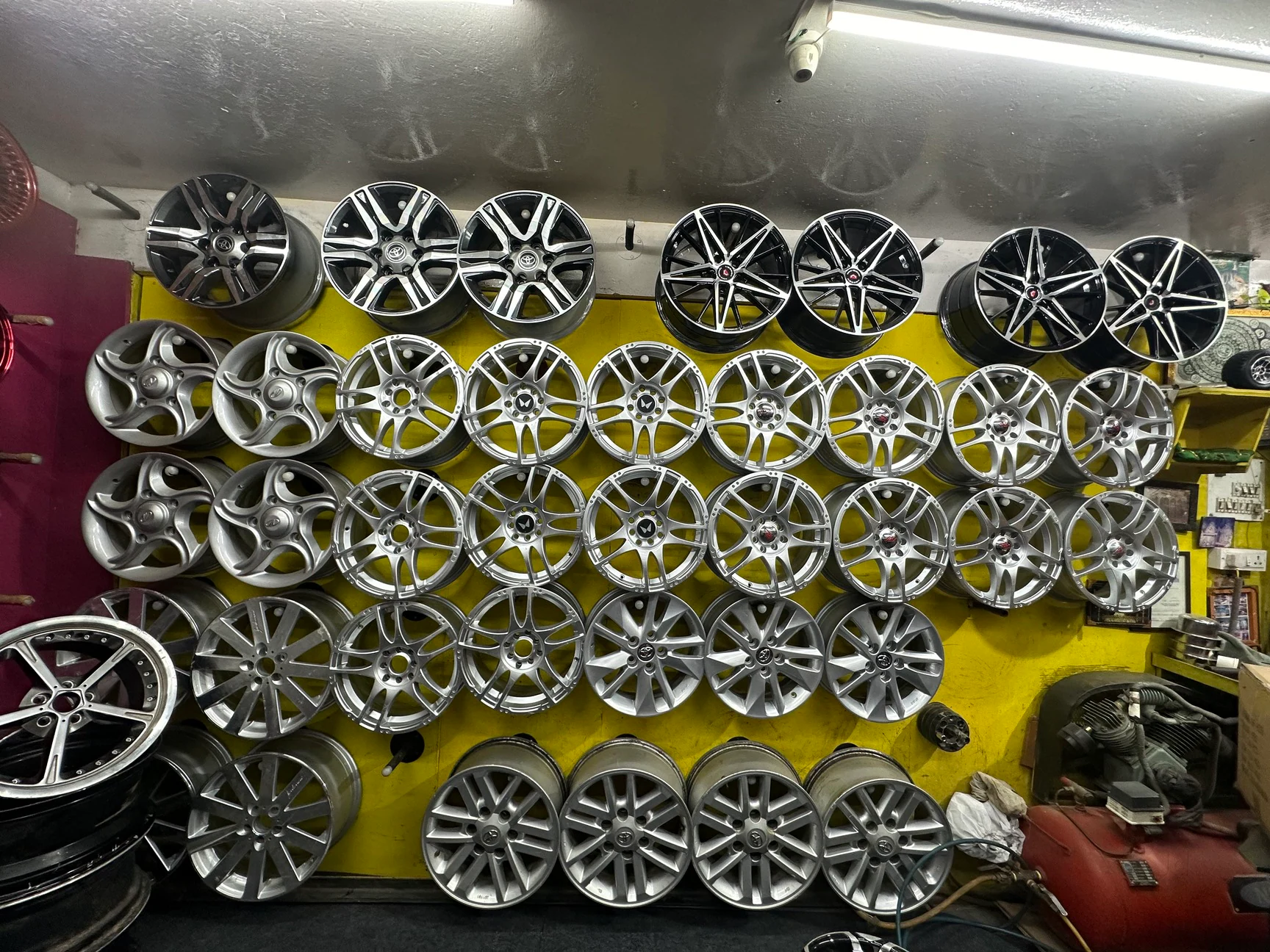
The question is never whether it happened. It’s always: how bad is it, can it be fixed, and what will it cost?
This guide answers all three — for every type of damage, every wheel finish, and every budget. We’ll also tell you when repair is smart and when it’s not — because sometimes a ₹3,500 repair on a wheel that needs replacement is ₹3,500 you can’t get back.
WHY BANGALORE IS UNIQUELY BRUTAL ON ALLOY WHEELS
Before the price breakdown, it’s worth understanding what specifically makes Bangalore harder on alloy wheels than almost any other Indian city.
Pothole profile: Bangalore’s annual monsoon season doesn’t just create potholes — it creates sharp-lipped, deep craters. The potholes on Outer Ring Road, ITPL Road, and Sarjapur Road near Bellandur are frequently 10–15 cm deep with hard vertical edges. When an alloy wheel drops into one of these at even moderate speed, the impact isn’t a gradual compression — it’s a shear force that hits the rim’s outer lip in a fraction of a second. This is how alloys bend and crack, not from sustained pressure but from sudden shock.
Kerb design: The kerbs in Bangalore’s older neighbourhoods — Jayanagar, Malleswaram, Basavanagudi — are frequently high, sharp-edged concrete. Parking close to them is unavoidable in many areas. Even a slow contact at 5 km/h leaves a visible gouge on an alloy wheel.
Speed breaker geometry: Bangalore’s thousands of unofficial speed breakers — installed by RWAs without standard profiles — include many with sharp edges and extreme height. Hitting one of these at anything above crawling speed produces an asymmetric impact on whichever wheel reaches it first. Over time, this repetitive stress concentrates in specific areas of the wheel structure.
Temperature cycling: Bangalore’s summer road surface temperatures regularly reach 50–55°C. The heat-cool cycling between daytime and night accelerates micro-stress in alloy metals over time, making wheels that have already been impacted more vulnerable to cracking on subsequent hits.
The result of all this: at Tyre Torque, alloy wheel damage is one of the top five reasons customers walk in. We see every type of damage, on every size wheel, from every part of the city. The prices in this guide come directly from our service floor.
THE 5 TYPES OF ALLOY WHEEL DAMAGE — AND WHAT EACH COSTS IN BANGALORE
Understanding which type of damage you have determines the repair approach and the price. Let’s go through each one.
DAMAGE TYPE 1: KERB RASH AND SURFACE SCRATCHES Price: ₹500 – ₹1,500 per wheel
This is the most common alloy wheel damage in Bangalore, and the most misunderstood. When your wheel grazes a kerb or wall, the outer rim edge takes the hit — scratching away the paint and protective lacquer, sometimes gouging into the alloy metal underneath.
At first glance, it looks purely cosmetic. Here’s what most people don’t realise: it isn’t.
Bare, exposed alloy metal in Bangalore’s humidity will begin to oxidise within weeks. What starts as a silver scratch develops a white chalky oxidation layer, which spreads under the surrounding paint and lacquer, causing them to bubble and peel. A ₹700 repair in April becomes a ₹3,500 full refurbishment job by October if left untreated.
What the repair involves: The damaged area is sanded back to clean metal. If the gouge is deep, a metal-compatible filler is applied and shaped to restore the original rim profile. The area is primed, painted to match the wheel’s original colour, and sealed with clear lacquer. For minor surface scratches confined to a small section of the rim, this is a touch-up repair. For deeper or wider damage, the entire outer rim face may need to be repainted for an even colour match.
Cost in Bangalore 2026: Minor scratch, small area (2–4 cm): ₹500–₹800 per wheel Moderate kerb rash, larger area: ₹800–₹1,200 per wheel Deep gouge needing filler + full rim face repaint: ₹1,200–₹1,500 per wheel
Is it worth repairing? Always — especially in Bangalore’s climate. Treating kerb rash early is the cheapest maintenance decision you can make for your alloy wheels. The longer you wait, the more expensive it gets.
DAMAGE TYPE 2: BENT OR BUCKLED RIM Price: ₹1,500 – ₹3,500 per wheel
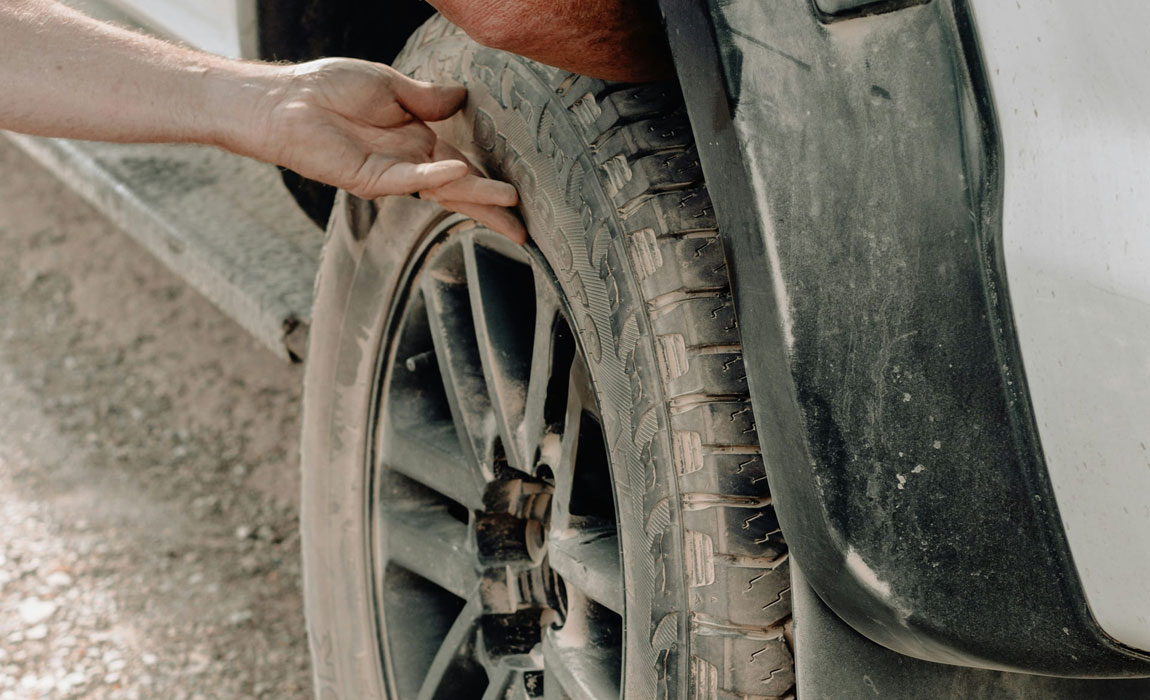
A pothole impact hard enough to bend an alloy wheel deforms the outer rim — the section that the tyre bead seats against. The wheel is no longer perfectly circular, which has two immediate consequences: the tyre can no longer form a perfect airtight seal (causing slow pressure loss), and the wheel no longer rotates true (causing vibration that worsens with speed).
Many drivers first notice a bent rim not by looking at the wheel but by feeling it — a new vibration that appeared suddenly after a specific pothole impact, or a tyre that keeps going slightly flat with no visible puncture.
What the repair involves: A hydraulic wheel straightening machine applies controlled, precisely calculated pressure to the deformed section, reforming the metal back to its original geometry. The process is done cold (without heat) on specialist equipment — heat weakens the alloy’s microstructure and should never be used to straighten wheels. After straightening, the wheel is balanced and carefully inspected for any cracks that the impact or the straightening process may have revealed.
Cost in Bangalore 2026: Minor outer rim bend, no refinishing needed: ₹1,500–₹2,000 per wheel Moderate bend with post-repair refinishing: ₹2,000–₹3,000 per wheel Severe deformation, multiple sections affected: ₹2,500–₹3,500 per wheel
Critical limitation — what cannot be straightened: Not every bent alloy wheel can or should be straightened. If the deformation has extended to the centre disc or spoke area (rather than just the outer rim), the structural load-bearing section of the wheel is compromised. Attempting to straighten this risks introducing internal micro-fractures that won’t be visible but will cause catastrophic failure under load — typically at speed.
If a shop tells you they can straighten any bent alloy wheel for a flat fee without inspecting where the bend is, walk away. A reputable technician will inspect the damage location before committing to a repair.
DAMAGE TYPE 3: CRACKED ALLOY WHEEL Price: ₹2,000 – ₹5,000 per wheel (where repairable)
This is the damage type that demands the most serious attention — and the most honest conversation between technician and customer.
Alloy wheels crack rather than bend gradually. Unlike steel wheels, which deform plastically and slowly, aluminium alloy is harder and more brittle. A hard pothole impact that would bend a steel rim will often crack an alloy rim instead. Many cracks are not immediately visible — they begin as hairline fractures on the inner barrel of the wheel, invisible unless the wheel is dismounted and inspected carefully.
The most common symptom of a cracked alloy wheel in Bangalore: a tyre that goes slightly flat overnight or over a few days, with no puncture visible in the tread. The crack allows air to seep slowly past the tyre bead. Drivers often visit three or four tyre shops for “phantom punctures” before anyone thinks to inspect the rim itself.
What the repair involves: Argon welding seals the crack by fusing the alloy metal at the fracture point. The welded area is then ground smooth, the wheel refinished, and the complete assembly pressure-tested to confirm the repair holds air correctly. After passing the pressure test, the wheel is balanced.
Cost in Bangalore 2026: Minor hairline crack, outer rim, weld + refinish: ₹2,000–₹3,000 per wheel Larger crack, inner barrel, more complex weld: ₹3,000–₹4,500 per wheel Multiple cracks or extensive crack welding: ₹4,000–₹5,000 per wheel
The repair vs replace decision for cracked wheels: This is where honest advice matters most. Not every cracked alloy wheel should be repaired. Here is the decision framework we use at Tyre Torque:
Repair is appropriate when: the crack is on the outer rim (not the centre disc or spoke roots), it is a single clean fracture rather than a spider-web of multiple cracks, the wheel is otherwise structurally sound, and the repair cost is less than 60% of a replacement wheel’s cost.
Replace immediately when: the crack runs through the centre disc or spoke root area (the primary load-bearing structure), when there are multiple cracks in different locations, when the wheel has already been crack-repaired before (repeated welding weakens the alloy progressively), or when the crack is near the centre bore.
Driving on a cracked alloy wheel — especially at highway speed — is not a calculated risk. It is a potential wheel failure event that can cause sudden tyre deflation and loss of vehicle control. If you suspect a crack, have the wheel inspected before driving further.
DAMAGE TYPE 4: DIAMOND-CUT ALLOY WHEEL DAMAGE Price: ₹4,000 – ₹8,000 per wheel
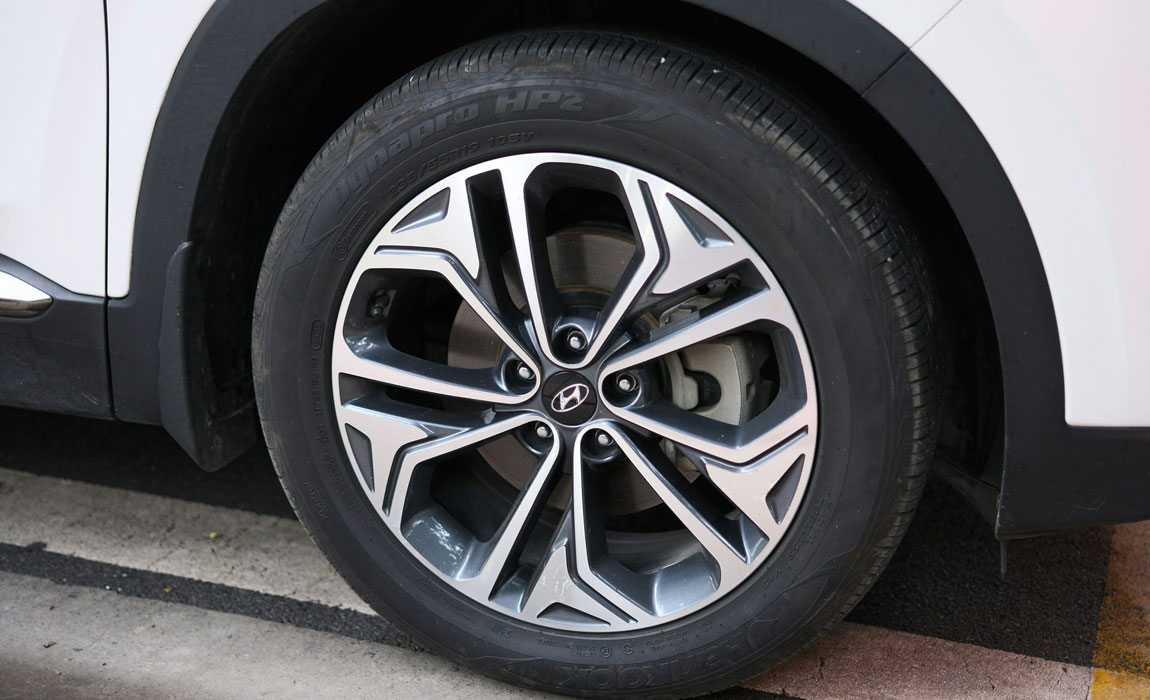
Diamond-cut alloy wheels are increasingly common on premium variants of popular Indian cars — the top trims of the Hyundai Creta, Kia Seltos, Tata Nexon, Honda City, and Volkswagen Taigun all feature diamond-cut finishes as standard or optional. They are also universal on luxury vehicles from BMW, Mercedes, and Audi.
The diamond-cut finish is created by mounting the finished wheel on a CNC lathe and cutting an extremely thin layer of metal from the face of the wheel with diamond-tipped tools. The result is a dual-finish wheel — a machined, mirror-bright aluminium surface with painted recesses between the spokes or in the background areas. It’s one of the most visually striking finishes available — and one of the most difficult to repair when damaged.
Why diamond-cut repair is more expensive and more complex: Standard painted alloys can be repaired with sanding, filler, paint, and lacquer. Diamond-cut alloys cannot. The machined aluminium surface cannot be painted to match — the colour and reflectivity of freshly cut aluminium is unique and cannot be replicated with paint. The only correct repair for a damaged diamond-cut surface is to re-machine it on a CNC lathe — cutting away another thin layer to expose fresh aluminium underneath and restore the mirror finish.
This requires specialist CNC wheel lathe equipment, trained operators, and significantly more time than a standard paint repair.
What the repair involves: The wheel is stripped of its current finish and inspected. Any structural damage (bends, cracks) is repaired first. The wheel is then mounted on a CNC lathe and a controlled cut is made across the face, removing the damaged surface and exposing fresh aluminium. The recessed sections are repainted in the correct colour. A specialised lacquer (not standard automotive lacquer — UV-stable alloy lacquer that protects the machined aluminium from oxidation) is applied to the whole face.
Cost in Bangalore 2026: Minor damage, small area, CNC re-cut + lacquer: ₹4,000–₹5,500 per wheel Moderate damage, full face re-cut + repaint recesses: ₹5,500–₹7,000 per wheel Severe damage, structural repair + full diamond-cut restoration: ₹6,500–₹8,000 per wheel
Important limitation: CNC re-cutting removes a thin layer of metal each time. This process can only be performed a limited number of times before the wheel becomes structurally too thin. Premium wheels can typically undergo this process twice — possibly three times on thicker castings. If a shop offers to diamond-cut restore a wheel without confirming its remaining material thickness, that’s a red flag.
DAMAGE TYPE 5: FULL WHEEL REFURBISHMENT Price: ₹3,000 – ₹7,000 per wheel (₹10,000 – ₹22,000 for a full set of four)
Sometimes a wheel has accumulated multiple types of damage — scratches, oxidation, peeling lacquer, light dents, and old paint that no longer matches — and the most cost-effective solution is to start fresh. A full refurbishment strips the wheel back to bare metal, repairs everything comprehensively, and refinishes it to look new.
What the refurbishment involves: Chemical stripping removes all paint and lacquer down to bare metal. The wheel is inspected in its bare state — this is when hidden cracks or deformation are most visible. All damage is repaired. The wheel is primed, painted in the chosen colour (original colour or a custom colour the owner selects), and sealed with a durable lacquer coat. Finally, it is balanced and pressure-tested.
Cost in Bangalore 2026: Standard painted finish refurbishment: ₹3,000–₹5,000 per wheel Premium finish (two-tone, gloss black, anthracite): ₹4,000–₹6,000 per wheel Diamond-cut refurbishment with CNC lathe: ₹5,500–₹7,000 per wheel Full set of four (standard): ₹10,000–₹18,000 (most shops offer 10–15% multi-wheel discount) Full set of four (diamond-cut): ₹18,000–₹24,000
Full refurbishment is the right choice when: the wheel has multiple overlapping damage types, the existing finish is badly oxidised or peeling across more than 30% of the surface, or the owner wants to change the wheel colour or finish entirely.
REPAIR VS REPLACE — THE HONEST DECISION GUIDE
This is the question we get asked most often at Tyre Torque, and it deserves a direct answer rather than a diplomatic non-answer.
ALWAYS REPAIR (don’t hesitate):
- Kerb rash and surface scratches caught early — always the cheapest option, always worth it
- Minor outer rim bends from pothole impacts — straightening is safe, effective, and a fraction of replacement cost
- Small cracks on the outer rim barrel, away from structural elements — welding is safe when done correctly
- Cosmetic oxidation and peeling lacquer — full refurbishment is far cheaper than replacement
REPAIR WITH CAUTION (get a second opinion if unsure):
- Moderate bends involving more than just the outer lip — have the bend location assessed before committing
- Cracks repaired once before — a second weld repair weakens the alloy progressively; assess carefully
- Diamond-cut wheels with deep structural damage — CNC re-cutting and structural repair together push costs close to replacement; run the numbers
ALWAYS REPLACE (don’t risk it):
- Cracks through the centre disc, spoke roots, or centre bore — these are primary structural areas; welding is not a safe long-term fix
- Wheels with multiple cracks in different locations — structural integrity is compromised throughout
- Wheels that have been crack-welded twice or more — the alloy has been heat-cycled too many times
- Severe bends where deformation extends into the centre section
- Any wheel where repair cost exceeds 60% of a replacement wheel’s price
The 60% rule is a reliable financial guideline: if it costs more than ₹9,000 to repair a wheel that can be replaced with a quality OEM alloy for ₹15,000, replacement is the smarter choice. The repaired wheel will always be structurally somewhat weaker than a new one; spending 60% of the replacement cost on a repair that produces an inferior outcome makes no financial sense.
HOW WHEEL SIZE AFFECTS REPAIR COST IN BANGALORE
This is a factor most guides mention briefly and move on from. It deserves more attention because the size difference in Bangalore’s current car fleet is significant.
14-inch wheels (Maruti Alto, Wagon R base): Smallest in the market, least material, least machining time. Repair costs sit at the lower end of every range above. Full refurbishment for a set of four: ₹10,000–₹14,000.
15-inch wheels (Maruti Swift, Hyundai i20, Honda City): The most common size in Bangalore’s car parc. Repair costs are the “standard” figures cited throughout this guide. Full refurbishment for a set of four: ₹12,000–₹16,000.
16-inch wheels (Hyundai Creta, Tata Nexon, Kia Sonet): Add approximately ₹500–₹800 per wheel over 15-inch pricing for the same repair type. Full refurbishment for a set of four: ₹14,000–₹20,000.
17-inch and above (Kia Seltos HTX+, VW Taigun, MG Hector): Add ₹1,000–₹1,500 per wheel over standard pricing. More material, more machining time, more balancing weight required. Full refurbishment for a set of four: ₹16,000–₹24,000.
18-inch and above (Toyota Fortuner, BMW 3 Series, Mercedes C-Class, Hyundai Tucson): Premium pricing throughout. CNC lathe time alone costs more on larger wheels. Full refurbishment for a set of four: ₹20,000–₹35,000+.
WHAT ABOUT INSURANCE? WILL YOUR POLICY COVER ALLOY WHEEL DAMAGE?
This is a question we hear regularly, and the honest answer is: usually no — but sometimes yes, depending on your policy.
Standard comprehensive motor insurance in India covers damage from accidents — collisions with other vehicles or objects. Pothole damage and kerb rash are typically classified as “wear and tear” or “road hazard damage” rather than accidents, and are not covered under standard comprehensive policies.
Zero-depreciation add-on cover extends coverage to certain types of damage without depreciation deductions, but still typically excludes pothole and kerb damage unless the incident qualifies as an accident in the insurer’s definition.
Engine Protection and Tyre Protection add-ons (offered by some insurers) sometimes include alloy wheel damage specifically. HDFC Ergo, Bajaj Allianz, and ICICI Lombard all offer tyre protection riders that may cover alloy wheel damage from road hazards — check your specific policy document.
The practical advice: always document alloy wheel damage with photographs immediately after the incident, note the exact location and date, and speak to your insurer before assuming you’re not covered. The worst they can say is no.
5 QUESTIONS TO ASK ANY BANGALORE WORKSHOP BEFORE YOU AGREE TO ALLOY REPAIR
Not every alloy wheel repair shop in Bangalore delivers the same quality. These five questions will tell you immediately whether a shop knows what they’re doing.
- “Do you have a hydraulic wheel straightening machine, or do you straighten by hand?” Hand straightening of alloy wheels — using mallets or presses without controlled pressure measurement — produces inconsistent results and can crack the alloy. A proper hydraulic straightening machine with pressure gauges is the only appropriate tool. If a shop cannot answer this clearly, walk away.
- “Do you pressure-test cracked wheels after welding?” After crack welding, the only way to confirm the repair is airtight is a pressure test — mounting the tyre, inflating the wheel assembly, and submerging it in water to look for bubbles, or using a pressure differential test. Any shop that skips this step after crack repair is releasing a wheel onto the road without confirming it holds air. That’s your tyre and your safety.
- “Can I have the before-and-after wheel balance readings?” After any alloy repair, the wheel must be rebalanced. A professional shop will have before and after balance readings. If they cannot produce this, either the wheel wasn’t balanced or they don’t have proper documentation — both are problems.
- “Do you use cold straightening or heat straightening?” The correct answer is cold straightening. Heat application during straightening changes the microstructure of the alloy around the heated area, creating a stress concentration point that is more likely to crack on the next impact. Reputable shops use cold hydraulic processes only. If a shop uses heat, they may be offering a quick and cheap fix that’s potentially compromising your safety.
- “What’s your assessment of this wheel — repair or replace?” A good technician will give you an honest assessment before taking your money. If the first words out of their mouth are a price rather than an inspection opinion, they haven’t looked at the wheel carefully enough to make a proper recommendation.
HOW LONG DOES ALLOY WHEEL REPAIR TAKE IN BANGALORE?
Knowing the turnaround time helps you plan around the repair:
Kerb scratch touch-up (minor): 2–4 hours. Same-day service is standard for minor cosmetic repairs.
Bent rim straightening (without refinishing): 2–3 hours. Most straightforward bend repairs can be done while you wait.
Bent rim straightening with refinishing: 4–8 hours. Allow a full day; same-day collection is possible at most shops if you bring the car in the morning.
Crack welding with refinishing: 1–2 days. The weld needs to cool and cure, the wheel needs pressure-testing, and the finish needs drying time.
Diamond-cut CNC restoration: 2–3 days. CNC machining requires setup and precision time, and the lacquer curing process cannot be rushed.
Full refurbishment (one wheel): 2–3 days.
Full refurbishment (four wheels): 3–5 days. Most shops batch all four wheels through the process simultaneously, so the time is not simply four times the single-wheel time.
If a shop is promising diamond-cut restoration in one day, that is not enough time for the lacquer to cure properly. A rushed cure produces a finish that peels within months. Don’t trade time savings for a job that needs doing again in six months.
HOW TO PROTECT YOUR ALLOY WHEELS IN BANGALORE — 5 PRACTICAL STEPS
Prevention is always cheaper than repair. Here’s what works in Bangalore’s specific conditions.
Maintain correct tyre pressure at all times. Underinflated tyres provide less cushioning for the wheel rim on pothole impacts. A tyre that is 8–10 PSI low significantly increases the force transmitted to the rim on impact. Check pressures every 2 weeks — don’t rely on your TPMS warning light, which only triggers at critically low pressure.
Slow down at potholes when you can see them. The force of a pothole impact increases with the square of speed — hitting a pothole at 40 km/h generates approximately four times the impact force of hitting it at 20 km/h. On Bangalore roads, where potholes are unavoidable, approaching them at reduced speed is the most effective protection you have.
Use alloy wheel sealant or ceramic coating. A hydrophobic coating on the wheel surface makes it easier to clean, reduces brake dust adhesion, and creates a micro-barrier that slows the onset of oxidation after any surface damage. This won’t prevent damage but extends the time before minor scratches become oxidation problems.
Park with awareness. Most kerb rash happens at slow speeds in tight spaces. When parking in Indiranagar, Koramangala, or any area with narrow lanes and high kerbs, take the extra 30 seconds to position carefully. The cost of that caution, measured over 5 years of Bangalore parking, is dramatically less than the cost of four annual kerb rash repairs.
Inspect wheels monthly. Run a quick visual check of each wheel — including the inner barrel where you need to crouch — every month. Catching a hairline crack or the beginning of oxidation early is always cheaper than catching it late.
GET YOUR ALLOY WHEELS ASSESSED AND REPAIRED AT TYRE TORQUE, BANGALORE
At Tyre Torque – NV Tyre Centre, we inspect every alloy wheel honestly before recommending repair or replacement. We tell you what’s structurally sound to repair, what isn’t, and what the repair will cost before any work begins. No upsells. No vague pricing. No rushing a 3-day job into one day.
What we offer for alloy wheels: ✅ Free alloy wheel damage assessment on every visit ✅ Hydraulic cold-press wheel straightening — never heat ✅ Argon crack welding with mandatory pressure testing after ✅ CNC diamond-cut restoration for premium alloy finishes ✅ Full refurbishment in standard and custom finishes ✅ Wheel balancing after every repair — always included, never charged separately ✅ Transparent, fixed pricing — quoted before work begins
📍 Kasturi Nagar Main Road, Near CMR College, Next to Nayara Petrol Station, Chikka Banaswadi, Bangalore – 560043 📞 +91-72041-01993 🌐 www.tyretorque.in 🕘 Open 7 days | 8:00 AM – 8:00 PM
Walked away from a pothole hit wondering if your alloy is bent or cracked? Come in for a free inspection. We’ll tell you exactly what happened to that wheel and exactly what it will cost to fix — or whether replacing it is the smarter call.
FREQUENTLY ASKED QUESTIONS
How much does alloy wheel repair cost in Bangalore in 2026?
It depends on the damage type. Kerb scratch repairs cost ₹500–₹1,500 per wheel. Bent rim straightening costs ₹1,500–₹3,500. Crack welding costs ₹2,000–₹5,000. Diamond-cut restoration costs ₹4,000–₹8,000 per wheel. Full refurbishment costs ₹3,000–₹7,000 per wheel, or ₹10,000–₹22,000 for a full set of four.
Can a cracked alloy wheel be repaired safely?
It depends entirely on where the crack is. Cracks on the outer rim barrel can often be welded safely and should then be pressure-tested before road use. Cracks through the centre disc, spoke roots, or centre bore are structural — these wheels should be replaced, not repaired. Never drive on a cracked alloy wheel at highway speed before it has been inspected.
How do I know if my alloy wheel is bent?
The most common symptoms are vibration that started suddenly after a pothole impact, a tyre that slowly loses pressure with no visible puncture, or a rougher ride that appeared after a specific incident. A technician can confirm a bend by spinning the wheel on a balance machine and measuring runout — the deviation from a true circle.
Is alloy wheel repair covered by insurance in India?
Standard comprehensive insurance does not cover pothole or kerb damage. Zero-depreciation add-ons and specialist tyre protection riders from some insurers may cover alloy damage — check your specific policy document. Always photograph the damage immediately and note the date and location.
How many times can a diamond-cut alloy be re-cut?
Typically twice, sometimes three times on thicker castings. Each CNC re-cut removes a thin layer of aluminium from the wheel face. Once the material becomes too thin, re-cutting is no longer safe and the wheel must be replaced. A reputable technician will measure the remaining thickness before committing to a re-cut.
Should I repair alloy wheels before selling my car?
Yes, in almost all cases. Damaged alloy wheels are among the first things buyers and dealerships look at during an inspection. A professional repair that costs ₹2,000–₹3,000 per wheel typically recovers ₹5,000–₹10,000 in negotiated sale price — a strong return. Full refurbishment before sale often pays for itself completely in a private sale negotiation.
How long does alloy wheel repair last?
A quality repair done correctly — proper material filling, proper paint, proper lacquer cure time — should last for years. Kerb scratch repairs on painted alloys, done with the correct alloy-compatible filler and lacquer, typically last 3–5 years before any touch-up is needed. Crack welds that pass a pressure test are permanent structural repairs. Diamond-cut finishes, if done with UV-stable lacquer, maintain their appearance for 2–4 years in Bangalore’s conditions before the lacquer begins to dull slightly.

2 Responses