
You’ve got a puncture. The tyre shop mechanic looks at it for 10 seconds and says:
“Sir, repair possible — ₹300.”
Or:
“Sir, tyre damage ho gaya. Replace karna padega — ₹3,500.”
Which one is he telling the truth? How do you know when a puncture is actually repairable vs when your tyre genuinely needs replacement? And what exactly is a “mushroom puncture” anyway?
This guide answers every question — with clear rules, a decision matrix, and the honest truth about what Bangalore tyre shops won’t always tell you.
Quick Answer: A puncture is safely repairable if it’s in the tread area, smaller than 6mm in diameter, and the tyre has no other structural damage. Sidewall punctures, holes larger than 6mm, and damaged inner liners always require replacement. A proper mushroom plug repair costs ₹250-400. A new tyre costs ₹2,500-7,000+. The difference is knowing which situation you’re actually in.
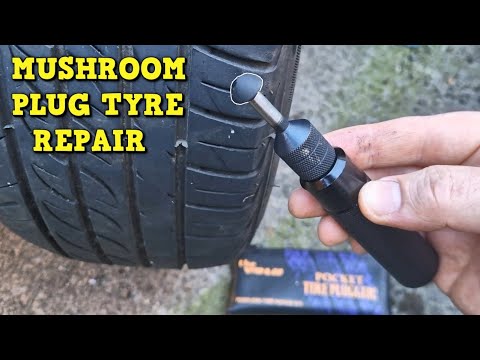
What Is a Mushroom Puncture Repair?
Before deciding repair vs replace, understand what a mushroom repair actually is — because it’s very different from the ₹50 roadside “string plug” repair.
The Roadside String Plug (Avoid This)
You’ve seen this a hundred times on Bangalore roads:
- Mechanic finds the nail/screw
- Pulls it out with pliers
- Jams a rubber string into the hole with a metal tool
- Inflates tyre
- Charges ₹50-100
- Done in 4 minutes
What’s wrong with it:
- Only seals the outer hole, not the inner liner
- String can work loose at high speeds
- Air leaks slowly for weeks or months
- Tyre structure remains compromised
- Not safe for highway speeds above 80 km/h
- Many tyre manufacturers void warranty after string plug
The Mushroom Plug Repair (The Right Way)
Named after its mushroom-shaped patch, this is the industry-standard repair method approved by all major tyre manufacturers.
How it works:
Step 1: Tyre Removal Tyre is completely removed from the rim — not repaired while mounted.
Step 2: Inner Liner Inspection Inside of tyre inspected under light for:
- Size and angle of puncture
- Inner liner damage
- Secondary damage from running flat
Step 3: Damage Assessment If repairable: Hole is buffed from inside and outside.
Step 4: Mushroom Plug Insertion The mushroom plug — a rubber unit with a flat cap (the mushroom head) and a stem — is:
- Pulled through the hole from inside out
- Cap seals the inner liner
- Stem fills the hole from inside
- Vulcanizing cement bonds everything permanently
Step 5: Curing Heat-cured or chemical-cured to create permanent bond.
Step 6: Remounting and Balancing Tyre remounted, balanced, and pressure checked.
Time: 25-45 minutes
Cost at TyreTorque: ₹250-400
Result: Permanent, manufacturer-approved repair
The Repair vs Replace Decision Matrix
Use this before agreeing to anything at a tyre shop.
REPAIR IS SAFE WHEN:
✅ Puncture is in the central tread area (middle 75% of tread width)
✅ Puncture diameter is 6mm or smaller
✅ Puncture angle is roughly perpendicular (not severely angled)
✅ Tyre has adequate tread remaining (3mm+)
✅ Tyre has not been driven flat for more than 1-2 km
✅ No sidewall damage present
✅ Inner liner is intact (confirmed by internal inspection)
✅ No previous repairs in or near the damaged area
✅ Tyre is less than 5 years old
One tyre can typically hold a maximum of 2 repairs — never in the same area.
REPLACEMENT IS REQUIRED WHEN:
❌ Puncture is on the sidewall (any size — no exceptions)
❌ Puncture is on the shoulder (where tread meets sidewall)
❌ Puncture is larger than 6mm
❌ Puncture angle is severe (over 25 degrees from perpendicular)
❌ Tyre was driven flat (even 3-5 km can destroy inner structure)
❌ Multiple punctures too close together
❌ Tread depth below 2mm (replace regardless)
❌ Sidewall bulge present (pothole damage)
❌ Visible inner liner damage on inspection
❌ Tyre is over 6 years old
❌ Previous repairs already exist near damaged area
❌ Any visible cracks, cuts, or impact breaks
The Location Rule: Most Important Factor
Where the puncture is located matters more than almost anything else. Here’s the definitive guide:
Zone 1: CENTER TREAD — ALWAYS REPAIRABLE
|←————— 75% of tread width —————→|
|  SAFE REPAIR ZONE                |
|  (Central tread area)            |
What it looks like: Nail or screw embedded in the flat top surface of the tyre, roughly in the middle area.
Why it’s safe: This area has the most rubber, adequate distance from the structural sidewall belts, and the inner liner is intact.
Repair cost: ₹250-400 (mushroom plug)
Expected result: Permanent repair, tyre safe for full remaining lifespan
Zone 2: SHOULDER — NEVER REPAIRABLE
|  Center  |← SHOULDER →|  SIDEWALL  |
|  (Safe)  |  (DANGER)  |  (DANGER)  |
What it looks like: Puncture at the curved edge where the flat tread transitions to the sidewall.
Why it’s dangerous: The shoulder flexes dramatically with every wheel rotation. No repair material can maintain a permanent seal under this constant movement. Failure risk is high, especially at highway speeds.
Action required: Tyre replacement, no exceptions.
Zone 3: SIDEWALL — ALWAYS REPLACE
What it looks like: Damage on the vertical side wall of the tyre, anywhere between the rim and the tread edge.
Why it’s dangerous:
- Sidewall flexes 800-1,000 times per kilometer
- Contains the structural integrity of the tyre
- No repair can withstand this repeated flex
- Failure = sudden blowout at any speed
The Bangalore Pothole Connection: Sidewall damage is often caused by pothole impact, not punctures. The bulge you see after hitting a pothole is internal structural damage — never drive on a sidewall-bulged tyre.
Action required: Immediate replacement. Do NOT drive more than absolutely necessary.
Size Guide: When the Hole Is Too Big
The 6mm Rule
| Hole Size | Repair? | Reason |
|---|---|---|
| Under 3mm | ✅ Yes | Small nail/screw — ideal for repair |
| 3-6mm | ✅ Yes | Standard mushroom plug handles this |
| 6-10mm | ⚠️ Maybe | Needs expert assessment — often no |
| Over 10mm | ❌ No | Too large for any safe repair |
| Gash/cut | ❌ No | Structural damage — always replace |
How to estimate size at the shop:
- A standard nail: 3-4mm → Repairable
- A large screw: 5-6mm → Borderline, expert call
- A bolt: 7mm+ → Replace
- Road debris cut: Replace
Tip: Ask the mechanic to show you the removed object and the hole before agreeing to repair or replace.
The Angle Rule: Perpendicular vs Angled
Most people don’t know this factor exists. It matters significantly.
Perpendicular Puncture (90 degrees) — Ideal for Repair
Nail went straight in, perpendicular to the tread surface. Clean hole, inner liner intact, mushroom plug seals perfectly.
Angled Puncture (under 25 degrees) — Usually Repairable
Nail or screw entered at slight angle. Repair more complex but typically achievable with proper mushroom plug.
Severe Angle (over 25 degrees) — Often Not Repairable
Severely angled objects create oval or elongated holes that are hard to seal permanently. The mushroom plug may not bond properly.
How to check: Ask the mechanic to show you the puncture channel before patching. A responsible shop will always show you.
The “Driven Flat” Problem: Bangalore’s Biggest Tyre Killer
This is where most Bangalore drivers make an expensive mistake.
What Happens When You Drive on a Flat Tyre
At 0 km flat: Tyre is punctured, slightly low pressure
At 1 km flat: Inner liner begins deforming
At 3 km flat: Sidewall structural integrity compromised
At 5 km flat: Inner liner likely torn — repair impossible
At 8+ km flat: Rim damage possible — tyre definitely dead
The Bangalore Reality
“I didn’t know it was flat until I reached the petrol bunk” — we hear this daily at TyreTorque.
Signs you’re driving on low/flat tyre:
- Steering pulls strongly to one side
- Sluggish, heavy steering feel
- Car sits noticeably lower on one corner
- Thumping or flapping sound
- TPMS warning light (if your car has it)
What to do if you get a puncture:
- Pull over safely and immediately (use hazard lights)
- Do NOT drive to the nearest shop
- Call for roadside assistance OR change to spare
- If you must drive: 1km maximum, hazard lights on, under 20 km/h
TyreTorque Emergency: Call +91-72041-01993 for advice on whether your specific situation allows driving to us.
Cost Comparison: Repair vs Replace
Mushroom Puncture Repair Costs in Bangalore
| Service | Budget Shop | TyreTorque | Authorized Dealer |
|---|---|---|---|
| String plug only | ₹50-100 | Not offered | Not offered |
| Mushroom plug repair | ₹150-200 | ₹250-350 | ₹400-600 |
| Repair + remounting | Included | Included | Included |
| Repair + rebalancing | ₹100 extra | Included | Included |
| Nitrogen refill after | ₹100-200 | FREE | ₹200-400 |
| Total fair cost | ₹250-400 | ₹250-400 | ₹600-1,000 |
Why TyreTorque charges ₹250-350 (not the cheapest): We use vulcanizing cement + heat curing + include rebalancing. Budget shops skip curing = repair fails faster. Authorized dealers charge double for identical work.
Tyre Replacement Costs in Bangalore (When Repair Not Possible)
| Car Type | Budget Tyre | Mid-Range | Premium |
|---|---|---|---|
| Hatchback (185/65 R15) | ₹2,400 (CEAT) | ₹2,800 (Apollo) | ₹4,200 (Michelin) |
| Sedan (195/60 R16) | ₹3,200 | ₹3,800 | ₹5,500 |
| SUV (215/60 R17) | ₹4,800 | ₹5,800 | ₹7,200 |
Plus installation: ₹600-800 per tyre (fitting, balancing, nitrogen, valve)
Total replacement cost (1 tyre):
- Hatchback budget: ₹3,000-3,200
- Hatchback mid-range: ₹3,400-3,600
- SUV premium: ₹8,000+
The real cost of a ₹50 roadside plug that fails:
- Failed repair → damaged inner liner → tyre can’t be saved → ₹3,000+ replacement
- The ₹200 you “saved” cost you ₹3,000
5 Signs a Tyre Shop Is Pushing Unnecessary Replacement
Unfortunately, some Bangalore shops recommend replacement when repair is perfectly viable. Here’s how to spot it.
Red Flag #1: No Internal Inspection
A legitimate mushroom repair requires removing the tyre from the rim to inspect the inner liner. If a mechanic says “repair possible” or “not possible” without removing the tyre — walk away. He hasn’t done the essential check.
What to say: “Please remove the tyre and show me the inside before we decide.”
Red Flag #2: “This Brand Can’t Be Repaired”
False. Michelin, Apollo, CEAT, Bridgestone — all brands can be repaired using the same method if the puncture meets repair criteria. Brand has zero influence on repairability.
Exception: Run-flat tyres cannot be repaired after being driven flat. But regular tyres have no brand restriction.
Red Flag #3: “Tyre Too Old to Repair”
Partially true, but misused. A 4-year-old tyre in good condition with 5mm+ tread is absolutely repairable. “Too old” is only valid if the rubber shows significant cracking or the tyre is 7+ years old.
What to do: Ask them to show you the cracking or aging they’re concerned about.
Red Flag #4: Quick Replacement Recommendation Without Explanation
If a mechanic glances at your tyre for 5 seconds and says “replace karna padega” — ask WHY. A professional should be able to tell you:
- Exactly where the damage is (zone 1, 2, or 3)
- Exact size of the puncture
- Specific reason repair isn’t possible
No explanation = no credibility.
Red Flag #5: Replacement Recommendation for a Center Tread Nail
A small nail in the center tread is the most textbook repairable puncture there is. If a shop recommends replacement for this scenario without any other damage present — they’re either incompetent or dishonest.
Action: Get a second opinion before spending ₹3,000+.
Real Cases From TyreTorque Workshop
Case 1: The Unnecessary Replacement (Saved ₹3,200)
Situation: Priya drove her Baleno to a petrol bunk with a slow puncture. Attendant said tyre needed replacement — ₹3,200.
TyreTorque Assessment: 4mm nail in center tread, inner liner fully intact, tyre had 6mm+ tread. Textbook repairable puncture.
Result: Mushroom repair for ₹300. Tyre still running fine after 8,000 km.
Saved: ₹2,900
Case 2: When Replacement Was Right (Safety Prevented Accident)
Situation: Vikram brought his Creta with what looked like a simple nail. He was annoyed we recommended replacement.
TyreTorque Finding: Nail was in the shoulder zone. Inner liner showed cracking from repeated flex. Additionally, tyre had been driven approximately 8 km on low pressure — inner liner deformation visible.
Result: Replaced the tyre. Three weeks later, Vikram WhatsApped us: “Glad I replaced it. Drove Bangalore-Coorg last week. If that tyre had blown on the ghats…”
Lesson: ₹5,800 replacement vs unknown risk on Coorg ghat roads.
Case 3: The String Plug That Cost ₹4,000
Situation: Rajesh had a puncture repaired at a roadside shop for ₹80 (string plug). Two months later, the repair failed at 90 km/h on NICE Road.
Damage: Inner liner torn from running flat after plug failure. Rim scratched from impact.
Cost: New tyre (₹3,200) + rim repair (₹800) = ₹4,000
Original mushroom repair cost: ₹300
The ₹80 “saving” cost him ₹4,000.
Mushroom Puncture Repair: Step-by-Step at TyreTorque
When you bring your car to us with a puncture, here’s exactly what happens — no surprises.
Step 1: Free Assessment (5 minutes)
Our technician:
- Locates the puncture object
- Identifies the zone (1, 2, or 3)
- Estimates hole size
- Checks tyre age and condition
- Gives you honest repair/replace recommendation with reasons
Cost: ₹0 — No obligation
Step 2: Tyre Removal (10 minutes)
If repairable, tyre removed from rim on our professional tyre changer. This step alone separates us from roadside shops who repair without removing.
Step 3: Internal Inspection (5 minutes)
Inner liner examined under workshop lighting:
- Confirm puncture size from inside
- Check inner liner integrity
- Look for secondary damage
- Final repair/replace call
If we find unrepairable damage at this stage: We show you and explain. No charge for assessment.
Step 4: Surface Preparation (5 minutes)
- Damaged area buffed from inside and outside
- Cleaning solution applied
- Vulcanizing cement applied to both surfaces
Step 5: Mushroom Plug Insertion (5 minutes)
- Correct size mushroom plug selected
- Pulled through from inside
- Cap pressed firmly to inner liner
- Stem trimmed flush on outside
Step 6: Curing (10 minutes)
Heat curing applied for permanent bond. This step is skipped by budget shops — it’s what makes our repair last vs fail.
Step 7: Remounting and Balancing (10 minutes)
- Tyre remounted on rim
- Wheel balanced (included in our repair cost)
- Pressure set to correct PSI
- Nitrogen topped up (free)
Step 8: Road Test
We drive the car 50-100 meters to confirm no air loss, correct mounting, and proper feel.
Total time: 45-60 minutes
Total cost: ₹250-350 (includes rebalancing + nitrogen)
Tyre Replacement: When You Have No Choice
When replacement is necessary, here’s how to make the best of it.
Do You Need to Replace All 4 Tyres?
No — but follow these rules:
Replace just the damaged tyre when:
- Remaining 3 tyres have 50%+ tread
- Remaining tyres are same brand/model
- Tyres are less than 2 years old
Replace in pairs (axle) when:
- Opposite tyre has less than 50% tread
- Matching tyre not available
- For AWD/4WD vehicles (critical — unequal tread can damage drivetrain)
Replace all 4 when:
- All tyres showing wear
- Opportunity to upgrade all at once
- Best handling balance
Choosing Replacement Tyre in Bangalore
Same size as damaged tyre — check sidewall for size code (e.g., 185/65 R15)
Same or better brand — don’t downgrade from Michelin to no-name
Same type — if you had all-season, replace with all-season
Check manufacturing date — demand fresh stock (within 6 months)
Frequently Asked Questions
Q1: How much does mushroom puncture repair cost in Bangalore?
Fair market rate for a proper mushroom plug repair in Bangalore is ₹250-400. This should include tyre removal, internal inspection, plug insertion with vulcanizing cement, curing, remounting, and rebalancing. If quoted below ₹150, they’re likely doing a string plug without proper removal — avoid it. Above ₹600 for a standard hatchback is overcharging.
Q2: Can I drive to TyreTorque with a puncture?
Depends on severity. Safe to drive slowly (under 40 km/h): Minor slow puncture that’s still holding reasonable pressure — drive immediately, don’t delay further. Not safe to drive: Tyre visibly flat, car sitting low, thumping sound. Call us: +91-72041-01993. Driving on a completely flat tyre even 5 km can convert a ₹300 repair into a ₹3,500 replacement.
Q3: Is tubeless tyre puncture repair different?
Yes, but only slightly. Most modern Bangalore cars have tubeless tyres (no inner tube). Tubeless repair is actually easier and faster. The mushroom plug bonds directly to the inner liner. Tube tyres require tube replacement/patching in addition. At TyreTorque, we handle both.
Q4: How long does a mushroom repair last?
A properly done mushroom repair with vulcanizing cement and heat curing is permanent — meaning it should last the remaining life of the tyre. Our repairs come with a 1-year warranty against repair failure. If a repair fails within a year, we redo it free.
Q5: My mechanic says sidewall puncture can be repaired “internally.” True?
False. No repair method makes sidewall punctures safe. Period. This is a universal standard across all tyre manufacturers worldwide. Any mechanic claiming otherwise is either misinformed or trying to avoid a replacement sale. Sidewall repairs fail unpredictably and often at high speed. Don’t risk it.
Q6: Can run-flat tyres be repaired after a puncture?
No — if driven in run-flat mode (deflated). Run-flat tyres are designed to be driven 80 km at 80 km/h when flat, but this destroys the internal structure. After being driven flat, run-flat tyres must be replaced. If you caught a run-flat puncture BEFORE driving on it flat, consult a specialist.
Q7: What’s the difference between a patch and a mushroom plug?
A patch only covers the inner liner from inside — it doesn’t seal the hole channel itself. A mushroom plug does both: the stem fills the hole channel AND the mushroom cap patches the inner liner. Industry standard today is mushroom plugs (also called combination repairs) because they seal both the channel and liner simultaneously.
Q8: Should I put the repaired tyre on the front or rear?
Always put the best tyres on the rear for safety — whether repaired or newer. Rear tyre failure is harder to control than front. If your car is rear-wheel drive, this is even more critical. After repair, move the repaired tyre to the rear and put the best remaining tyre on that front position.
Q9: My tyre has two punctures. Can both be repaired?
Maybe — if both punctures meet repair criteria AND are at least 15cm apart. Two adjacent punctures create overlapping damage that weakens the repair zones. Our technician will assess distance between holes and advise accordingly. Maximum 2 repairs per tyre lifetime.
Q10: Will my tyre warranty be affected by a mushroom repair?
A proper mushroom plug repair (not string plug) following manufacturer guidelines does NOT void tyre warranty for other issues. However, warranty claims for the repaired area itself won’t be honored — this is standard. String plug repairs CAN void warranty entirely. Always get a proper repair.
The Bottom Line: Repair or Replace?
Here’s the simplest decision guide you’ll find anywhere:
REPAIR (₹250-400) if ALL of these are true:
✅ Nail/screw in center tread area
✅ Hole 6mm or smaller
✅ Not driven flat
✅ Tread depth 3mm+
✅ Tyre under 6 years old
✅ No other damage visible
REPLACE (₹3,000-8,000) if ANY of these are true:
❌ Damage on sidewall or shoulder
❌ Hole larger than 6mm
❌ Driven flat for more than 2 km
❌ Tread depth under 2mm
❌ Sidewall bulge present
❌ Multiple damages
❌ Inner liner damaged (confirmed by internal check)
❌ Tyre over 6 years old
Get Expert Assessment if UNSURE:
- Borderline hole size (5-7mm)
- Minor shoulder area damage
- Tyre driven slightly flat (1-2 km)
- Multiple close punctures
At TyreTorque, assessment is always free. We’ll tell you honestly — even if the honest answer means a ₹300 repair instead of a ₹3,500 sale.
Visit TyreTorque for Honest Puncture Assessment
Bangalore’s roads are unpredictable. Punctures happen to everyone. What shouldn’t happen is paying ₹3,500 for a replacement when a ₹300 repair would have done — or worse, accepting a ₹50 string plug that fails on the highway.
At TyreTorque: ✓ Free puncture assessment (no obligation)
✓ Internal inspection on every repair
✓ Mushroom plug + vulcanizing cement only (no string plugs)
✓ Rebalancing included in repair cost
✓ Free nitrogen refill after repair
✓ 1-year repair warranty
✓ Honest replace recommendation when genuinely needed
Location:
TyreTorque – NV Tyre Centre
Kasturi Nagar Main Road
Next to Nayara Petrol Station
Bangalore – 560043
Call/WhatsApp: +91-72041-01993
Hours: Monday-Sunday, 9 AM – 8 PM

One Response