You’re Filling Air Every 3 Days—Here’s Why
It’s Tuesday morning. You’re heading to Marathahalli for work. The TPMS light blinks on. Again. You filled air on Saturday. Before that, Thursday. And the week before, twice.
You’ve visited three tyre shops on ORR. Each time: “Small puncture, sir. We fixed it.” Each time: ₹150. Each time: The leak returns within 4-7 days.
You’ve spent ₹600 on “repairs” in a month. The leak keeps coming back. You’re losing 2-3 PSI daily. You’re frustrated, late for work, and wondering if you need a new tyre.
Here’s what nobody told you: That ₹150 “quick plug” was never designed to be permanent. It’s a temporary fix being sold as a permanent solution. And on Bangalore’s roads—with potholes, heat, and monsoon—temporary fixes fail fast.
This guide reveals why your puncture repair keeps failing, the difference between plug, patch, and mushroom repairs, and what actually works for Bangalore conditions.
What is a “Slow Puncture”? (And Why It’s Worse Than a Flat)
The Definition:
A slow puncture leaks air gradually—typically 1-5 PSI per day. You don’t notice it immediately like a flat tyre. Instead, you realize after a few days that pressure dropped from 32 PSI to 26 PSI.
Why It’s Actually Worse Than a Sudden Flat:
With a Sudden Flat:
- You notice immediately (thump-thump sound)
- You stop and change to spare
- You get proper repair done within 24 hours
- Total damage: Usually just the puncture
With a Slow Puncture:
- You don’t notice for 3-7 days
- You drive on under-inflated tyre (damages sidewalls)
- The leak worsens gradually
- Inner liner gets damaged from flexing
- What started as a ₹300 repair becomes a ₹12,000 tyre replacement
Bangalore-Specific Problem:
Bangalore’s conditions accelerate slow puncture damage:
- ORR high speeds (80-100 kmph): Under-inflated tyres heat up, sidewalls flex excessively
- Daily temperature swings (18°C morning to 35°C afternoon): Pressure varies 4-5 PSI naturally, masking the leak
- Stop-and-go traffic: Sidewalls flex constantly when under-inflated
- Potholes: Hitting Silk Board potholes with low pressure causes internal damage
The 3 Types of Puncture Repairs Explained
Method #1: External Plug (String/Rope Method)
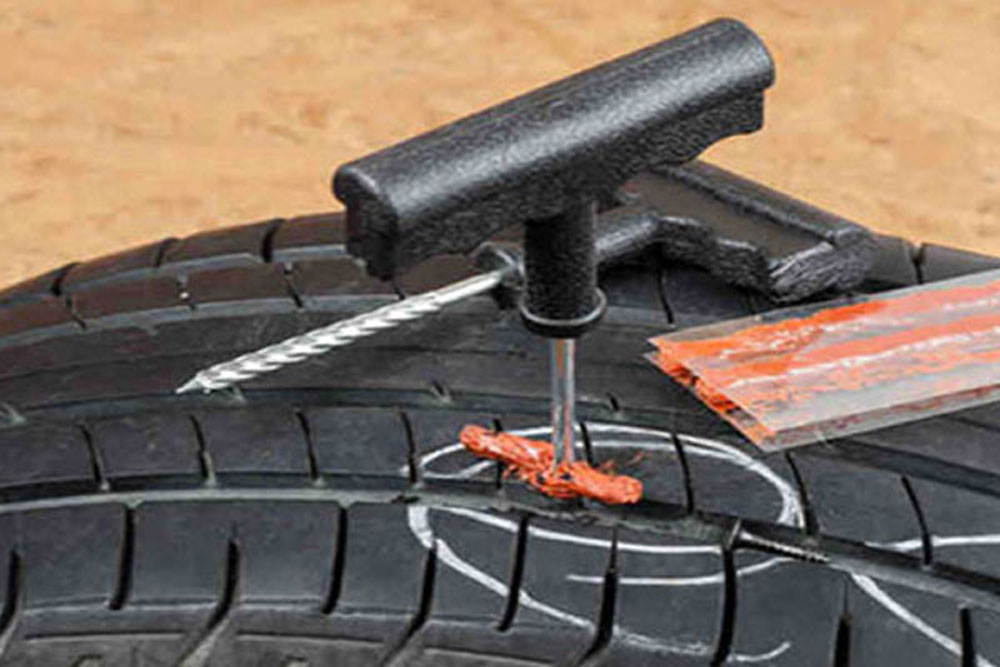
What It Is: A rubber string coated with adhesive is pushed through the puncture hole from the outside using a needle-like tool. The plug fills the hole and is held in place by friction.
The Process (10 minutes):
- Locate puncture (water spray shows bubbles)
- Ream puncture hole with spiral tool (makes it bigger to accept plug)
- Insert rubber plug string through needle tool
- Push plug through hole from outside
- Pull needle tool out (plug stays in hole)
- Trim excess plug flush with tread
- Inflate and done
Cost in Bangalore: ₹100-200
When It’s Used:
- Quick roadside repairs
- 80% of Bangalore tyre shops use this method
- Marketed as “permanent repair” (it’s not)
Why It Fails:
❌ Held by friction only – No chemical bond, just rubber wedged in hole
❌ Air pressure pushes it out – Constant 32 PSI pressure trying to eject plug
❌ Bangalore heat – 35°C summers make rubber soft, loses grip
❌ Pothole impacts – Each Silk Board pothole jiggles plug loose
❌ Water intrusion – Monsoon water seeps in, weakens friction
❌ Doesn’t seal inner liner – Leak continues from inside
Lifespan: 2-8 weeks typical in Bangalore conditions
Success Rate: 60-70% fail within 3 months
Method #2: Internal Patch
What It Is: A rubber patch bonded to the inner liner of the tyre from inside using vulcanizing cement.
The Process (30 minutes):
- Remove tyre from rim completely
- Inspect inner liner for damage
- Buff area around puncture (rough surface helps bonding)
- Apply vulcanizing cement to buffed area
- Apply cement to patch
- Let cement dry 5-7 minutes (critical step)
- Press patch firmly onto inner liner
- Roll with stitcher tool (removes air bubbles)
- Remount tyre, inflate, test
Cost in Bangalore: ₹250-400
Advantages: ✅ Chemical bond – Vulcanizing cement creates permanent bond
✅ Seals inner liner – Prevents air loss from inside
✅ Stronger than original tyre – Patch area is reinforced
✅ Monsoon-proof – Waterproof seal
Limitations: ⚠️ Doesn’t seal puncture hole through tread – Hole remains open
⚠️ Water/dirt can enter hole – Compromises inner liner over time
⚠️ Not ideal for tread punctures – Better for liner damage
Lifespan: 6-12 months typical, but not ideal for punctures
Method #3: Mushroom Puncture Repair (Patch-Plug Combination)
What It Is: A two-piece repair: rubber plug (stem) goes through puncture hole + rubber patch (cap) bonds to inner liner. Shaped like a mushroom 🍄.
The Process (45 minutes):
- Remove tyre from rim
- Inspect inner liner thoroughly
- Clean and buff puncture area (120mm diameter)
- Ream puncture hole from inside
- Apply vulcanizing cement to buffed area
- Apply cement to mushroom patch base
- Let dry 5-7 minutes (most critical step)
- Insert mushroom stem through puncture from inside
- Pull stem through with pliers from outside
- Roll mushroom cap with stitcher (creates pressure bond)
- Trim excess stem flush with tread
- Remount, balance, inflate, test
Cost in Bangalore: ₹300-450
Why It’s Superior:
✅ Two-way seal – Seals from inside (patch) AND outside (plug)
✅ Chemical + mechanical bond – Cement bonds patch, plug fills hole
✅ Air pressure strengthens it – Pressure pushes mushroom cap tighter
✅ Permanent repair – Lasts 40,000-60,000 km (tyre lifetime)
✅ Bangalore pothole-proof – Can’t be jiggled loose
✅ Monsoon waterproof – Complete seal prevents water intrusion
✅ High-speed rated – Safe up to 180 kmph (ORR speeds)
Lifespan: Entire remaining tyre life (40,000-60,000 km typical)
Success Rate: 98% permanent fix
Why Your ₹150 Plug Keeps Failing: The Science
The Physics Working Against External Plugs:
Force Calculation:
- Tyre pressure: 32 PSI (pounds per square inch)
- Puncture hole: 6mm diameter = 0.28 square inches
- Force pushing plug OUT: 32 PSI × 0.28 sq in = 8.96 pounds constant force
What’s Holding Plug IN:
- Friction between rubber plug and hole walls
- Adhesive on plug (minor contribution)
Bangalore’s Plug-Killers:
1. Temperature Cycling (Daily):
- Morning: 18°C (tyre pressure: 30 PSI)
- Afternoon: 35°C (tyre pressure: 34 PSI)
- Rubber expands/contracts with temperature
- Plug loosens slightly each cycle
- After 30 days: 30 expansion/contraction cycles = plug walks out
2. Pothole Impacts:
- Each Silk Board pothole: 3-5G impact force
- Plug gets hammered from inside by impact
- Gradually works its way out
- You hit 10-15 potholes daily on Marathahalli-Whitefield route
- After 1 month: 300-450 impacts = plug severely loosened
3. Tyre Flex (ORR High Speeds):
- At 100 kmph, tyre rotates 11.4 times per second
- Each rotation flexes tread (contact patch flattens)
- Puncture hole opens/closes 684 times per minute
- Plug experiences constant flexing stress
- Material fatigue = plug loses elasticity = leak starts
4. Water Intrusion (Monsoon):
- Bangalore monsoon: June-September
- Water enters around plug (not perfectly sealed)
- Water reaches inner liner
- Inner liner rubber deteriorates
- Leak develops from inside, not outside
- Plug might look fine but inner liner is damaged
Real Bangalore Examples
Example #1 – ORR Commuter (Honda City):
- Nail puncture, got ₹150 plug
- Failed after 8 days (TPMS light)
- Re-plugged for ₹100 more
- Failed again after 6 days
- Finally got mushroom repair (₹350)
- Result: 25,000 km later, still perfect
- Total wasted on plugs: ₹250 + hassle
Example #2 – Monsoon Failure (Hyundai Creta):
- Plug held 3 weeks, then monsoon started
- After KR Puram flooded underpass: leak began
- Water damaged inner liner around plug
- Mushroom repair required inner liner drying first
- Lesson: Plugs + Bangalore monsoon = failure
Example #3 – False Economy (Maruti Swift):
- 4 months, 4 failed repairs (₹650 total)
- Finally got mushroom repair (₹350)
- 8 months later: still perfect
- Should have done mushroom first time
When Each Repair Method Makes Sense
External Plug – Only Use For:
✅ Emergency temporary fix
- Tyre punctured on highway, need to reach city
- Planning to replace tyre in 1-2 weeks anyway
- Cannot remove tyre (no equipment available)
✅ Very old tyres (5+ years)
- Tyre nearly worn out (<3mm tread)
- Not worth ₹350 repair on tyre with 2-3 months life left
- Temporary fix until planned tyre replacement
❌ Never Use For:
- Tyres you plan to keep 6+ months
- Highway driving (ORR, Bangalore-Mysore)
- Monsoon season
- Premium/expensive tyres
Internal Patch Only – Rare Use Cases:
✅ Inner liner damage without puncture
- Tyre driven flat, inner liner separated
- Sidewall impact caused liner crack
- No hole in tread, just liner needs reinforcement
❌ Not Suitable For:
- Regular puncture repairs (mushroom is better)
- Holes in tread (need plug component)
Mushroom Repair – Use For:
✅ Any puncture you want permanently fixed ✅ Tread punctures 4-8mm diameter ✅ New tyres (<2 years old, >4mm tread) ✅ Expensive tyres (₹6,000+ per tyre) ✅ Highway/ORR daily driving ✅ Monsoon season reliability ✅ When plug has already failed
❌ Not Suitable For:
- Sidewall punctures (no repair is safe)
- Punctures near shoulder (flex zone)
- Multiple punctures (3+ in same tyre)
- Very large holes (>10mm)
How to Find Slow Puncture Location
DIY Method:
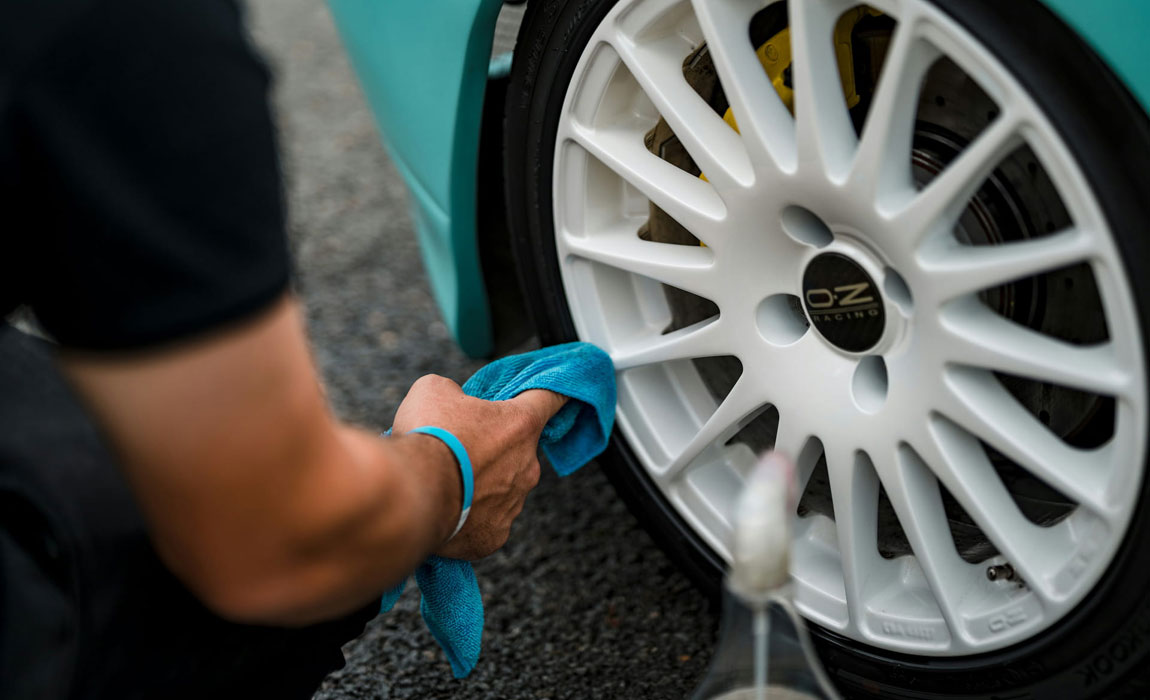
- Mix soap + water in spray bottle
- Inflate tyre to correct pressure
- Spray entire tread surface
- Look for bubbles (air escaping)
- Mark location with chalk
- Check valve stem too (common leak point)
Pro Tip: Small punctures make tiny bubbles. May need 2-3 applications to spot.
Professional Method (Tyre Shops): Water immersion tank finds ALL leaks simultaneously, including multiple punctures you might miss with DIY spray method.
Red Flags: When Your “Repair” Was Actually Fake
🚩 Red Flag #1: Tyre Never Removed from Rim
What It Means: If shop doesn’t remove tyre from rim, they can’t:
- Inspect inner liner for damage
- Do proper patch or mushroom repair
- Check for second puncture inside
- Clean and buff inner surface
What They Did: External plug only. Might work temporarily but will fail.
What to Say: “I need the tyre removed for proper inspection and mushroom repair.”
🚩 Red Flag #2: Repair Done in Under 20 Minutes
Proper Repair Timeline:
- External plug: 10-15 min (temporary)
- Patch: 25-35 min
- Mushroom repair: 40-50 min
If Done Faster: They skipped critical steps (cement drying time, proper buffing, inspection).
🚩 Red Flag #3: No Discussion of Cement Drying Time
Critical Detail: Vulcanizing cement MUST air-dry 5-7 minutes before patch/mushroom is applied. This allows solvents to evaporate, activating bonding agents.
If Shop Says: “We use fast cement” or “No need to wait”
Reality: There is NO fast cement. Chemical bonding requires drying time. They’re rushing, repair will fail.
🚩 Red Flag #4: Shop Refuses to Show You Inside of Tyre
Transparent Shop: Will show you inner liner condition, explain the damage, show the repair from inside after completion.
Sketchy Shop: “Don’t worry sir, we fixed it” but won’t let you see or verify.
Cost-Benefit Analysis: Bangalore Reality
Scenario: Honda City Tyre (₹8,500 per tyre)
Option A: Multiple External Plugs
| Timeline | Event | Cost | Cumulative |
|---|---|---|---|
| Week 1 | Initial plug | ₹150 | ₹150 |
| Week 4 | Plug failed, re-plugged | ₹150 | ₹300 |
| Week 8 | Failed again, tried at different shop | ₹200 | ₹500 |
| Week 12 | Still leaking, gave up | – | ₹500 |
| Result | Tyre replaced (inner liner damaged from leaks) | ₹8,500 | ₹9,000 |
Hidden Costs:
- 4 shop visits × 1 hour each = 4 hours wasted
- Weekly air filling at petrol pump = ₹20/week × 12 weeks = ₹240
- Fuel efficiency loss from under-inflation = ~3% = ₹450 over 3 months
- Stress and worry = Priceless
Total Real Cost: ₹9,690 + stress
Option B: Mushroom Repair (Week 1)
| Timeline | Event | Cost | Cumulative |
|---|---|---|---|
| Week 1 | Mushroom repair at TyreTorque | ₹350 | ₹350 |
| Weeks 2-52 | Zero leaks, perfect pressure | ₹0 | ₹350 |
| Result | Tyre lasts full 50,000-60,000 km lifespan | – | ₹350 |
Total Real Cost: ₹350, one visit, done
Savings: ₹9,340 by choosing mushroom repair first time
TyreTorque’s Mushroom Puncture Process
What Makes Our Repair Permanent:
1. Complete Interior Inspection
- Remove tyre from rim (non-negotiable)
- Inspect entire inner liner with light
- Check for hidden damage from driving on low pressure
- Verify puncture is repairable (location, size)
- Measure remaining tread depth (must be >2mm)
2. Professional Surface Preparation
- Buff 120mm diameter area around puncture
- Wire brush creates rough surface (promotes bonding)
- Clean with solvent (removes oils, debris)
- Let dry completely (moisture prevents cement bonding)
3. Premium Vulcanizing Cement
- Thin, even coat on buffed area
- Same coat on mushroom patch base
- 7-minute drying time strictly observed (sets timer)
- Check cement tackiness (should feel slightly sticky, not wet)
4. Precise Mushroom Application
- Insert stem through puncture from inside
- Pull with pliers from outside (centered placement)
- Ensure mushroom cap sits completely flat (no air bubbles)
- Roll with stitcher tool (creates 15+ PSI bonding pressure)
- Work from center outward (removes trapped air)
5. Quality Verification
- Trim stem flush with tread (smooth finish)
- Remount tyre on rim
- Inflate to correct pressure
- Submerge in water tank (check for any leaks)
- Balance wheel if weights were disturbed
- Final pressure check after 5 minutes
6. Documentation & Warranty
- Mark repair date on sidewall (for tracking)
- 6-month warranty on repair workmanship
- 48-hour free recheck offer
- Schedule next rotation reminder
Time: 45 minutes (proper job can’t be rushed)
Cost: ₹350 all-inclusive
Success Rate: 98% permanent (vs 30-40% for plugs)
Prevention Tips
1. Weekly pressure checks (Monday mornings, cold tyres)
2. Visual inspections before long trips
3. Replace valve stems every 3-4 years (₹40 each)
4. Avoid construction zones (nails, screws common)
5. Consider TPMS (₹3,500-5,000, early leak detection)
When to Replace vs Repair
Repair is Possible:
✅ Puncture in tread area (center 75% of tread width)
✅ Puncture size 4-10mm diameter
✅ Tread depth >2mm remaining
✅ Tyre age <6 years
✅ No sidewall damage
✅ Inner liner intact
Replacement Necessary:
❌ Sidewall puncture (any size)
❌ Shoulder puncture (near edge of tread)
❌ Large hole (>10mm diameter)
❌ Multiple punctures (3+ in same tyre)
❌ Tyre age >6 years (regardless of tread)
❌ Tread depth <2mm
❌ Inner liner separated/damaged
Bangalore-Specific Decision:
If your tyre has 30,000+ km on it, showing uneven wear, and has a puncture:
- Evaluate total cost
- ₹350 mushroom repair + potential 10,000 km life = ₹35 per 1,000 km
- New tyre ₹8,000 + 50,000 km life = ₹160 per 1,000 km
- Repair makes sense IF tyre otherwise healthy
Get Permanent Puncture Repair at TyreTorque
Why Choose TyreTorque for Slow Puncture Repair:
✅ Professional mushroom repair (not quick plug)
✅ Complete interior inspection (catch hidden damage)
✅ 6-month repair warranty (confidence guarantee)
✅ 48-hour free recheck (verify it’s holding)
✅ Transparent pricing (₹350, no hidden fees)
✅ 45-minute proper process (not rushed 10-min plug)
✅ Free nitrogen top-up (more stable pressure)
✅ Honest assessment (we’ll tell you if replacement is better)
📍 Location: Kasturi Nagar Main Road, Near CMR College
Next to Nayara Petrol Station
Chikka Banaswadi, Bangalore – 560043
📞 Call/WhatsApp: +91-72041-01993
⏰ Hours: Monday-Sunday, 8:00 AM – 8:00 PM
🚗 Emergency Puncture Assistance: Within 2km radius: FREE for existing customers
Response time: 15-30 minutes
Call: +91-72041-01993
Stop the Weekly Air-Filling Cycle
Your slow puncture isn’t going to fix itself. External plugs will keep failing. You’ll keep visiting petrol pumps, losing time, risking inner liner damage.
The choice is simple:
- Keep doing ₹150 plugs that fail every 3 weeks = ₹600+ annually + hassle
- OR get ₹350 mushroom repair once = permanent fix + peace of mind
Stop the cycle. Get permanent repair. Drive with confidence.
Call TyreTorque: +91-72041-01993