
You’re standing at a tyre shop in Bangalore. The technician quotes you ₹5,800 for a set of MRF ZVTS — and ₹14,200 for Michelin Primacy 4. Same size. Same car. Same road.
The Michelin costs 2.4x more.
Your first instinct? Go with MRF. Save ₹8,400. Put the money toward something else.
But here’s the question nobody asks out loud: What does that decision actually cost you over 3 years?
At Tyre Torque, we fit hundreds of tyres every month — budget, mid-range, and premium. We see what wears out quickly, what survives Bangalore’s potholes, and what our customers come back to regret. This guide gives you the real numbers, not a brand pitch.
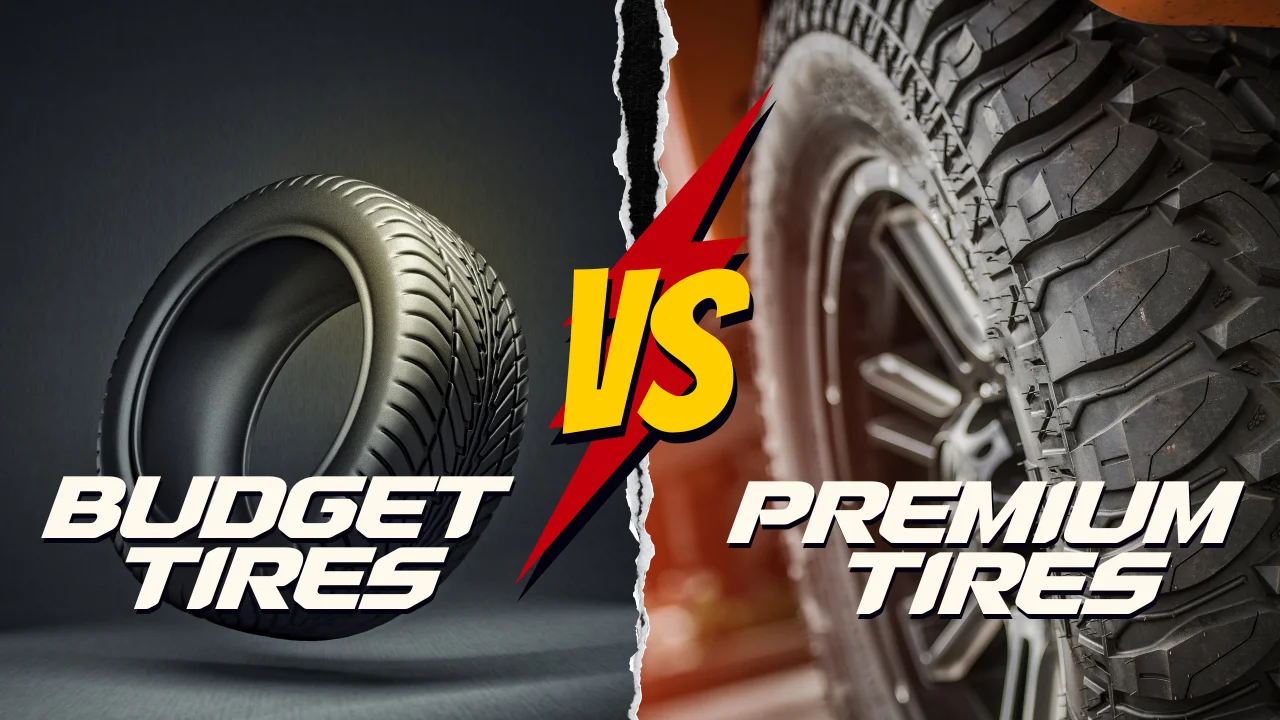
What Exactly Is a “Budget” or “Premium” Tyre?
Before comparing costs, let’s be clear on definitions — because in India, the categories aren’t always what they seem.
Budget tyres (₹3,500 – ₹6,500 per tyre): Indian brands like MRF, CEAT, Apollo, and JK Tyre. These are not cheap, low-quality products. They are well-engineered, road-tested on Indian conditions, and fitted as OEM equipment on many popular cars. “Budget” here means affordable — not inferior.
Mid-range tyres (₹6,500 – ₹10,000 per tyre): Brands like Yokohama, Goodyear, Falken, and certain Apollo premium lines. These occupy the middle ground — better compounds and wet grip than entry Indian brands, but priced below the European giants.
Premium tyres (₹10,000 – ₹18,000+ per tyre): Michelin, Bridgestone, Continental, Pirelli. Manufactured with silica-enhanced compounds, precision-engineered tread patterns, and R&D investment measured in billions. These are the tyres that dominate Formula 1 pit lanes and BMW dealer specifications.
The overlap between categories is real. An MRF ZVTS for a Maruti Alto costs ₹3,800. A Michelin Primacy 4 for a Toyota Fortuner can cost ₹17,500. You’re not always comparing the same vehicle category, so context matters enormously.
The Price Gap at a Glance
Here’s an honest, real-world price comparison for a common sedan size (195/65 R15) — one of the most popular tyre sizes in India, fitting cars like the Honda City, Maruti Ciaz, and Hyundai Verna:
| Brand | Category | Price Per Tyre (approx.) | Set of 4 |
|---|---|---|---|
| CEAT SecuraDrive | Budget | ₹4,800 | ₹19,200 |
| MRF ZVTS | Budget | ₹5,200 | ₹20,800 |
| Apollo Alnac 4G | Budget-Mid | ₹5,800 | ₹23,200 |
| Yokohama Earth-1 | Mid-range | ₹7,400 | ₹29,600 |
| Goodyear Assurance | Mid-range | ₹8,200 | ₹32,800 |
| Bridgestone Turanza | Premium | ₹11,500 | ₹46,000 |
| Michelin Primacy 4 | Premium | ₹13,200 | ₹52,800 |
| Continental CC6 | Premium | ₹12,800 | ₹51,200 |
Prices are indicative for Bangalore market, April 2026. Actual prices vary by vehicle model and size.
The gap between a full set of MRFs and a full set of Michelins is roughly ₹32,000. That’s real money. Let’s find out whether you get it back.
The Real Cost Equation: 5 Factors That Actually Matter
1. Tread Life — How Many Kilometres Will They Last?
This is the most important number in the entire comparison, and it’s the one most people ignore when they’re standing at the counter.
Tread life determines your cost per kilometre — the only metric that actually matters.
Here’s what real-world usage in Indian city conditions looks like:
| Tyre Category | Typical Lifespan (City + Highway mix) |
|---|---|
| Budget Indian brands | 35,000 – 45,000 km |
| Mid-range | 45,000 – 55,000 km |
| Premium (Michelin/Bridgestone) | 55,000 – 70,000 km |
Michelin tyres, in particular, are engineered with a harder silica compound that maintains grip even as tread depth reduces. The rubber simply doesn’t wear as fast. Bridgestone’s NanoPro-Tech compound works similarly.
The maths for a Honda City driver doing 20,000 km/year:
- MRF ZVTS set: ₹20,800 ÷ 40,000 km = ₹0.52 per km
- Michelin Primacy 4 set: ₹52,800 ÷ 65,000 km = ₹0.81 per km
On pure tread life, the MRF is still cheaper per kilometre. But this is only one part of the equation. Read on.
2. Fuel Efficiency — The Hidden Monthly Cost
Premium tyres are engineered with lower rolling resistance — meaning your engine works less hard to move the car forward. The difference is measurable at the fuel pump.
Independent tests show that low rolling resistance tyres (standard in Michelin, Continental, and Bridgestone’s modern ranges) can improve fuel economy by 4–8% compared to higher-resistance budget tyres.
For a Honda City averaging 14 km/litre, driving 20,000 km/year:
- Fuel consumption: ~1,428 litres/year
- At ₹105/litre (Bangalore 2026): ₹1,49,940/year
- A 5% fuel saving with premium tyres: ₹7,497 saved per year
Over 3 years (the lifespan of one set of premium tyres), that’s ₹22,491 in fuel savings alone.
That’s more than the price difference between MRF and Michelin.
3. Wet Braking Distance — The Safety Cost of Going Budget
This is where the conversation shifts from money to lives.
Independent European tyre testing (which has been replicated in Indian conditions by automotive media) consistently shows that premium tyres stop significantly shorter in wet conditions than budget tyres of the same size.
At 80 km/h in wet conditions, the difference in braking distance between a premium tyre and a budget tyre can be 3 to 8 metres.
On Bangalore’s monsoon roads — Sarjapur Road in July, Hennur Road after a downpour, the ORR during a thunderstorm — 5 extra metres of stopping distance is the difference between a clean stop and a rear collision.
This is not a figure that belongs in a spreadsheet. It belongs in your decision-making.
Bridgestone’s wet-weather technology stops cars measurably shorter than most competitors. Michelin’s Primacy 4 was specifically engineered around wet grip as its primary design brief. These are not marketing claims — they are independently verified test results.
Budget tyres are not unsafe. They meet all mandatory Indian and international safety standards. But they are simply not designed to extract maximum wet-road performance. If you drive through a Bangalore monsoon daily, this matters.
4. Ride Comfort and Noise
Premium tyres are noticeably quieter. If you’ve ever switched from a budget to a Michelin or Bridgestone and felt like your cabin suddenly got a sound insulation upgrade — that’s the tyre compound and tread block design at work.
Bridgestone’s QuietTrack technology uses a dual-layer tread that absorbs road vibrations before they reach the cabin. Michelin’s acoustic foam-lined variants (available for SUVs) reduce tyre noise by up to 20%. Apollo’s Alnac 4G, their more premium domestic offering, has made significant strides in this area too.
For city commuters in Bangalore who spend 90+ minutes in traffic daily, a quieter, smoother ride is not a luxury — it directly affects fatigue and stress levels. If you’re in the car for 500+ hours a year, a ₹15,000 premium for meaningfully better comfort is a calculation worth making.
5. Alignment and Balance Retention
One factor almost no one discusses: premium tyres hold their shape better over time, meaning they retain wheel alignment and balance longer after initial setup.
Budget tyres, especially under the stress of Indian potholes and temperature variation (Bangalore summers push road surface temps to 55°C+), can develop micro-deformations in the sidewall and tread that cause subtle imbalance — leading to steering vibration, uneven wear, and the need for more frequent re-balancing.
At Tyre Torque, we see this regularly. Customers who came in 3 months ago for a budget tyre fitment return because their steering is vibrating again. Premium tyre customers rarely return for this reason.
That recurring re-balancing visit isn’t free — and more importantly, the uneven wear it causes shortens the tyre’s life further.
The Full 3-Year Cost Comparison
Let’s put all the numbers together for a Honda City owner in Bangalore doing 20,000 km/year:
| Cost Factor | MRF ZVTS (Budget) | Michelin Primacy 4 (Premium) |
|---|---|---|
| Tyre purchase (set of 4) | ₹20,800 | ₹52,800 |
| Tyre lifespan | ~40,000 km | ~65,000 km |
| Tyres needed over 60,000 km | 1.5 sets = ₹31,200 | 1 set = ₹52,800 |
| Fuel savings over 3 years | — | -₹22,491 |
| Extra re-balancing visits (est.) | ₹3,600 | ₹0 |
| Total 3-Year Cost | ₹34,800 | ₹30,309 |
The Michelin is cheaper over 3 years. By approximately ₹4,500 — even before accounting for improved safety, comfort, and reduced risk.
This is the calculation the industry doesn’t publicise — because it doesn’t benefit shops that push volume over value.
Note: These figures are estimates based on typical driving patterns. Actual results vary based on driving style, road conditions, and vehicle type.
When Budget Tyres Are the Right Choice
Honesty matters here. Premium tyres are not always the right answer. Here’s when going budget makes genuine sense:
When your car is old or about to be sold. If your vehicle is 8+ years old and you’re planning to sell it within a year, premium tyres don’t make financial sense. The resale value uptick is minimal.
For hatchbacks doing short city commutes. A Maruti Alto or Tata Tiago used for 10 km daily school runs doesn’t need Michelin Primacy. Good MRF or CEAT tyres are perfectly suited and will last adequately.
When budget is genuinely constrained. A good Indian brand tyre is always better than delaying replacement entirely. If the choice is between premium tyres on a credit card and budget tyres paid for outright — buy the budget tyres and maintain them well.
For vehicles with basic suspension setups. Entry-level hatchbacks with basic suspension won’t translate the benefits of a premium tyre’s ride quality into the cabin anyway. The compound quality still matters for safety, but the comfort premium is harder to feel.
When Premium Tyres Are Worth Every Rupee
Sedans, SUVs, and luxury cars. The bigger and heavier the vehicle, the more the tyre matters. A Toyota Fortuner, Hyundai Creta, or Honda City spends significant time at highway speeds where premium compound advantages become tangible.
Frequent highway driving. If you’re regularly on the NICE Road, Mysore Expressway, or driving to Hyderabad on NH44, premium tyres’ stability, wet braking, and lower noise pay real dividends.
Monsoon-heavy commuters. Anyone driving daily through Bangalore’s June–September rainy season on roads like Sarjapur, Hennur, or HAL Airport Road should seriously consider the wet braking advantage of premium tyres.
EV owners. Electric vehicles like the Tata Nexon EV, Mahindra BE 6, and MG Windsor place dramatically higher torque and weight loads on tyres than equivalent petrol cars. Budget tyres wear 20–30% faster on EVs. The total cost math shifts even more strongly toward premium for EV drivers.
Long-term keepers. If you plan to drive your car for 5+ more years, premium tyres with their longer lifespan and fuel savings almost always work out cheaper in the long run.
The Bangalore Road Factor
No cost comparison for Indian tyres is complete without acknowledging what our roads actually do to rubber.
Bangalore’s road conditions are uniquely punishing. The ORR’s potholes create sudden impact loads that stress sidewalls. Stop-and-go traffic on Silk Board and Marathahalli accelerates front tyre wear by applying brake torque repetitively on hot rubber. The monsoon season creates wet surfaces that genuinely test tyre compounds. And our summer temperatures cause road surfaces to heat up significantly, accelerating compound degradation.
Budget tyres handle these conditions adequately. Premium tyres handle them measurably better — with stronger sidewalls, more heat-resistant compounds, and deeper initial tread depth that provides a larger margin before replacement.
After years of fitting tyres in this city, the team at Tyre Torque has observed a consistent pattern: premium tyre customers on Bangalore roads typically get closer to the upper end of their tyre’s rated lifespan. Budget tyre customers more often fall toward the lower end, because the road conditions push the rubber harder than it was designed for.
Which Brands Fall Where? A Quick Reference
Best Budget Brands for Indian Conditions:
- MRF ZVTS / ZVTV — Trusted, wide service network, heat-resistant compound, honest mileage
- CEAT SecuraDrive — Good wet grip for a budget tyre, strong value for hatchbacks
- Apollo Alnac 4G — Best-performing domestic tyre, genuinely competitive with lower mid-range imports
- JK Vectra — Motorsport-derived handling, best in class for dry performance at price
Best Premium Brands for Indian Conditions:
- Michelin Primacy 4 — Best overall for sedan/SUV owners who prioritise total cost of ownership and wet safety
- Bridgestone Turanza T005 — Excellent wet braking, quieter highway ride, long tread life
- Continental PremiumContact 6 — Outstanding dry and wet handling, preferred for performance cars
- Yokohama Earth-1 — Best mid-to-premium option; ideal for buyers not ready to pay Michelin prices but wanting a step up from Indian brands
The Bottom Line
If someone asks us “Should I go budget or premium?” the honest answer is: it depends on your car, your mileage, and your driving conditions — but the premium tyre almost always costs less than you think.
The upfront price of a premium tyre is higher. The total cost over three years, factoring in lifespan, fuel savings, and avoided re-balancing visits, is often lower. And the safety benefit of shorter wet braking distances is impossible to price.
For a Bangalore driver with a mid-size car doing 15,000–25,000 km annually, our recommendation is this: don’t automatically go budget. Run the numbers specific to your situation, and you may find that Michelin or Bridgestone actually saves you money before you even account for the safer stop.
If you’re unsure which tyre is right for your car and budget, come in for a free tyre consultation. We’ll show you the real numbers for your specific vehicle — and we won’t push you toward anything you don’t need.
Get Expert Advice at Tyre Torque, Bangalore
At Tyre Torque – NV Tyre Centre, we stock every major brand — MRF, CEAT, Apollo, JK, Michelin, Bridgestone, Continental, Pirelli, Yokohama, and Goodyear — and we’ll give you a straight comparison for your car and your budget.
📍 Kasturi Nagar Main Road, Near CMR College, Next to Nayara Petrol Station, Chikka Banaswadi, Bangalore – 560043 📞 +91-72041-01993 🌐 www.tyretorque.in 🕘 Open 7 days | 8:00 AM – 8:00 PM
✅ Free tyre inspection with every visit ✅ 3D computerised wheel alignment ✅ Transparent, all-inclusive pricing — no surprise charges ✅ Free nitrogen top-up for all customers