The Shocking Reality of SUV Tyre Ownership in Bangalore
If you own an SUV in Bangalore and your tyres aren’t lasting at least 50,000 km, you’re likely making one or more critical mistakes that are costing you thousands of rupees every year.
Here’s the harsh truth: Most Bangalore SUV owners replace their tyres 2-3 times more frequently than necessary. With a typical set of premium SUV tyres costing between ₹40,000 to ₹60,000, these avoidable mistakes add up to a staggering financial loss over your vehicle’s lifetime.
In this comprehensive guide, we’ll reveal the exact mistakes destroying your expensive tyres and show you how to extend tyre life from 30,000 km to 60,000+ km—potentially saving you ₹47,000 or more.
Case Study: Rajesh’s ₹47,000 Wake-Up Call
Vehicle: Mahindra XUV700 AX7 (Purchased: March 2024)
Tyre Brand: Continental ContiCrossContact LX2 (OEM)
Original Tyre Cost: ₹47,200 (set of 4 – 235/60 R18)
Expected Life: 60,000 km
Actual Life: 28,500 km
Replacement Cost (April 2025): ₹52,800 (price increase)
Total Loss: ₹52,800 spent + ₹31,500 km of remaining tyre life wasted
What Went Wrong?
When Rajesh brought his XUV700 to Tyre Torque in April 2025 for unusual vibrations, our detailed inspection revealed severe irregular wear patterns across all four tyres. Here’s what we discovered:
Front Tyres:
- Inner edge wear (80% worn vs 30% on outer edge)
- Indication: Negative camber misalignment + underinflation
Rear Tyres:
- Center tread completely bald while shoulders had 60% tread remaining
- Indication: Chronic overinflation + no rotation schedule
The Root Causes:
- Never checked wheel alignment after hitting multiple Bangalore potholes over 13 months
- Wrong tyre pressure – Running 38 PSI constantly (correct: 32 PSI city, 35 PSI highway)
- Zero tyre rotations in 28,500 km (should rotate every 8,000 km)
- Overloaded during weekend trips – Regular Bangalore-Coorg trips with 5 adults + luggage exceeding GVWR
- Aggressive ORR driving – Daily high-speed runs on misaligned wheels accelerated wear
The ₹47,000+ Impact:
- Premature replacement at 28,500 km instead of 60,000 km
- Lost ₹52,800 on new tyres 18 months early
- Would have spent another ₹50,000+ in 2027 if pattern continued
- Total 5-year projection: ₹2,10,000 vs ₹1,05,600 (with proper maintenance)
Rajesh’s Testimony: “I thought I was just unlucky with tyre quality. Turns out, I was destroying ₹50,000 tyres through ignorance. The TyreTorque team didn’t just sell me new tyres—they educated me on proper SUV maintenance. My second set has already crossed 42,000 km and is still going strong.”
The 5 Bangalore-Specific SUV Tyre Killers
Mistake #1: Wrong Tyre Pressure for City vs Highway Driving
The Problem:
Most Bangalore SUV owners set their tyre pressure once and forget about it. This is a catastrophic mistake, especially given Bangalore’s unique driving conditions:
- Heavy city traffic: Stop-and-go from Silk Board to Marathahalli (generates heat)
- High-speed ORR runs: 80-100 kmph sustained speeds (increases tyre temperature)
- Temperature fluctuations: 18°C winter mornings to 35°C summer afternoons
- Load variations: Empty during weekday commutes, fully loaded for weekend getaways
Why It Destroys Tyres:
Underinflation (Most Common):
- Tyres flex excessively, generating extreme heat
- Sidewalls break down 3x faster
- Center tread wears slower than edges (cupping effect)
- Fuel efficiency drops by 8-12%
- Result: 40% reduction in tyre life
Overinflation:
- Reduced contact patch = center tread wears rapidly
- Harsher ride over Bangalore potholes
- Increased risk of sidewall damage
- Poor wet grip during monsoons
- Result: 35% reduction in tyre life
The Bangalore Solution:
| Driving Condition | Front Tyres PSI | Rear Tyres PSI | When to Use |
|---|---|---|---|
| City Commute (Light Load) | 32-33 PSI | 32-33 PSI | Daily office runs, 1-2 passengers |
| Highway Driving (Light Load) | 34-35 PSI | 34-35 PSI | ORR, NICE Road, Mysore Highway |
| Fully Loaded (5+ passengers + luggage) | 36 PSI | 38 PSI | Bangalore-Coorg, Bangalore-Ooty trips |
| Extreme Load (Max GVWR) | 38 PSI | 40 PSI | Check door jamb sticker |
Pro Tips for Bangalore SUV Owners:
✅ Check pressure COLD – Before starting engine, preferably at 6-7 AM
✅ Adjust for temperature – Increase 1 PSI for every 10°C temperature rise
✅ Weekly checks mandatory – Bangalore’s pothole-riddled roads cause slow leaks
✅ Invest in TPMS – Real-time monitoring prevents underinflation disasters
✅ Use nitrogen filling – More stable pressure, better for Bangalore heat (FREE at TyreTorque)
Real Impact: Proper pressure management alone can extend tyre life by 15,000-20,000 km on Bangalore roads.
Mistake #2: ORR High-Speed Runs with Misaligned Wheels
The Problem:
Bangalore’s Outer Ring Road (ORR) is a double-edged sword for SUV owners. While the 116 km stretch offers rare high-speed driving opportunities, it’s also the #1 tyre destroyer when combined with misaligned wheels.
The Deadly Combination:
- You hit a pothole near Silk Board Junction (camber/toe gets knocked out)
- You don’t notice because the SUV drives “fine” at 40 kmph in city traffic
- You accelerate to 90-100 kmph on ORR for your daily Whitefield-Electronic City commute
- Misaligned wheels + high speed = catastrophic tyre wear
How Bad Is It?
At 100 kmph with 1-degree toe misalignment, your tyres are essentially dragging sideways 8.8 meters every kilometer. On a 40 km ORR commute, that’s 352 meters of sideways scrubbing per trip.
Over one month:
- 20 working days x 40 km (round trip) = 800 km
- Sideways scrubbing: 7,040 meters (7 km of sideways friction!)
- Result: Tyres that should last 60,000 km are destroyed in 25,000 km
Common Misalignment Symptoms:
🔴 Steering wheel off-center when driving straight
🔴 Vehicle pulls to left/right (especially noticeable on ORR)
🔴 Uneven tyre wear – one edge more worn than the other
🔴 Vibration at 80+ kmph speeds
🔴 Squealing tyres during turns in parking lots
Bangalore’s Alignment Destroyers:
| Location | Severity | Why It’s Dangerous |
|---|---|---|
| Silk Board Junction | Extreme | Multiple potholes at signal approach, taken at speed |
| Marathahalli Bridge | High | Expansion joints create sharp impacts |
| KR Puram Railway Underpass | Extreme | Deep potholes + waterlogging = hidden damage |
| ORR Service Roads | Very High | Poorly maintained, sudden elevation changes |
| Hebbal Flyover Approach | High | Uneven surface, heavy vehicle traffic damage |
The Bangalore Solution:
✅ Get wheel alignment every 8,000 km (not 10,000 km) due to road conditions
✅ Immediate check after hitting potholes – Don’t wait for symptoms
✅ Use computerized 3D alignment – Manual methods are 70% less accurate
✅ Ask for print-out – Before/after specs prove work was done correctly
✅ Check alignment before long highway trips – Prevents ORR damage
Bangalore Alignment Costs:
- Manual Alignment: ₹500-800 (Not recommended – inaccurate)
- Computerized 2-Wheel: ₹800-1,000 (Basic, only front wheels)
- Computerized 4-Wheel: ₹1,200-1,500 (Recommended for SUVs)
- 3D Alignment (Premium): ₹1,500-2,000 (Best for luxury SUVs)
At TyreTorque: Starting ₹500 for standard, ₹1,200 for premium 4-wheel alignment with printout
ROI Calculation:
- Alignment cost: ₹1,200 every 8,000 km
- Tyres saved: 20,000+ km extended life
- Value per set: ₹47,000 (premium tyres)
- Return: ₹1,200 investment saves ₹15,000+ in premature replacement
Mistake #3: Overloading During Weekend Trips to Coorg/Ooty
The Problem:
Bangalore SUV owners love their weekend getaways. The typical Bangalore-Coorg trip (270 km) or Bangalore-Ooty journey (280 km) is a rite of passage. But here’s what most don’t realize: overloading your SUV on these trips is silently destroying your tyres.
The Typical Bangalore Weekend Scenario:
The Load:
- 5-7 adults (averaging 70 kg each = 350-490 kg)
- Heavy luggage (3-4 large suitcases = 60-80 kg)
- Food/beverages for trip (20-25 kg)
- Camera equipment, camping gear, etc. (15-20 kg)
- Total Additional Weight: 445-615 kg
Popular SUV Payload Limits:
| SUV Model | GVWR | Kerb Weight | Actual Payload Capacity | Typical Overload on Coorg Trip |
|---|---|---|---|---|
| Mahindra XUV700 | 2,450 kg | 1,993 kg | 457 kg | ✅ Within limits (if careful) |
| Tata Safari | 2,400 kg | 1,950 kg | 450 kg | ⚠️ Borderline with 7 adults |
| Hyundai Tucson | 2,245 kg | 1,685 kg | 560 kg | ✅ Generally safe |
| MG Hector | 2,255 kg | 1,760 kg | 495 kg | ⚠️ Often exceeded |
| Kia Seltos | 1,925 kg | 1,380 kg | 545 kg | ✅ Adequate capacity |
| Mahindra Scorpio-N | 2,570 kg | 2,050 kg | 520 kg | ✅ Well within |
What Overloading Does to Your Tyres:
- Excessive Heat Buildup
- Tyres flex beyond design limits
- Internal structure breaks down
- Sidewall separation risk increases
- Critical on 6-hour Bangalore-Ooty climbs
- Uneven Weight Distribution
- Rear tyres bear 65-70% of load (should be 55%)
- Rear tyres wear 2.5x faster than front
- Handling becomes unpredictable on ghat roads
- Increased Rolling Resistance
- Fuel economy drops 15-20%
- Tyre temperatures exceed safe limits (75°C+)
- Accelerated rubber degradation
- Pothole Impact Amplification
- Bumps on Bangalore-Mysore highway hit harder
- Sidewall bulges become common
- Risk of blowouts on broken ghat sections
The Hidden Cost:
Let’s break down the real cost of that Coorg trip with an overloaded SUV:
Scenario: Mahindra XUV700, overloaded by 100 kg, 3 Coorg trips per year
| Impact Area | Normal Load | Overloaded (100kg) | Annual Excess Cost |
|---|---|---|---|
| Tyre Wear Rate | 60,000 km life | 42,000 km life | ₹11,200 |
| Fuel Efficiency | 12 kmpl | 10.2 kmpl | ₹4,800 (3 trips) |
| Suspension Wear | Normal | 30% accelerated | ₹8,500 |
| Total Annual Cost | – | – | ₹24,500 |
The Bangalore Solution:
✅ Know your GVWR – Check vehicle manual or door jamb sticker
✅ Weigh your typical load – Most people underestimate by 40%
✅ Increase tyre pressure – Add 3-4 PSI for heavy loads (see manufacturer specs)
✅ Avoid roof cargo – Increases fuel consumption 25%, causes swaying
✅ Make two trips – Or rent a larger vehicle for group travel
✅ Check tyres after trips – Look for bulges, cuts, excessive wear
Smart Packing for Bangalore-Coorg/Ooty Trips:
🎒 Luggage: Use soft bags instead of hard suitcases (save 15-20 kg)
🎒 Food: Buy at destination, don’t carry 3-day supplies
🎒 Equipment: Rent camping gear in Coorg instead of carrying
🎒 Passengers: Consider 4+luggage instead of cramming 7 adults
🎒 Distribute weight: Place heavy items low and centered
Pro Tip: If you regularly do Bangalore-Coorg/Ooty trips with full loads, consider:
- Load-rated tyres (XL or reinforced)
- Commercial-grade tyres (higher load index)
- Nitrogen inflation (more stable under heat)
- Tyre pressure monitoring system (alerts to dangerous pressure drops)
Mistake #4: Not Rotating Tyres on AWD Vehicles
The Problem:
This is the most ignored maintenance task among Bangalore SUV owners, especially those with AWD (All-Wheel Drive) or 4WD systems. Many don’t even know their vehicle requires more frequent tyre rotation.
Why AWD/4WD SUVs Are Different:
Unlike front-wheel-drive cars where only front tyres wear faster, AWD systems distribute power to all four wheels—but not equally:
- Power distribution: 60% front, 40% rear (typical AWD bias)
- Bangalore city traffic: Front tyres wear 30% faster due to steering load
- ORR highway runs: Rear tyres heat up more during sustained high speed
- Ghat climbs: Power shifts, creating uneven wear patterns
The Disaster Scenario:
Many premium AWD systems (Hyundai Tucson, Jeep Compass, VW Tiguan) have tyre diameter tolerance limits:
⚠️ If tyre diameter difference exceeds 3mm between front and rear, the AWD system can be permanently damaged.
How This Happens:
- Month 0-6: You don’t rotate tyres
- Month 6: Front tyres have 6mm tread, rear tyres have 7.5mm (1.5mm difference)
- Month 9: Front tyres have 4mm tread, rear tyres have 6.5mm (2.5mm difference)
- Month 12: Front tyres have 2mm tread, rear tyres have 5mm (3mm difference – DANGER ZONE)
- Result: AWD system thinks wheels are slipping, engages constantly, burns out transfer case
Repair Cost for Damaged AWD System:
- Transfer case replacement: ₹1,20,000 – ₹2,50,000
- Differential damage: ₹80,000 – ₹1,50,000
- Total potential damage: ₹2,00,000 – ₹4,00,000
All from not doing a ₹500 tyre rotation!
Bangalore AWD/4WD SUVs That MUST Follow Strict Rotation:
| Vehicle | AWD Type | Max Tread Difference | Rotation Interval |
|---|---|---|---|
| Jeep Compass | Active AWD | 3mm | Every 6,000 km |
| Hyundai Tucson | HTRAC AWD | 2.5mm | Every 6,000 km |
| VW Tiguan | 4Motion AWD | 3mm | Every 8,000 km |
| Toyota Fortuner | 4WD (Part-time) | 4mm | Every 8,000 km |
| MG Gloster | 4WD | 3mm | Every 8,000 km |
| Land Rover Discovery | Permanent AWD | 2mm | Every 5,000 km |
The Correct Rotation Pattern for AWD SUVs:
Rearward Cross Pattern (Most Common):
Front Left  →  Rear Right
Front Right →  Rear Left
Rear Left   →  Front Left
Rear Right  →  Front Right
X-Pattern (For directional tyres):
Front Left  →  Rear Right
Front Right →  Rear Left
Rear Left   →  Rear Right
Rear Right  →  Rear Left
The Bangalore Solution:
✅ Rotate every 6,000-8,000 km – Mark it in your service book
✅ Measure tread depth – Use a ₹50 depth gauge, check all 4 tyres
✅ Keep records – Note mileage and depth at each rotation
✅ Replace all 4 together – If difference exceeds 3mm, replace all
✅ Choose reputable shops – Wrong rotation pattern damages AWD
Rotation Cost in Bangalore:
- Standard shops: ₹300-400
- Authorized service centers: ₹600-800
- Premium workshops: ₹500-600
- At TyreTorque: ₹400 (includes balance check + nitrogen top-up)
ROI Calculation:
- 8 rotations over 60,000 km: ₹3,200
- Even tyre wear: All 4 tyres last full 60,000 km
- Avoided AWD damage: ₹2,00,000+ potential repair cost saved
- Savings: Tyres last 40% longer, saving ₹18,800 on ₹47,000 tyre set
Red Flags That You’ve Ignored Rotation Too Long:
🚩 Front tyres significantly balder than rear (visual difference)
🚩 Vehicle pulls to one side despite alignment
🚩 AWD warning light illuminates
🚩 Unusual vibration at highway speeds
🚩 One or two tyres wearing in center vs edges
Mistake #5: Ignoring Bangalore’s Unique Tyre Wear Accelerators
The Problem:
Bangalore has specific environmental and infrastructure factors that accelerate SUV tyre wear far beyond what’s typical in other Indian cities. Ignoring these Bangalore-specific issues compounds all the previous mistakes.
Bangalore’s Tyre Destroyers:
1. Extreme Temperature Fluctuations
The Data:
- Early morning (6-8 AM): 18-22°C (winter), 24-27°C (summer)
- Afternoon (2-4 PM): 28-32°C (winter), 35-38°C (summer)
- Daily swing: 10-16°C difference
Impact on Tyres:
- Rubber expands/contracts daily
- Tyre pressure varies by 3-4 PSI throughout day
- Accelerates rubber oxidation by 25%
- Sidewall cracking appears 12 months earlier
Solution: Check pressure at same time daily, use nitrogen inflation for stability
2. Infamous Pothole Network
Bangalore Pothole Statistics (2024-2025):
- BBMP received 42,800+ pothole complaints
- Average pothole depth: 4-8 inches
- Worst areas: ORR service roads, Marathahalli, Silk Board approaches
- Peak damage season: July-September (post-monsoon)
What One Pothole Hit Does:
- Impacts suspension geometry (misalignment)
- Creates sidewall bulges (internal damage)
- Accelerates tread separation
- Each pothole hit = 500 km of normal wear
Bangalore SUV owners hit average 8-12 significant potholes per month.
Cumulative damage: 6,000 km worth of extra wear annually
Solution:
- Drive slower over known pothole zones
- Inspect tyres after severe impacts
- Immediate alignment check if steering feels different
- Consider run-flat or reinforced tyres
3. Monsoon Underpass Flooding
High-Risk Bangalore Underpasses:
- KR Puram Railway Underpass
- Dairy Circle Underpass
- Hebbal Underpass
- Okalipuram Underpass
Tyre Damage from Water:
- Tread rubber deteriorates 3x faster when waterlogged
- Hidden pothole impacts under water
- Sidewall water intrusion (if tyres have cuts)
- Reduced grip leads to aggressive throttle (accelerates wear)
Solution:
- Avoid flooded underpasses during monsoon
- Dry tyres thoroughly after water exposure
- Check for cuts/punctures after monsoon driving
- Increase following distance on wet roads
4. Aggressive Traffic Patterns
Bangalore Driving Characteristics:
- Frequent hard braking (traffic signals every 500m)
- Rapid acceleration from stops
- Lane changes on ORR
- Speed variations: 10 kmph (Silk Board) to 100 kmph (ORR) within 5 minutes
Wear Impact:
- Front tyres experience 40% more stress
- Temperature spikes reduce tyre life
- Aggressive starts wear center tread
- Hard braking wears front edges
Solution:
- Smooth acceleration/braking patterns
- Maintain safe following distances
- Anticipate traffic flow
- Use cruise control on ORR
5. Weekend Ghat Road Punishment
Popular Bangalore Weekend Destinations:
- Nandi Hills: 60 km, 18 hairpin bends
- Coorg: 270 km, multiple ghat sections
- Ooty: 280 km, 36 hairpin bends
- Chikmagalur: 245 km, steep gradients
Ghat Road Tyre Stress:
- Excessive heat from continuous braking
- Sidewall flexing on tight turns
- Uneven weight distribution on slopes
- Edge wear from constant cornering
One Bangalore-Ooty round trip = 2,000 km of normal wear on tyres
Solution:
- Check tyre pressure before ghat trips (increase by 2-3 PSI)
- Use engine braking instead of constant braking
- Inspect tyres after every ghat trip
- Consider performance tyres if frequent traveler
Decoding Tyre Wear Patterns: Visual Diagnosis Guide
Understanding why your tyres are wearing helps you fix the root cause, not just replace tyres repeatedly.
Wear Pattern #1: Center Tread Wear
What It Looks Like:
- Center of tyre tread is significantly more worn than edges
- Edges still have 70-80% tread, center is bald
Diagnosis: Chronic Overinflation
Common Cause in Bangalore:
- Set pressure for Bangalore-Coorg trip (38 PSI)
- Forgot to reduce for daily city driving
- Running high pressure for 6+ months
Solution:
- Reduce to manufacturer-recommended pressure (32-33 PSI city)
- Check pressure weekly
- Adjust for load conditions
Tyre Life Impact: -30% (60,000 km → 42,000 km)
Wear Pattern #2: Edge/Shoulder Wear
What It Looks Like:
- Both outer edges worn significantly
- Center tread appears normal or slightly worn
Diagnosis: Chronic Underinflation
Common Cause in Bangalore:
- Never checking pressure (slow leak from pothole damage)
- Running on low pressure for months
- Thinking “it looks fine”
Solution:
- Immediately inflate to correct pressure
- Check for slow leaks (puncture repair needed)
- Weekly pressure checks mandatory
Tyre Life Impact: -40% (60,000 km → 36,000 km)
Wear Pattern #3: Inner or Outer Edge Wear (One Side Only)
What It Looks Like:
- Only inner edge or outer edge is excessively worn
- Opposite edge and center tread normal
Diagnosis: Wheel Misalignment (Camber Issue)
Common Cause in Bangalore:
- Hit Silk Board potholes, didn’t get alignment
- Suspension damage from ORR service road
- Broken/worn suspension components
Types:
- Inner edge wear: Negative camber (wheel tilts inward at top)
- Outer edge wear: Positive camber (wheel tilts outward at top)
Solution:
- Immediate 4-wheel alignment needed
- Suspension component inspection
- Check all 4 tyres (usually affects both front or both rear)
Tyre Life Impact: -50% (60,000 km → 30,000 km)
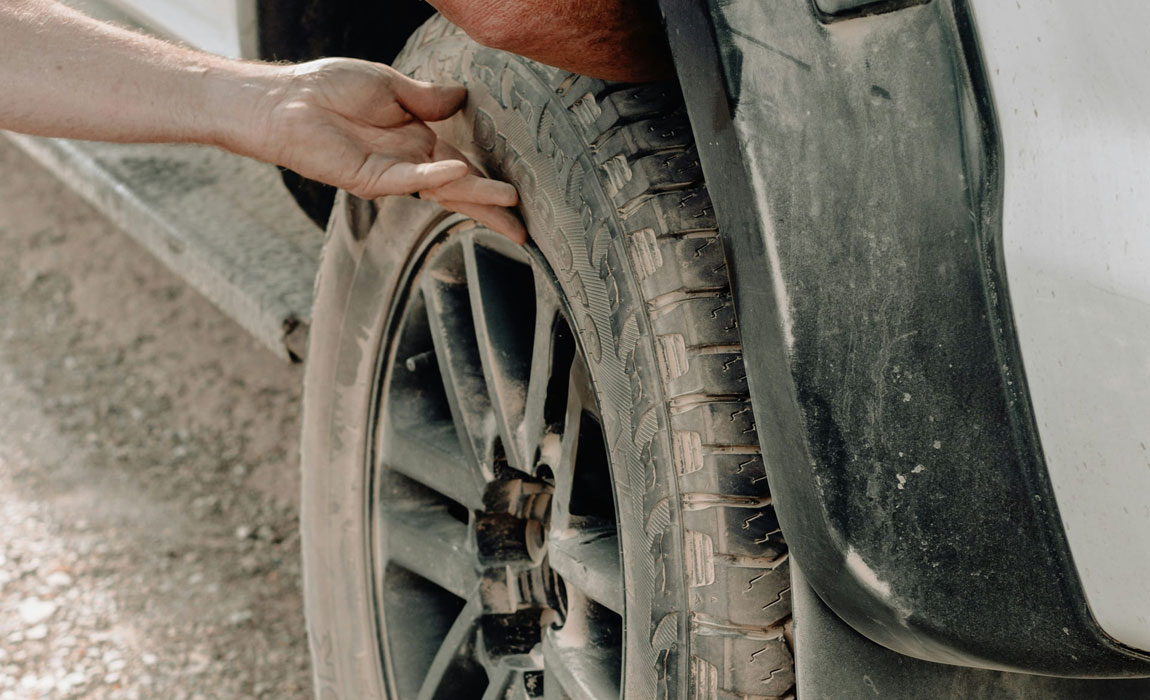
Wear Pattern #4: Feathering/Sawtooth Pattern
What It Looks Like:
- Tread blocks have rounded edge on one side, sharp edge on other
- Feels rough when you run hand across tread
Diagnosis: Toe Misalignment
Common Cause in Bangalore:
- Wheels pointed inward (toe-in) or outward (toe-out)
- Happens after hitting curbs, potholes
- Incorrect alignment work
Solution:
- Computerized wheel alignment
- Ensure toe specs are within 0.05 degrees
- Get printout showing before/after specs
Tyre Life Impact: -45% (60,000 km → 33,000 km)
Wear Pattern #5: Cupping/Scalloping
What It Looks Like:
- Wavy, scalloped pattern around circumference
- Dips and high spots every 3-4 inches
- Causes vibration and noise
Diagnosis: Worn Suspension Components + Imbalance
Common Cause in Bangalore:
- Worn shock absorbers (Bangalore roads destroy them)
- Unbalanced wheels
- Combination of both issues
Solution:
- Replace shock absorbers
- Balance all 4 wheels
- Check for bent rims (Bangalore pothole special)
Tyre Life Impact: -35% (60,000 km → 39,000 km)
Wear Pattern #6: Flat Spots
What It Looks Like:
- Specific flat section on tyre circumference
- Vibration at certain speeds
- Usually on one or two tyres only
Diagnosis: Hard Braking / Locked Wheels
Common Cause in Bangalore:
- Emergency braking on ORR (no ABS or ABS malfunction)
- Sliding stop on wet roads during monsoon
- Handbrake turns (if you’re adventurous)
Solution:
- Tyres likely need replacement
- Check ABS system functionality
- Smooth braking practices
Tyre Life Impact: Immediate replacement often needed
The Ultimate Bangalore SUV Tyre Maintenance Checklist
Use this monthly checklist to prevent the ₹47,000 mistake and maximize tyre life:
Weekly Tasks (5 Minutes)
Every Monday Morning (Before Starting Car):
□ Check tyre pressure (all 4 + spare)
- Use digital gauge (₹500 investment, lasts years)
- Record readings in phone app
- Adjust as needed for week’s driving
□ Visual inspection
- Look for cuts, bulges, embedded objects
- Check tread depth markers
- Look for unusual wear patterns
□ Quick tread depth check
- Insert ₹5 coin into grooves
- If Ashoka pillar fully visible, tyres need replacement
Time Investment: 5 minutes
Potential Savings: ₹15,000-20,000 annually
Bi-Weekly Tasks (10 Minutes)
Every Alternate Sunday:
□ Detailed tyre inspection
- Clean tyres with water, inspect closely
- Check for sidewall cracks (aging signs)
- Look for small punctures that haven’t deflated yet
□ Tyre rotation planning
- Note current mileage
- Calculate km until next rotation (target: 6,000-8,000 km)
- Book appointment if due
Time Investment: 10 minutes
Potential Savings: Catch problems early, avoid roadside emergencies
Monthly Tasks (30 Minutes)
First Sunday of Every Month:
□ Comprehensive tyre audit
- Measure tread depth with gauge (all 4 tyres, 3 points each)
- Record measurements in maintenance log
- Compare with previous month
□ Wheel inspection
- Check for bent rims (Bangalore potholes)
- Look for weights missing (balance issue)
- Clean wheel wells, remove stones
□ Pressure adjustment for month ahead
- Check weather forecast
- Adjust for planned trips (highway/city ratio)
- Increase if planning Coorg/Ooty trip
□ Spare tyre check
- Bangalore SUV owners FORGET THIS
- Check pressure (usually needs 5-10 PSI increase)
- Inspect condition (spares age even unused)
Time Investment: 30 minutes
Potential Savings: ₹25,000-30,000 over tyre lifetime
Quarterly Tasks (Professional Service)
Every 3 Months or 8,000 km (Whichever Comes First):
□ Professional tyre rotation
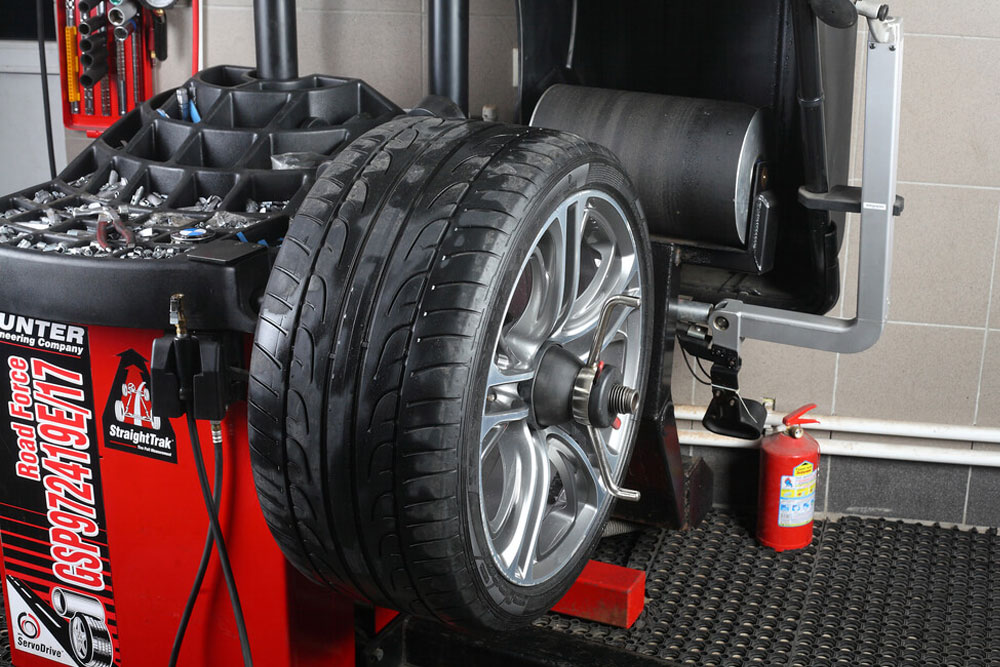
- Book at TyreTorque or authorized service center
- Ensure correct AWD/4WD rotation pattern
- Get balance check during rotation
□ Wheel alignment check
- Mandatory after rotation
- Get computerized 4-wheel alignment
- Request printout of specs
□ Brake system inspection
- Brake pads affect tyre wear
- Uneven brakes cause uneven tyre wear
□ Suspension check
- Critical for Bangalore roads
- Worn shocks = rapid tyre wear
Professional Service Cost: ₹1,500-2,000
ROI: Extends tyre life by 15,000+ km = ₹11,750 value (for ₹47,000 tyre set)
Seasonal Tasks
Pre-Monsoon (May-June):
□ Check tread depth (minimum 3mm for monsoon safety) □ Inspect for cuts/cracks that water could exploit □ Test tyre grip on wet surface (empty parking lot test) □ Consider replacing if below 4mm tread
Post-Monsoon (October):
□ Thorough inspection for monsoon damage □ Check for sidewall bubbles (waterlogged roads) □ Alignment check (potholes worsen during monsoon) □ Clean and treat rubber (remove accumulated grime)
Pre-Summer (February-March):
□ Adjust pressure for heat expansion □ Check for dry rot/cracking (summer accelerates) □ Plan for increased pressure checks (heat variations)
How to Make ₹12,000 Tyres Last 60,000 km Instead of 30,000 km
Here’s the exact 10-step system used by TyreTorque customers who consistently get 55,000-65,000 km from their SUV tyres:
Step 1: Buy the Right Tyres for Bangalore Conditions
Not all tyres are equal for Bangalore’s unique challenges.
Best Tyre Categories for Bangalore SUVs:
Premium All-Season (₹10,000-15,000 per tyre):
- Michelin Primacy SUV
- Bridgestone Dueler H/P Sport
- Continental ContiCrossContact LX2
Strengths: Long life (60,000+ km), excellent wet grip, comfortable, fuel-efficient
Best For: Daily Bangalore commuters, occasional highway drives
Performance All-Terrain (₹8,000-12,000 per tyre):
- Yokohama Geolandar G015
- Apollo Apterra AT2
- Goodyear Wrangler AT Adventure
Strengths: Pothole resistance, ghat road capability, good life (50,000+ km)
Best For: Weekend adventurers, Coorg/Ooty regulars
Budget Long-Life (₹5,000-8,000 per tyre):
- CEAT CrossDrive
- JK Ranger AT
- Apollo Apterra Cross
Strengths: Value for money, decent life (45,000-50,000 km)
Best For: High-mileage drivers, fleet operators
Avoid: Ultra-high performance tyres (wear out in 25,000 km) unless track enthusiast
Step 2: Perfect Installation is Critical
80% of premature tyre wear starts at installation.
Insist on These Installation Standards:
✅ Torque wrench use – Wheel nuts must be torqued to exact specs (not impact gun) ✅ Road force balancing – Superior to spin balancing, eliminates vibrations ✅ Alignment immediately – Don’t drive away without alignment check ✅ Nitrogen inflation – More stable pressure, less oxidation ✅ TPMS reprogramming – If your SUV has sensors (most modern ones do)
Red Flags During Installation:
🚩 Mechanic uses impact gun to final-tighten lugs (overtightening damages rims)
🚩 No balancing weights added (impossible that all 4 tyres are perfectly balanced)
🚩 Rushed job under 15 minutes per tyre
🚩 No alignment offered or checked
At TyreTorque: Every installation includes computerized balancing, nitrogen fill, alignment check, and 6-month follow-up
Step 3: The Perfect Pressure Protocol
Follow this daily/weekly pressure management system:
Daily (30 seconds):
- Visual check: Any tyre looks different? (low pressure visible)
- TPMS warning? Address immediately
Weekly (3 minutes – Cold Morning):
- Check all 4 tyres + spare with digital gauge
- Record in app (many free tyre apps available)
- Adjust based on week ahead’s driving
Pressure Adjustment Formula for Bangalore:
Base Pressure (Door Jamb Sticker) +/-:
- City only: No change (32-33 PSI typical)
- Highway planned: +2 PSI (34-35 PSI)
- Fully loaded trip: +4 PSI front, +6 PSI rear (36/38 PSI typical)
- Summer (35°C+): -1 PSI from target
- Winter (18°C mornings): +1 PSI from target
Pro Tip: Set phone reminder for every Monday 7 AM – “CHECK TYRE PRESSURE”
Step 4: Religious Rotation Schedule
This is non-negotiable for 60,000 km life.
Bangalore SUV Rotation Schedule:
| Vehicle Type | Rotation Interval | Annual Rotations | Cost Per Year |
|---|---|---|---|
| 2WD SUV (FWD) | Every 8,000 km | 2-3 times | ₹800-1,200 |
| AWD/4WD SUV | Every 6,000 km | 3-4 times | ₹1,200-1,600 |
| Heavy SUV (Fortuner, Endeavour) | Every 6,000 km | 3-4 times | ₹1,500-2,000 |
Set Up Rotation Reminders:
- Service book: Note next rotation mileage
- Phone calendar: Repeat every 2 months
- Service center: Schedule next appointment at current rotation
Rotation + Balance + Alignment Package at TyreTorque: ₹1,200 (saves 15% vs separate)
Step 5: Alignment After Every Pothole Impact
Bangalore’s #1 rule: When in doubt, get alignment.
Mandatory Alignment Triggers:
✅ After hitting pothole at speed (>40 kmph)
✅ After hitting curb while parking
✅ After any accident, even minor
✅ Every rotation (6,000-8,000 km)
✅ When steering wheel is off-center
✅ When vehicle pulls to one side
✅ Before long highway trips
Don’t wait for symptoms. By the time you feel misalignment, you’ve already lost 2,000-5,000 km of tyre life.
Investment vs Return:
- 4 alignments per year: ₹4,800
- Tyre life extended: 18,000-25,000 km
- Value created: ₹14,100-19,600 (for ₹47,000 tyre set)
- Net profit: ₹9,300-14,800
Step 6: Load Management for Long Trips
Every 100 kg overload reduces tyre life by 8-12%.
Before Bangalore-Coorg/Ooty Trips:
✅ Weigh your actual load – Most people underestimate by 40% ✅ Check GVWR – Don’t exceed under any circumstances ✅ Increase pressure – Add 3-4 PSI for heavy loads ✅ Distribute weight – Heavy items low and centered ✅ Check tyres after trip – Look for damage, measure pressure
Smart Alternatives to Overloading:
- Rent roof box instead of cramming interior (better weight distribution)
- Ship luggage ahead for extended trips
- Take two vehicles if group >5 adults with luggage
- Consider upgrading to higher load-rated tyres if you regularly travel fully loaded
Step 7: Driving Style Modifications
Your right foot controls 30% of tyre life.
Bangalore-Specific Driving Tips:
City Traffic (Marathahalli, Koramangala, Indiranagar):
- Anticipate traffic signals (reduces hard braking)
- Gentle acceleration from stops
- Maintain safe distance (fewer emergency stops)
- Take auto lane when safe (smoother surface than bus/truck lanes)
ORR Highway Driving:
- Cruise control when possible (constant speed)
- Lane discipline (reduce lane changes = less tyre stress)
- Smooth acceleration to 100 kmph, not rapid
- Ease off throttle before toll plazas, don’t brake hard
Ghat Roads (Nandi Hills, Ooty, Coorg):
- Engine braking downhill (reduces brake heat transfer to tyres)
- Moderate cornering speeds (reduces edge wear)
- Stop every hour for tyre cooling
- Check pressure at base before climbing
Monsoon Driving:
- Reduce speed 20% on wet roads
- Gentle steering inputs (reduces stress)
- Avoid standing water (hydroplaning risk)
- Increase following distance 2x
Impact on Tyre Life:
| Driving Style | Tyre Life Expectancy |
|---|---|
| Aggressive (hard acceleration, braking) | 30,000-35,000 km |
| Normal (typical Bangalore driver) | 40,000-50,000 km |
| Conservative (smooth, anticipatory) | 55,000-65,000 km |
Difference: ₹23,500 saved over vehicle lifetime (assuming 3 sets of ₹47,000 tyres vs 5 sets)
Step 8: Environmental Protection
Bangalore’s environment attacks tyres even when parked.
UV Damage (Bangalore Sun):
- Park in shade whenever possible
- Use car cover for outdoor parking
- Tyre dressing every 2 months (UV protectant)
- Avoid prolonged sun exposure in summer (35°C+)
Monsoon Protection:
- Don’t park in waterlogged areas (sidewall degradation)
- Dry tyres after rain exposure
- Check for embedded stones/debris after rain
- Inspect for cuts that water could penetrate
Chemical Damage:
- Avoid driving through chemical spills (Peenya industrial area)
- Don’t use harsh cleaners on tyres
- Petroleum products destroy rubber (keep away)
Age Management:
- Tyres older than 6 years need careful monitoring
- Bangalore heat accelerates aging (vs northern climates)
- Replace at 8 years regardless of tread (safety)
Step 9: Emergency Response Protocol
Quick action prevents ₹500 puncture from becoming ₹5,000 damage.
If You Hear/Feel Something Wrong:
- Don’t Panic
- Safely move to left lane
- Slow down gradually (not sudden braking)
- Look for safe stopping spot
- Immediate Inspection
- Turn on hazard lights
- Check all 4 tyres visually
- Look for punctures, deflation, damage
- Decision Tree:
- Flat tyre: Don’t drive, call assistance or change to spare
- Slow leak: Drive to nearest tyre shop slowly (<30 kmph)
- Sidewall damage: Do NOT drive, permanent damage occurs
- Vibration/noise: Could be balance, alignment, or internal damage
TyreTorque Emergency Service:
- 2km radius assistance: FREE for customers
- Puncture repair on-site: ₹200-300
- Towing arrangement: If needed beyond 2km
- Emergency number: +91-72041-01993
Step 10: Record Keeping & Data Analysis
Track these metrics to spot problems early:
Tyre Life Log (Spreadsheet or App):
| Date | Mileage | Front Left Depth | Front Right Depth | Rear Left Depth | Rear Right Depth | Pressure FL/FR/RL/RR | Notes |
|---|---|---|---|---|---|---|---|
| Jan 5 | 5,000 | 7.5mm | 7.5mm | 8.0mm | 8.0mm | 32/32/32/32 | After rotation |
| Feb 5 | 8,000 | 7.0mm | 6.8mm | 7.5mm | 7.5mm | 33/33/33/33 | Front right wearing faster – check alignment |
| Mar 5 | 11,000 | … | … | … | … | … | Alignment done, now even |
What This Reveals:
- Early detection of uneven wear
- Alignment problems before visible
- Optimal rotation timing
- Pressure loss patterns
- ROI on maintenance spend
Monthly Analysis Questions:
❓ Are all 4 tyres wearing evenly? (If not, alignment issue)
❓ Is wear rate normal? (0.5mm per 2,000 km is typical)
❓ Any pressure consistently low? (Slow leak, check for puncture)
❓ One tyre wearing faster? (Balance, alignment, or suspension issue)
Annual Review:
- Total km driven vs tread consumed
- Project replacement date
- Budget accordingly
- Identify patterns (e.g., “always need alignment after monsoon”)
Cost-Benefit Analysis: Proper Maintenance vs Neglect
Let’s put real numbers to the ₹47,000 mistake:
Scenario A: Rajesh (Neglect) – What NOT To Do
Vehicle: Mahindra XUV700
Driving: 25,000 km/year
Tyre Cost: ₹47,000 per set (Continental)
| Year | Mileage | Action | Cost | Running Total |
|---|---|---|---|---|
| Year 1 (2024) | 25,000 km | Drove normally, no maintenance | ₹0 | ₹47,000 (OEM) |
| Year 2 (2025) | 50,000 km | Tyres destroyed at 28,500 km, replaced | ₹52,800 | ₹99,800 |
| Year 3 (2026) | 75,000 km | Second set destroyed at 57,000 km, replaced | ₹58,000 | ₹1,57,800 |
| Year 4 (2027) | 1,00,000 km | Third set destroyed at 85,000 km, replaced | ₹63,500 | ₹2,21,300 |
| Year 5 (2028) | 1,25,000 km | Fourth set active | ₹0 | ₹2,21,300 |
5-Year Total: ₹2,21,300 on tyres (4 sets)
Average Life Per Set: 28,500 km
Scenario B: Smart Owner (Proper Maintenance)
Vehicle: Mahindra XUV700
Driving: 25,000 km/year
Tyre Cost: ₹47,000 per set (Continental)
| Year | Mileage | Action | Tyre Cost | Maintenance | Running Total |
|---|---|---|---|---|---|
| Year 1 | 25,000 km | 3 rotations, 3 alignments, pressure checks | ₹0 | ₹3,600 | ₹50,600 (OEM + maint) |
| Year 2 | 50,000 km | 3 rotations, 3 alignments | ₹0 | ₹3,600 | ₹54,200 |
| Year 3 | 75,000 km | First replacement at 62,000 km, maintain new set | ₹52,800 | ₹3,600 | ₹1,10,600 |
| Year 4 | 1,00,000 km | 3 rotations, 3 alignments | ₹0 | ₹3,600 | ₹1,14,200 |
| Year 5 | 1,25,000 km | Second replacement at 1,24,000 km | ₹58,000 | ₹3,600 | ₹1,75,800 |
5-Year Total: ₹1,75,800 (tyres + maintenance)
Average Life Per Set: 62,000 km
Savings vs Scenario A: ₹45,500
Plus Additional Benefits:
- Better fuel economy: ~₹12,000 saved (3% improvement over 1,25,000 km)
- Fewer roadside emergencies: Priceless
- Better safety: Cannot be quantified
- Higher resale value: ₹15,000-25,000 (well-maintained vehicle)
Total 5-Year Advantage: ₹72,500 – ₹82,500
Bangalore SUV Owner Success Stories
Success Story #1: Pradeep’s Fortuner – 68,000 km on One Set
Vehicle: Toyota Fortuner 2.8 4×2 (2022)
Tyres: Bridgestone Dueler H/P Sport (₹48,500 for set of 4)
Achievement: 68,000 km and counting (currently at 6mm tread, projecting 75,000+ km total)
What He Did Right: ✅ Pressure check every Sunday morning (religiously)
✅ Rotation every 7,000 km (8 rotations so far)
✅ Alignment every rotation + after any significant pothole
✅ Nitrogen inflation (FREE at TyreTorque)
✅ Avoided overloading (max 4 adults + moderate luggage)
✅ Smooth driving style (no racing on ORR)
✅ Detailed log in Excel (tracked every metric)
Pradeep’s Quote:
“I spent ₹8,400 on rotations and alignments over 68,000 km. If I had neglected maintenance, I’d be on my third tyre set by now. That’s ₹97,000 saved by spending ₹8,400. Best investment ever.”
Success Story #2: Corporate Fleet Manager – 15 XUV700s
Company: Bangalore-based IT company
Fleet: 15 Mahindra XUV700s
Annual Mileage: 35,000 km per vehicle (drivers)
Before TyreTorque Maintenance Program (2023):
- Average tyre life: 32,000 km
- Tyre replacement frequency: Every 11 months
- Annual tyre cost: ₹7,80,000 (15 vehicles x ₹52,000)
- Downtime from punctures: High
After Implementing Maintenance Protocol (2024-2025):
- Average tyre life: 58,000 km (81% improvement!)
- Replacement frequency: Every 20 months
- Annual tyre cost: ₹4,42,000
- Downtime: Reduced 70%
Annual Savings: ₹3,38,000
Maintenance Cost: ₹54,000 (rotations + alignments for fleet)
Net Savings: ₹2,84,000 per year
Fleet Manager’s Quote:
“We were hemorrhaging money on tyres. TyreTorque’s systematic approach transformed our fleet economics. The preventive maintenance program pays for itself 5x over.”
Frequently Asked Questions (Bangalore SUV Owners)
Q1: How often should I really check tyre pressure in Bangalore?
A: Weekly minimum, daily in summer.
Bangalore’s 10-16°C daily temperature swings cause 3-4 PSI pressure variations. Check every Monday morning before starting your car (cold tyres). In summer (March-May), check daily if doing ORR runs, as 35°C+ heat can cause dangerous overinflation.
Pro Tip: Install TPMS (Tyre Pressure Monitoring System) for real-time alerts. Available at TyreTorque starting ₹3,500.
Q2: Is nitrogen really worth it, or is it just marketing?
A: Absolutely worth it for Bangalore conditions.
Benefits specific to Bangalore:
- 40% less pressure variation (vs air) during temperature swings
- Tyres run 8-12°C cooler (critical for ORR high-speed driving)
- Slower pressure loss (3 months vs 3 weeks for air)
- Reduced oxidation (extends sidewall life in Bangalore heat)
At TyreTorque: FREE nitrogen top-ups for life for our customers. Initial fill: ₹200 for 4 tyres (one-time).
ROI: Nitrogen extends tyre life by 8-12%. On ₹47,000 tyres = ₹3,760-5,640 value.
Q3: Can I rotate tyres myself to save money?
A: Not recommended for AWD/4WD SUVs.
Why:
- Incorrect rotation pattern damages AWD systems (₹2 lakh+ repair)
- Balancing usually needed during rotation (requires equipment)
- Professional torque specs critical (prevents wheel damage)
- Alignment should be checked simultaneously
DIY Risk: ₹400 saved, ₹2,00,000 potential loss.
Better Option: Rotation packages at TyreTorque (₹400) include balance check + nitrogen top-up.
Q4: How do I know if my wheel alignment is actually done correctly?
A: Always demand a printout.
What To Check on Printout:
| Specification | Before Reading | After Reading | Factory Spec Range | Status |
|---|---|---|---|---|
| Camber (Front Left) | -1.2° | -0.4° | -0.5° to +0.5° | ✅ Within spec |
| Camber (Front Right) | -1.4° | -0.3° | -0.5° to +0.5° | ✅ Within spec |
| Toe (Front Total) | +0.25° | +0.05° | 0° to +0.15° | ✅ Within spec |
| Caster (Front Left) | +2.8° | +3.2° | +2.5° to +3.5° | ✅ Within spec |
Red Flags: 🚩 Shop refuses to provide printout
🚩 “Before” and “After” readings identical (they didn’t actually adjust)
🚩 Specs still outside manufacturer range
🚩 Charges alignment fee but “couldn’t adjust” (bad excuse)
At TyreTorque: Computerized 3D alignment with guaranteed printout, or money back.
Q5: When should I replace tyres even if tread looks OK?
A: Age matters as much as tread.
Replacement Triggers:
✅ Tread depth below 3mm (minimum legal in India: 1.6mm, but unsafe)
✅ Age over 6 years (check DOT code on sidewall, even if tread OK)
✅ Sidewall cracks/bulges (internal damage, blowout risk)
✅ Uneven wear >2mm difference between tyres (alignment, suspension issue)
✅ Exposed cords anywhere (immediate replacement)
✅ Frequent pressure loss (sidewall porosity, aging)
Bangalore Exception: Due to extreme heat and UV exposure, tyres age faster. Consider replacement at 5 years if showing aging signs (cracking, hardening).
DOT Code Example: “DOT XXXX 2319”
- Last 4 digits: Week 23, Year 2019 (June 2019 manufacture)
- Current age (Feb 2026): 6 years 8 months → Replace soon
Q6: Are premium tyres worth 2x the cost for Bangalore roads?
A: Yes, if you drive >15,000 km/year.
Cost-Per-Kilometer Analysis:
| Tyre Category | Set Cost | Lifespan | Cost/km | 5-Year Cost (25,000 km/yr) |
|---|---|---|---|---|
| Budget (CEAT) | ₹24,000 | 38,000 km | ₹0.63 | ₹82,500 (3.3 sets) |
| Mid-Range (Apollo) | ₹36,000 | 50,000 km | ₹0.72 | ₹90,000 (2.5 sets) |
| Premium (Michelin) | ₹52,000 | 65,000 km | ₹0.80 | ₹1,00,000 (1.9 sets) |
But Consider Total Ownership:
Premium tyres also offer:
- Better fuel economy: 3-5% = ₹9,000-15,000 saved over 1,25,000 km
- Superior wet grip: Safety during Bangalore monsoons
- Quieter ride: Reduced cabin noise
- Better handling: Especially on ghats (Coorg, Ooty)
- Fewer punctures: Stronger construction
Total Cost of Ownership (5 years, 1,25,000 km):
- Budget: ₹82,500 (tyres) + ₹0 (fuel saving) = ₹82,500
- Premium: ₹1,00,000 (tyres) – ₹12,000 (fuel saving) = ₹88,000
Difference: Only ₹5,500 for significantly better safety and comfort.
Recommendation: Premium tyres are worth it for Bangalore’s challenging conditions.
Q7: What’s the best way to handle a tyre emergency on ORR?
A: Follow the “S.A.F.E.” protocol.
S – SLOW DOWN
- Don’t panic brake (causes loss of control)
- Gradually reduce speed
- Grip steering firmly with both hands
A – ASSESS THE SITUATION
- Is it a flat, blowout, or just vibration?
- Can you safely continue at low speed?
- Where’s the nearest safe stop?
F – FIND SAFE SPOT
- ORR service lane or designated bay
- Away from traffic flow
- Flat, solid ground (not slope)
- Turn on hazard lights
E – EXECUTE PLAN
- Option 1: Change to spare (if you know how, safe location)
- Option 2: Call TyreTorque (+91-72041-01993) – 2km radius assistance
- Option 3: Call towing service (insurance usually covers)
Never: 🚫 Drive on flat tyre (ruins rim, costs ₹8,000-15,000)
🚫 Stop in moving traffic lane
🚫 Change tyre in dangerous location
🚫 Ignore TPMS warnings
ORR Emergency Numbers:
- Highway Police: 9480801500
- Ambulance: 108
- TyreTorque Assistance: +91-72041-01993 (within 2km of Kasturi Nagar)
Take Action Today: Your 30-Day Tyre Transformation Plan
Don’t wait until you’re forced to spend ₹47,000+ on premature replacement. Start now:
Week 1: Assessment
Day 1-2: □ Check all 4 tyre pressures (cold morning) □ Visual inspection for damage, wear □ Measure tread depth (all 4 tyres, 3 points each) □ Check tyre age (DOT code on sidewall)
Day 3-4: □ Review vehicle manual for correct pressure specs □ Check last rotation date (service book) □ Check last alignment date □ Calculate km since last service
Day 5-7: □ Create tyre maintenance log (Excel or app) □ Set up monthly reminders (pressure checks, inspections) □ Research: Do I need rotation/alignment now?
Week 2: Immediate Fixes
Day 8-10: □ Book professional inspection at TyreTorque □ Get 4-wheel computerized alignment (if due or symptoms present) □ Get rotation (if >8,000 km since last) □ Request printout/documentation
Day 11-12: □ Fix any identified issues (punctures, balance problems) □ Switch to nitrogen inflation □ Purchase digital pressure gauge (if don’t have)
Day 13-14: □ Review all documentation from service □ Understand your baseline (tread depth, alignment specs) □ Set next service date in calendar
Week 3: Establish Routine
Day 15-17: □ Implement weekly pressure check routine (set day/time) □ Practice using pressure gauge correctly □ Establish “pre-trip” inspection habit
Day 18-20: □ Research tyre pressure app (many free options) □ Input vehicle specs, track readings □ Set up automated reminders
Day 21: □ Complete first weekly pressure check using new routine □ Log readings in app/spreadsheet □ Adjust pressure if needed
Week 4: Long-Term Planning
Day 22-24: □ Calculate projected tyre replacement date □ Set budget reminder for replacement □ Research tyre options for when needed
Day 25-27: □ Create Bangalore driving adaptation plan:
- Identify regular pothole zones
- Plan smoother routes
- Adjust driving style for tyre longevity
Day 28-30: □ Review 30-day progress □ Calculate potential savings from new habits □ Commit to maintenance schedule for next 12 months
Conclusion: The ₹47,000 Question
Will you be like Rajesh – destroying expensive tyres through neglect, spending ₹2,21,300 over 5 years?
Or will you be like Pradeep – investing ₹8,400 in maintenance to save ₹97,000 in premature replacements?
The difference isn’t luck. It’s not about buying the most expensive tyres. It’s about:
✅ Weekly pressure checks (5 minutes)
✅ Quarterly rotations (₹400 each)
✅ Regular alignments (₹1,200 every 8,000 km)
✅ Smart load management (avoid overloading)
✅ Bangalore-adapted driving (anticipate potholes, smooth inputs)
Total annual investment: ₹3,600
Total annual savings: ₹45,000-60,000
This isn’t optional maintenance. For Bangalore SUV owners, it’s financial survival.
Your Next Step: Free Tyre Health Check at TyreTorque
Don’t know where you stand? We’ll tell you – for free.
What You Get (No Obligation):
✅ Comprehensive 15-point tyre inspection
✅ Tread depth measurement (all 4 tyres, digital gauge)
✅ Pressure check and adjustment (nitrogen available)
✅ Visual damage assessment (cuts, bulges, aging)
✅ Wear pattern analysis (identifies alignment/pressure issues)
✅ Projected remaining life (how many km left)
✅ Written report (take home, no pressure to buy)
✅ Customized maintenance plan (based on your driving)
Plus, Bangalore SUV Owner Bonuses:
🎁 FREE nitrogen top-up (if you become a customer)
🎁 10% off first rotation + alignment (new customers)
🎁 Lifetime nitrogen refills (for tyres purchased from us)
🎁 Emergency puncture assistance (within 2km radius)
Book Your Free Inspection Today
TyreTorque – NV Tyre Centre
Kasturi Nagar Main Road, Near CMR College
Next to Nayara Petrol Station, Chikka Banaswadi
Bangalore – 560043
Call Now: +91-72041-01993
WhatsApp: +91-72041-01993
Website: www.tyretorque.in
Email: info@tyretorque.in
Operating Hours:
Monday – Sunday: 8:00 AM – 8:00 PM
(No appointment needed, but booking recommended for alignment)
Follow Us for More Bangalore SUV Tips
Stay updated with:
- Monthly tyre maintenance reminders
- Bangalore pothole alerts
- Seasonal tyre care tips
- Exclusive service discounts
📱 Instagram: @tyre.torque
📘 Facebook: TyreTorque
🐦 Twitter: @torque_tyre
📍 Google Maps: Leave a Review
Don’t let the ₹47,000 mistake happen to you. Take control of your tyre investment today.
Disclaimer: Tyre life estimates based on typical Bangalore driving conditions, proper maintenance, and quality tyres. Actual results may vary based on individual driving habits, road conditions, and vehicle specifications. Cost figures based on February 2026 market rates in Bangalore.