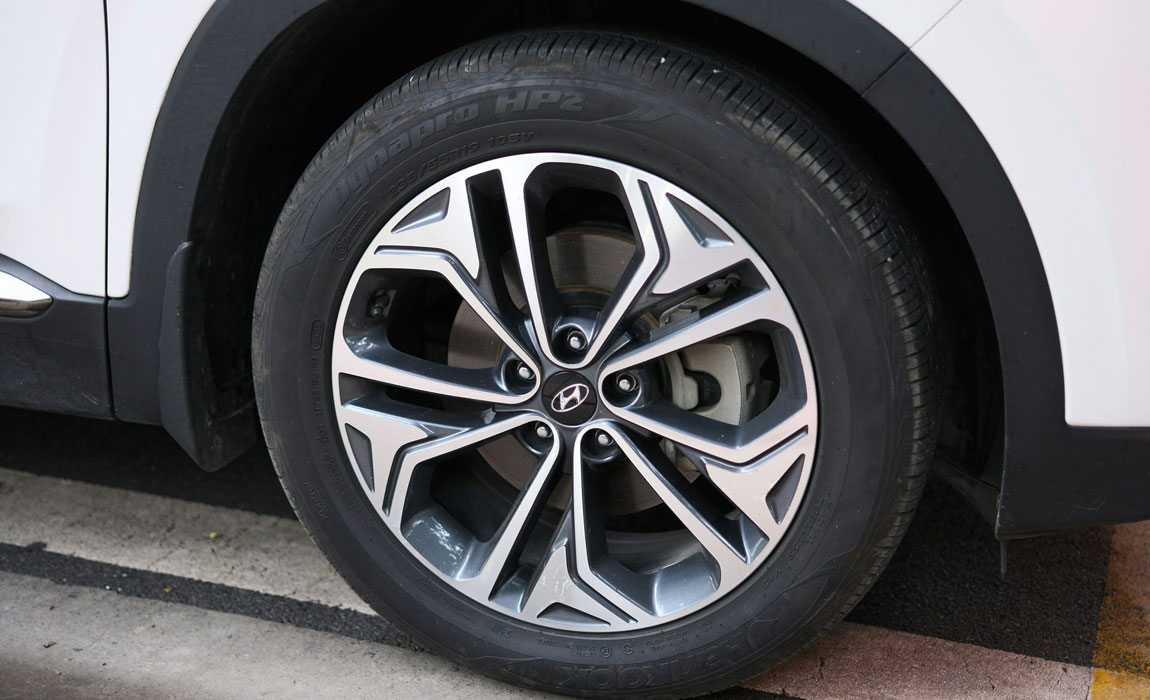
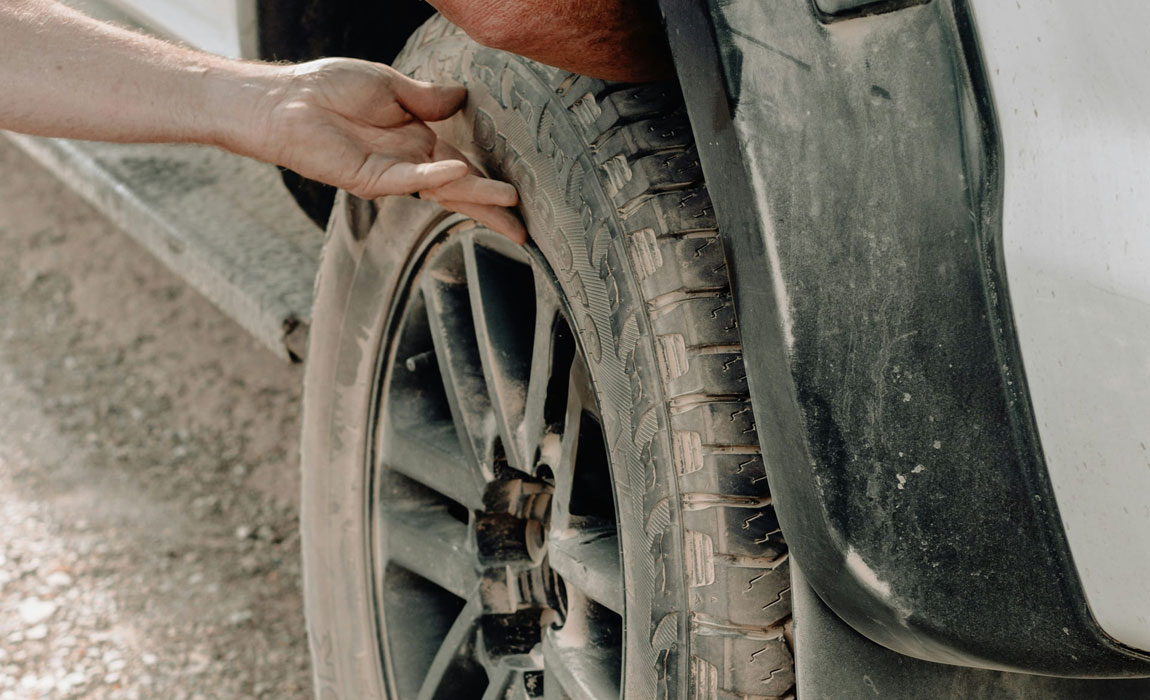
“I just got my wheel alignment done last month, so I don’t need balancing, right?” This question reveals the most common confusion among Bangalore car owners about three essential but completely different tyre services. Despite driving on some of India’s most challenging roads—with over 200,000 potholes across the city—many drivers remain unclear about when they need alignment, balancing, or rotation, often paying for the wrong service or skipping critical maintenance altogether. Understanding these differences isn’t just about saving money; it’s about protecting your ₹8,000-15,000 tyre investment and ensuring family safety on Bangalore’s unpredictable roads.
The Three Services: What They Actually Fix
Each service addresses a distinct mechanical problem with your wheels and tyres.
Wheel Alignment: Adjusting Wheel Angles
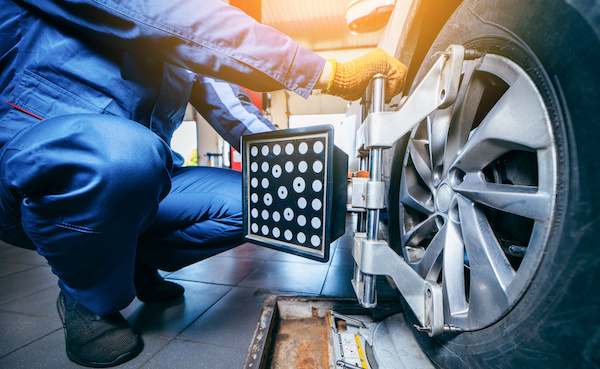
Wheel alignment corrects the angles at which your wheels sit relative to the road surface and each other. It’s a suspension adjustment, not a tyre service—the mechanic never touches your tyres during alignment work. Three angles get adjusted: camber (inward/outward tilt when viewed from front), caster (steering axis angle affecting stability), and toe (whether wheels point inward or outward when viewed from above).
What It Fixes: Car pulling to one side, off-center steering wheel, uneven tyre wear on inner or outer edges, and poor handling through corners.
What Causes Misalignment: Hitting potholes on Outer Ring Road or Sarjapur Road, mounting curbs in tight Bangalore parking lots, driving over speed breakers too fast, and worn suspension components.
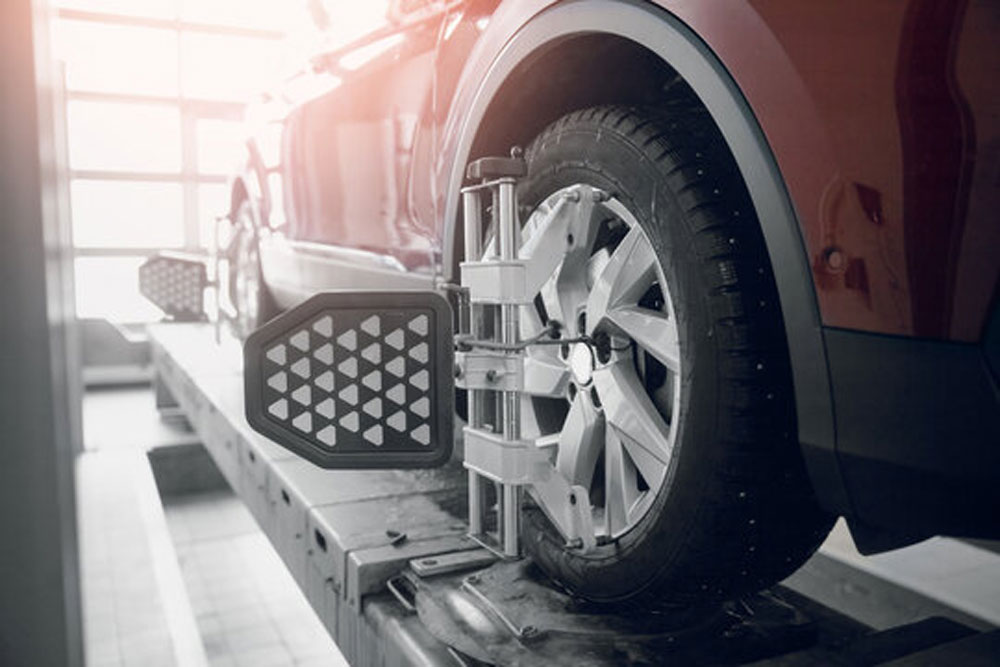
Wheel Balancing: Evening Out Weight Distribution
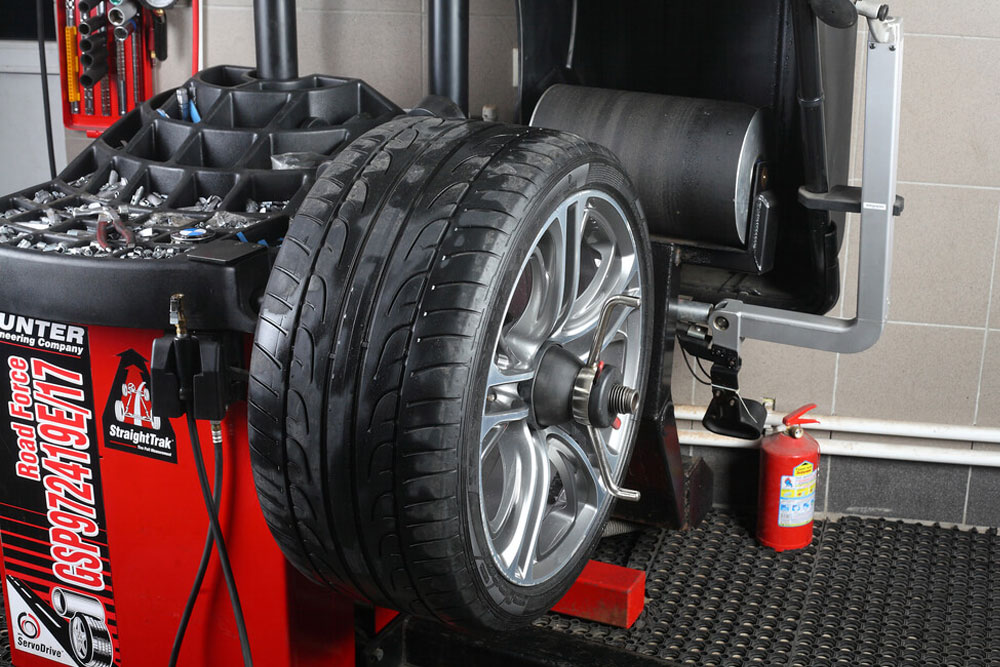
Wheel balancing ensures the combined weight of each tyre and wheel assembly is evenly distributed around the axle. No tyre or wheel is perfectly uniform—manufacturing variations create light and heavy spots that cause wobbling at high speeds. Mechanics mount each wheel on a computerized spin balancer that detects imbalances and indicates where to attach small lead or zinc weights (typically 5-60 grams) to compensate.
What It Fixes: Steering wheel vibration at 60-100 km/h, seat or floorboard shaking, cupped or scalloped tyre wear patterns, and premature suspension bearing failure.
What Causes Imbalance: Normal tyre wear over time, losing balancing weights on rough roads, uneven tyre wear from delayed rotation, and mounting new tyres without balancing.
Tyre Rotation: Repositioning Tyres for Even Wear
Tyre rotation is the systematic moving of tyres from one position to another on your vehicle—typically front to rear and side to side in specific patterns. Front tyres wear differently than rear tyres because they handle steering forces, and front-wheel-drive cars (most hatchbacks and sedans in India) wear front tyres 2-3 times faster due to engine power and braking concentration.
What It Fixes: Uneven wear between front and rear tyres, extends overall tyre lifespan by 8,000-15,000 km, and ensures all four tyres reach replacement point simultaneously rather than requiring premature pair replacements.
What Causes Uneven Wear: Front-wheel-drive power delivery, aggressive acceleration and braking in Bangalore traffic, misalignment (which rotation doesn’t fix but can reveal), and failure to rotate tyres every 5,000-8,000 km.
The Confusion Matrix: Why Bangalore Drivers Mix Them Up
Three factors create widespread confusion about these services in the local market.
Workshops Offering “Package Deals” Without Explanation
Many Bangalore tyre shops advertise “Complete Wheel Service Package for ₹1,500” without breaking down what’s included. Car owners assume the package covers everything needed but often discover later that rotation wasn’t included, or the workshop did 2-wheel alignment when their SUV needed 4-wheel service. This bundling creates the impression that alignment, balancing, and rotation are variations of the same service rather than three distinct procedures.
Similar Symptoms With Different Root Causes
Both misalignment and imbalance cause steering issues, making self-diagnosis nearly impossible. A car pulling left could indicate toe misalignment, but it could also mean unbalanced front wheels or simply underinflated left-side tyres. Vibration at highway speeds typically means imbalance, but severe camber misalignment combined with aggressive tyre wear also creates vibration. Without diagnostic equipment, even experienced drivers guess wrong about which service they need.
Terminology Overlap in Local Workshops
Walk into a neighborhood garage in Jayanagar or Malleswaram and ask for “wheel setting,” and you might get alignment, balancing, or both depending on the mechanic’s interpretation. Terms like “wheel correction,” “tyre setting,” and “balance checking” get used interchangeably across Bangalore workshops, creating communication gaps that result in paying for unnecessary services or skipping critical ones.
Side-by-Side Comparison: Alignment vs Balancing vs Rotation
Understanding the technical differences helps you request appropriate services and avoid unnecessary expenses.
| Aspect | Wheel Alignment | Wheel Balancing | Tyre Rotation |
|---|---|---|---|
| What gets adjusted | Suspension angles (camber, caster, toe) | Weight distribution with small metal clips | Physical position of tyres on vehicle |
| Parts involved | Suspension components, steering linkage | Wheels, tyres, balancing weights | Only tyres (wheels stay with tyres) |
| Equipment used | Computerized alignment rack with sensors/cameras | Spin balancer with weight dispenser | Floor jack, impact wrench (basic tools) |
| Service duration | 45-60 minutes for 4-wheel alignment | 30-45 minutes for all four wheels | 20-30 minutes for complete rotation |
| Cost in Bangalore | ₹1,000-2,500 depending on vehicle type | ₹600-1,200 for all four wheels | ₹200-400 (often free with other services) |
| Primary symptom | Car pulls left/right, off-center steering wheel | Vibration at 60-100 km/h, steering wheel shake | Uneven wear between front and rear tyres |
| Secondary symptoms | Uneven edge wear (inner/outer tyre edges) | Cupped wear pattern, suspension noise | Front tyres bald while rear tyres have 50% tread |
| Frequency needed | Every 10,000 km in Bangalore (vs 15,000 km standard) | Every 5,000-8,000 km or when mounting new tyres | Every 5,000-8,000 km |
| Trigger events | Pothole hits, curb contact, suspension repairs | New tyre installation, weight loss from rough roads | Routine maintenance intervals |
| Can you skip it? | No—causes rapid uneven tyre wear and safety issues | No—damages suspension bearings and comfort | Yes short-term, but reduces tyre life 20-30% |
| DIY possible? | No—requires professional alignment equipment | No—requires computerized spin balancer | Technically yes with jack, but risky without proper tools |
Common Mistakes Bangalore Car Owners Make
Local driving conditions and workshop practices create specific patterns of service errors.
Mistake #1: Getting Alignment Instead of Balancing (or Vice Versa)
The Scenario: Your steering wheel shakes at 80 km/h on Nice Road, so you visit a workshop requesting “wheel setting.” The mechanic does alignment for ₹1,200, but the vibration continues because you actually needed balancing.
Why It Happens: Both services involve wheels, and both can cause steering issues, creating confusion. Many local garages lack diagnostic protocols and simply perform whichever service you request without checking if it addresses your actual problem.
The Fix: Describe symptoms rather than requesting specific services. Say “my steering wheel vibrates at highway speeds” instead of “I need alignment.” Competent workshops diagnose first, then recommend appropriate services.
Mistake #2: Skipping Rotation Because “Tyres Look Fine”
The Scenario: You drive a front-wheel-drive Maruti Swift primarily in Bangalore traffic for 15,000 km without rotation. Front tyres wear down to 2mm tread depth while rear tyres still have 6mm, forcing you to replace two tyres prematurely.
Why It Happens: Tyre rotation doesn’t fix obvious problems like vibration or pulling, so it feels optional compared to alignment or balancing. Front-wheel-drive vehicles accelerate front tyre wear dramatically—steering, braking, and engine power all concentrate on front tyres.
The Fix: Rotate every 5,000-8,000 km regardless of visible wear. This simple ₹300 service extends tyre lifespan by 10,000-15,000 km, saving ₹4,000-8,000 in premature replacements.
Mistake #3: Getting Balancing Without Rotation When Mounting New Tyres
The Scenario: You install two new tyres on the front axle, get them balanced, and drive away. Within 6 months, the new front tyres show significant wear while older rear tyres remain relatively fresh.
Why It Happens: Workshops focus on the service you’re paying for (new tyre installation and balancing) without proactively suggesting rotation. Many car owners don’t realize new tyres should go on the rear axle first, then older tyres rotated to front for better stability and even wear.
The Fix: When installing new tyres, always request: “Mount new tyres on rear, rotate older rear tyres to front, and balance all four”. This ₹200 rotation service protects your ₹8,000-12,000 new tyre investment.
Mistake #4: Believing “Package Deals” Cover Everything
The Scenario: You pay ₹1,800 for a “Complete Wheel Service Package” advertised on a banner outside a Koramangala workshop, assuming it includes alignment, balancing, and rotation. Later you discover the package only included 4-wheel alignment and balancing—rotation wasn’t mentioned in fine print.
Why It Happens: Package pricing varies wildly between Bangalore workshops with no standardization. Some include rotation; others don’t. Many workshops use packages as marketing hooks without clearly itemizing included services.
The Fix: Always ask “Does this package include alignment, balancing AND rotation?” before agreeing. Request a written breakdown showing each service and its individual cost within the package.
Mistake #5: Doing Rotation Without Alignment Check
The Scenario: You religiously rotate tyres every 6,000 km but never check alignment. After 30,000 km, all four tyres show uneven edge wear despite rotation—you’ve been rotating the problem around the vehicle.
Why It Happens: Rotation is cheaper and faster than alignment, making it tempting to do rotation alone. However, rotation doesn’t fix alignment problems; it just distributes uneven wear more evenly across all four tyres.
The Fix: Combine rotation with alignment checks (even if full alignment isn’t needed) every 10,000 km. Many workshops offer free alignment checks with rotation—the mechanic visually inspects tyre wear patterns and steering pull to determine if paid alignment service is necessary.
When You Need Each Service: A Bangalore-Specific Timeline
Local road conditions demand modified maintenance schedules compared to national recommendations.
Wheel Alignment Schedule
Standard Interval: Every 10,000 km or 6 months for Bangalore roads (versus 15,000 km elsewhere)
Immediate Check Required:
-
Within 500 km after hitting significant potholes on Outer Ring Road, Sarjapur Road, or Marathahalli areas
-
After any curb contact or median mounting in parking lots or traffic
-
When steering wheel is visibly off-center while driving straight
-
If car drifts consistently left or right on level roads
-
After suspension component replacement (shocks, struts, control arms)
-
Before installing new tyres (ensures even wear from day one)
Pre-emptive Situations:
-
Before monsoon season (April-May) to ensure safe wet-road handling
-
Before long road trips (Bangalore to Goa, Kerala, Ooty) when driving 500+ km
-
Every 6 months minimum if you’re a low-mileage driver (under 10,000 km/year)
Wheel Balancing Schedule
Standard Interval: Every 5,000-8,000 km or when symptoms appear
Immediate Balancing Required:
-
Immediately after mounting any new tyre
-
When vibration appears at speeds above 60 km/h
-
After repairing punctures (weight distribution changes slightly)
-
If you notice cupped or scalloped wear patterns on tyre surfaces
-
After hitting severe potholes that might dislodge balancing weights
Combine With:
-
Always pair balancing with rotation for efficiency
-
Get balanced when doing alignment to address both potential vibration causes
-
Balance during seasonal tyre swaps if you use separate monsoon tyres
Tyre Rotation Schedule
Standard Interval: Every 5,000-8,000 km without exception
Critical Timing:
-
Immediately if front and rear tyres show different wear depths (2mm+ difference)
-
During oil changes every 5,000 km—many workshops offer free rotation with service packages
-
When you notice front tyres wearing faster than rear (visible tread depth difference)
-
After long trips that accumulate 3,000+ km in short periods
Rotation Patterns for Different Vehicles:
Front-Wheel Drive (Swift, City, i20): Front tyres move straight back to rear; rear tyres cross to opposite front positions (left rear to right front, right rear to left front)
Rear-Wheel Drive (BMW, Mercedes sedans): Rear tyres move straight forward to front; front tyres cross to opposite rear positions
All-Wheel Drive (Creta, XUV700): Front tyres cross to opposite rear positions; rear tyres cross to opposite front positions (full X-pattern)
Directional Tyres: Can only rotate front-to-rear on same side (left front to left rear, right front to right rear) due to tread pattern design
How to Diagnose Which Service You Need
Before visiting workshops, perform basic checks to determine appropriate services.
The Straight-Road Test (For Alignment)
Find a flat, straight road with minimal traffic—sections of Tumkur Road or Nice Road work well. Drive at 50-60 km/h and briefly release the steering wheel (check mirrors first for safety). A properly aligned car continues straight for 5-7 seconds; misaligned vehicles pull noticeably left or right within 1-2 seconds. Also check if your steering wheel sits centered (logo upright) when driving straight—if rotated left or right, toe alignment is off.
The Vibration Test (For Balancing)
Accelerate gradually from 40 km/h to 100 km/h on a smooth highway or expressway. Note at which speed vibration appears and whether it’s in the steering wheel, floor, or seats. Balancing issues typically cause vibration that worsens with speed, peaks around 80-90 km/h, then sometimes decreases slightly above 100 km/h. If vibration occurs only at specific speeds (60-70 km/h but not 80-90 km/h), suspect wheel balance problems.
The Tread Depth Check (For Rotation Need)
Use a ₹5 coin (approximately 2mm thick) or proper tread depth gauge to measure all four tyres. Insert the coin into tread grooves at three points on each tyre. If front tyres show 2mm or less depth while rear tyres have 4mm or more, you’ve delayed rotation too long. For front-wheel-drive cars, front-to-rear depth difference exceeding 1.5-2mm indicates rotation is overdue.
The Wear Pattern Inspection (For Alignment + Rotation)
Inspect each tyre’s wear pattern closely:
Inner or Outer Edge Wear: Indicates camber misalignment—immediate alignment needed
Center Wear Only: Overinflation issue, not alignment—check tyre pressure
Both Edges Worn, Center Fresh: Underinflation issue—check pressure and inflate to manufacturer specs
Feathered Wear (One Side Sharp, Other Rounded): Toe misalignment—urgent alignment needed
Cupped or Scalloped Wear (Dips and Rises): Balancing issue or worn suspension—check both
Front Tyres More Worn Than Rear: Normal for front-wheel drive but indicates rotation delay
What Proper Service Should Include
Knowing service standards helps you evaluate Bangalore workshop quality.
Professional Wheel Alignment Includes
-
Pre-service inspection and current angle measurement documentation
-
Test drive to understand steering behavior and symptoms
-
Tyre pressure check and adjustment to manufacturer specs
-
Mounting vehicle on computerized alignment rack with sensors
-
Measuring camber, caster, and toe for all four wheels
-
Adjusting suspension components to bring angles within manufacturer tolerances
-
Post-service measurement documentation showing before/after readings
-
Test drive to verify correction
-
Printed alignment report with specifications and actual readings
Red Flags: Workshops that complete “alignment” in under 30 minutes, don’t provide printouts, skip test drives, or can’t show you pre-service measurements likely performed inferior work.
Professional Wheel Balancing Includes
-
Removing all four wheels from vehicle
-
Mounting each wheel individually on computerized spin balancer
-
Cleaning wheel rims of old weights, mud, and debris
-
Spinning each wheel at varying speeds to detect static and dynamic imbalance
-
Marking exact weight placement locations indicated by computer
-
Attaching clip-on or adhesive weights (typically 5-60 grams)
-
Re-spinning to verify balance correction
-
Reinstalling wheels with proper torque specifications
Red Flags: Reusing old weights, not cleaning rims, installing more than 100 grams weight on single wheel (indicates rim or tyre defect), or balancing only front wheels when you paid for all four.
Professional Tyre Rotation Includes
-
Recording current tread depth for all four tyres
-
Inspecting each tyre for damage, embedded objects, sidewall cracks
-
Following manufacturer-specified rotation pattern for your drivetrain type
-
Torquing lug nuts to proper specification (not over-tightening with impact wrench)
-
Adjusting tyre pressure to match new positions (front vs rear often have different specs)
-
Updating service records with date, mileage, and rotation pattern used
Red Flags: Rotating directional tyres side-to-side (impossible due to tread pattern), not recording tread depths, using impact wrench without torque stick, or mixing rotation patterns randomly.
Package Deals: What’s Worth It in Bangalore
Understanding typical package structures helps you identify good value versus marketing gimmicks.
The “Essential” Package (₹1,500-1,800)
Typically Includes:
-
4-wheel alignment with computerized equipment
-
Wheel balancing for all four wheels
-
Basic visual inspection
Should Include But Often Doesn’t:
-
Tyre rotation
-
Nitrogen filling
-
Alignment report printout
Value Analysis: Reasonable if it includes all three core services (alignment + balancing + rotation). Overpriced if rotation is excluded—you’re paying only ₹300 less than buying services separately.
The “Complete” Package (₹2,000-2,500)
Typically Includes:
-
4-wheel alignment with 3D computerized system
-
Wheel balancing all four wheels
-
Tyre rotation
-
Nitrogen filling
-
Tyre inspection and pressure check
Value Analysis: Excellent value if your vehicle needs all services—saves ₹500-800 versus separate pricing. Best for cars at 10,000 km service intervals or after significant pothole damage.
The “Premium” Package (₹3,000-4,000)
Typically Includes:
-
Everything in Complete Package
-
Suspension inspection
-
TPMS check or reset
-
Anti-rust underbody coating
-
Engine decarbonization
Value Analysis: Only worthwhile for SUVs, luxury cars, or vehicles due for comprehensive maintenance. If you only need wheel services, you’re overpaying for bundled services you may not require.
Cost Comparison: Individual vs Package Services
Breaking down actual Bangalore pricing reveals true savings.
Individual Service Pricing:
-
4-wheel alignment: ₹1,000-1,500
-
Balancing (4 wheels): ₹600-1,000
-
Rotation: ₹200-400
-
Nitrogen filling: ₹200-300
-
Total: ₹2,000-3,200
Typical Package Pricing:
-
Essential package: ₹1,500-1,800 (saves ₹200-400 but may exclude rotation)
-
Complete package: ₹1,800-2,200 (saves ₹500-1,000 if all services included)
Best Value Strategy: Request itemized pricing for your specific needs rather than accepting pre-packaged deals. If you only need balancing and rotation (₹800-1,400 separate), don’t pay ₹1,500 for a package that includes unnecessary alignment.
Where to Get Quality Service in Bangalore
Choosing the right workshop ensures accurate service and fair pricing.
Neighborhood Independent Garages
Best For: Cost-conscious car owners with older vehicles (pre-2015), routine rotation services, basic 2-wheel alignment
Typical Locations: Jayanagar, Malleswaram, BTM Layout, Rajajinagar local workshops
Pricing: Alignment ₹800-1,200, Balancing ₹500-800, Rotation ₹200-300
Watch For: Equipment calibration (ask when alignment rack was last calibrated), technician experience with your vehicle type, whether they provide measurement documentation
Branded Tyre Chain Outlets
Best For: Mid-range reliability, computerized alignment, comprehensive packages with warranties
Examples: Tyre Torque (Kasturi Nagar), Apollo zones (Koramangala, HSR Layout), MRF centers (Whitefield, Marathahalli), Bridgestone Select (Indiranagar)
Pricing: Alignment ₹1,000-1,500, Balancing ₹700-1,200, Complete packages ₹1,800-2,500
Advantages: Standardized service protocols, computerized equipment, printout documentation, often include free nitrogen filling and 30-day re-alignment guarantees
Authorized Dealerships
Best For: Warranty-period vehicles, luxury cars, manufacturer-specific alignment specifications
Locations: Yeshwanthpur (Maruti, Toyota), Hebbal (Honda, Ford), Bannerghatta Road (Hyundai)
Pricing: Alignment ₹1,200-2,500, Balancing ₹800-1,500, Premium packages ₹2,500-4,000
Justification: Only worth premium pricing for luxury European cars (BMW, Mercedes, Audi) requiring specialized equipment, or warranty compliance
Mobile Service Aggregators
Examples: GoMechanic, Pitstop
Best For: Doorstep convenience, transparent online pricing, cashless payments
Pricing: Alignment ₹399-1,299, Packages ₹999-1,999
Trade-offs: Can’t supervise service directly, quality depends on assigned technician, limited equipment compared to established workshops
The Ultimate Maintenance Checklist
Print this checklist and keep it in your glovebox for reference.
Every 5,000 km:
-
✓ Tyre rotation (front-to-rear or cross pattern based on drive type)
-
✓ Visual tyre wear inspection
-
✓ Tyre pressure check and adjustment
Every 5,000-8,000 km:
-
✓ Wheel balancing (or whenever vibration appears)
-
✓ Tread depth measurement on all four tyres
Every 10,000 km (Bangalore-specific):
-
✓ Wheel alignment check (full service if angles out of spec)
-
✓ Suspension component inspection
-
✓ Alignment report documentation
After Specific Events:
-
✓ Alignment check within 500 km of pothole impact
-
✓ Balancing immediately after new tyre installation
-
✓ Alignment after any suspension or steering repairs
-
✓ Both alignment and balancing after hitting curbs or medians
Seasonal:
-
✓ Pre-monsoon alignment check (April-May)
-
✓ Post-monsoon alignment inspection (October)
-
✓ Before long road trips (500+ km)
Stop Guessing, Start Maintaining Properly
The confusion between wheel alignment, balancing, and rotation costs Bangalore car owners thousands annually in premature tyre replacements and unnecessary services. Alignment adjusts suspension angles to prevent edge wear and pulling; balancing distributes weight to eliminate vibration; rotation repositions tyres to equalize wear—three completely different procedures addressing distinct problems. By understanding what each service actually does, recognizing appropriate symptoms, and following Bangalore-specific maintenance intervals, you protect your ₹8,000-15,000 tyre investment and ensure safer driving on the city’s challenging roads.
Need expert wheel services that get it right the first time? Visit Tyre Torque at Kasturi Nagar for transparent service explanations, computerized diagnostics, and honest recommendations. Our technicians take time to show you exactly what your vehicle needs—whether that’s alignment only, a complete package, or just rotation and balancing. We provide detailed printouts, follow manufacturer specifications, and never upsell unnecessary services. Book your appointment today and experience the difference proper wheel maintenance makes on Bangalore roads.